Citrus Infused Rosemary Fig Conserve
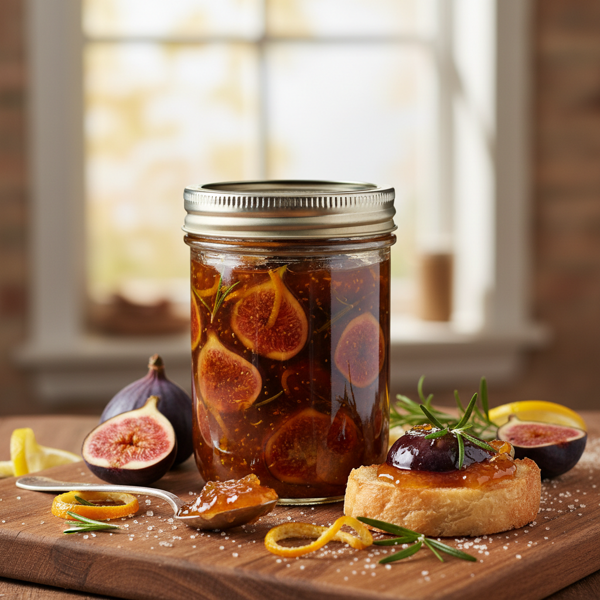
Indulge in this luxurious fig conserve, where the natural sweetness of ripe figs dances harmoniously with the bright zest of orange and the rich depth of Grand Marnier. Infused with fresh rosemary, this unique blend evokes a sophisticated flavor profile, enhanced by a subtle spiciness from minced cayenne peppers. Ideal as a glaze for roasted meats or as a savory accompaniment to charcuterie boards, this conserve elevates any dish it graces. Enjoy it as a spread on artisanal breads or paired with creamy cheeses for an effortless gourmet experience.
N/A
Servings
15
Calories
9
Ingredients
Ingredients
Sugar
1/4 cup (Turbinado sugar is preferred, but white sugar can also be used.)
No-sugar-needed pectin
1 3/4 ounces
Fresh figs
3 lbs (Stemmed and cut into 1/2-inch pieces.)
Brown sugar
2 cups
Lemon juice
1/3 cup (Use bottled lemon juice for consistent flavor.)
Orange
1 whole (Zest and fruit chopped; skin and pith removed and discarded.)
Grand Marnier
1/2 cup
Fresh rosemary sprig
1 (About four inches long.)
Fresh cayenne pepper
1-2 peppers (Minced.)
Instructions
1
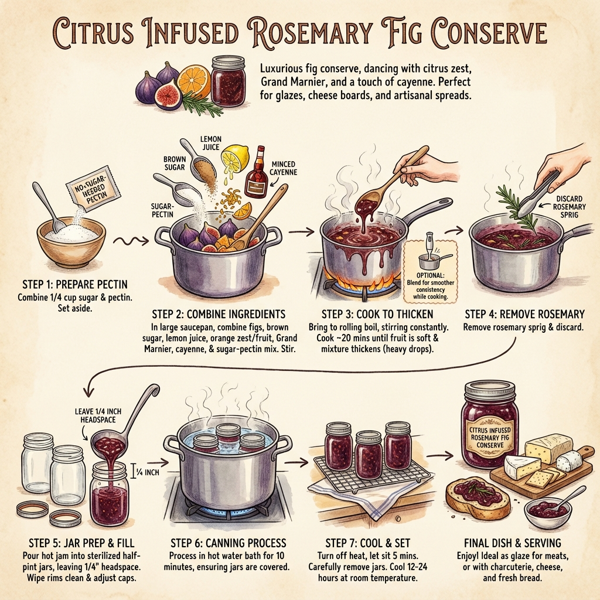
In a small bowl, combine the 1/4 cup of sugar with the no-sugar-needed pectin, mixing well and set aside.
2
In a large, deep, nonreactive saucepan, combine the figs, brown sugar, lemon juice, orange zest and chopped fruit, Grand Marnier, minced cayenne pepper, and the sugar-pectin mixture. Stir gently to incorporate.
3
Bring the mixture to a rolling boil over high heat while continuously stirring to dissolve the sugar. Cook for approximately 20 minutes, or until the fruit becomes soft and the mixture thickens, dropping from the spoon in heavy drops. Stir frequently to prevent sticking.
4
Once the mixture is ready, remove the rosemary sprig and discard.
5
For storage, either pour the warm jam into sterilized half-pint jars, leaving 1/4 inch of headspace, or follow the canning process as described next.
6
To can, ensure jars are sterilized and pour the hot jam into the jars, wipe the rims clean, adjust the caps, and process in a hot water bath for 10 minutes, ensuring the jars are covered with at least 2 inches of water.
7
Once the processing time is complete, turn off the heat and allow the pot to sit for 5 minutes before carefully removing the jars. Let cool for 12-24 hours at room temperature before storing.
8
For a smoother consistency, blend the mixture using an immersion blender while cooking, if desired.
Nutrition Information
<1g
Fat
4g
Carbs
<1g
Protein
0g
Fiber
2.5g
Sugar
Frequently Asked Questions
Frequently Asked Questions
What is Citrus Infused Rosemary Fig Conserve?
It is a luxurious fig spread featuring orange zest, Grand Marnier, fresh rosemary, and a hint of spiciness from cayenne peppers.
What type of sugar is preferred for this recipe?
Turbinado sugar is preferred, although white sugar can also be used as a substitute.
Can I use white sugar instead of turbinado?
Yes, white sugar is an acceptable alternative if turbinado sugar is unavailable.
What kind of pectin is required?
The recipe requires 1 3/4 ounces of no-sugar-needed pectin.
How should the fresh figs be prepared?
The figs should be stemmed and cut into 1/2-inch pieces before cooking.
Why is bottled lemon juice recommended?
Bottled lemon juice is used to ensure a consistent flavor and acidity level throughout the batch.
How do I prepare the orange for the conserve?
Zest the orange and chop the fruit, ensuring the skin and pith are completely removed and discarded.
What does Grand Marnier add to the recipe?
Grand Marnier adds a rich depth and a sophisticated citrus liqueur flavor profile to the fig mixture.
How long should the fresh rosemary sprig be?
The fresh rosemary sprig should be approximately four inches long.
How many cayenne peppers should be used?
The recipe calls for 1 to 2 fresh cayenne peppers, depending on your preferred level of spiciness.
How should the cayenne peppers be prepared?
The fresh cayenne peppers should be finely minced before being added to the saucepan.
What is the first step in preparing the pectin?
In a small bowl, combine 1/4 cup of sugar with the no-sugar-needed pectin and set it aside.
Which ingredients are combined in the large saucepan?
Combine the figs, brown sugar, lemon juice, orange zest and fruit, Grand Marnier, minced cayenne, and the pectin-sugar mixture.
What type of saucepan is recommended?
Use a large, deep, nonreactive saucepan to prevent any metallic flavors from leaching into the conserve.
What heat setting should be used for boiling?
The mixture should be brought to a rolling boil over high heat while stirring continuously.
How long should the conserve cook?
Cook the mixture for approximately 20 minutes until the fruit softens and the mixture thickens.
How do I know when the conserve is thick enough?
The conserve is ready when it drops from the spoon in heavy, slow drops.
When do I remove the rosemary sprig?
Remove and discard the rosemary sprig once the cooking process is finished and the mixture is ready for jarring.
Can I make the conserve smoother?
Yes, you can use an immersion blender while cooking to achieve a smoother consistency if desired.
What jar size is recommended for storage?
The recipe suggests pouring the warm jam into half-pint jars.
How much headspace is needed in the jars?
Leave 1/4 inch of headspace at the top of the jars before sealing.
How long do I process the jars in a water bath?
Process the jars in a hot water bath for 10 minutes to ensure they are properly canned.
How much water should cover the jars during canning?
Ensure the jars are covered with at least 2 inches of water in the canning pot.
What should I do immediately after the processing time ends?
Turn off the heat and allow the pot to sit for 5 minutes before carefully removing the jars.
How long should the jars cool at room temperature?
Let the jars cool for 12 to 24 hours at room temperature before storing them.
What is the calorie count per serving?
Each serving contains approximately 15 calories.
How much sugar is in each serving?
There are 2.5 grams of sugar per serving of this conserve.
What is the fat content of this recipe?
The conserve contains less than 1 gram of fat per serving.
What are some serving suggestions for this conserve?
It is ideal as a glaze for roasted meats, an accompaniment to charcuterie boards, or spread on artisanal breads with creamy cheeses.
How much protein does this conserve provide?
This recipe contains less than 1 gram of protein per serving.