Citrus Bliss Blood Orange Marmalade
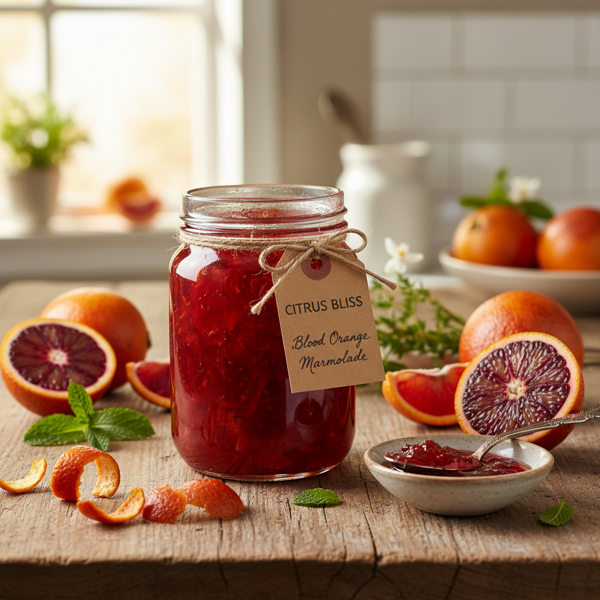
This luscious Citrus Bliss Blood Orange Marmalade showcases the unique sweetness of blood oranges, which are known for their striking crimson flesh and floral, berry-like notes. This delightful spread perfectly encapsulates the essence of citrus sunshine, making it a wonderful addition to breakfast toast, scones, or cheese boards. The recipe brings together the vibrant flavors of blood oranges, fresh lemon juice, and a touch of Campari for a hint of complexity that elevates this marmalade to a gourmet treat. With blood oranges in season from December to June, now is the perfect time to indulge in this irresistible marmalade that will transport your taste buds to sunny orchards with each jar.
12
Servings
150
Calories
5
Ingredients
Ingredients
Granulated sugar
2 cups (divided)
Water
1 1/2 cups (divided)
Blood oranges
1 (thinly sliced with peel into rounds, seeds removed)
Fresh lemon juice
2 1/2 tablespoons (freshly squeezed)
Campari
2 tablespoons
Instructions
1
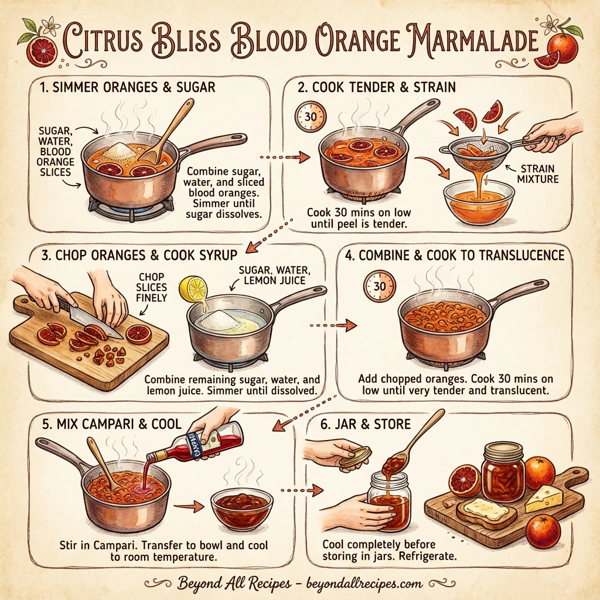
In a heavy medium saucepan, combine 1 cup of granulated sugar, 1 cup of water, and the sliced blood oranges. Stir gently and bring to a simmer over medium heat until the sugar completely dissolves.
2
Once simmering, reduce the heat to low and continue to cook for about 30 minutes, stirring occasionally, until the orange peel becomes tender.
3
Carefully pour the mixture into a strainer set over a medium bowl to separate the orange slices from the syrup. Chop the orange slices finely, reserving them while discarding the syrup.
4
In another clean heavy medium saucepan, combine the remaining cup of sugar, 1/2 cup of water, and the freshly squeezed lemon juice. Again, bring this mixture to a simmer over medium heat, stirring until the sugar has dissolved.
5
Add the chopped orange slices to this sweetened liquid and reduce the heat to low. Cook for approximately 30 more minutes, or until the orange becomes very tender and the peel becomes translucent.
6
Mix in the Campari and stir well to incorporate. Once the marmalade reaches your desired consistency, transfer it to a small bowl and allow it to cool to room temperature before placing it into jars.
7
Cool the marmalade completely before storing. It can be made up to a week in advance – simply cover and refrigerate until ready to use.
Nutrition Information
0g
Fat
37.5g
Carbs
0.17g
Protein
36.67g
Sugar
Frequently Asked Questions
Frequently Asked Questions
What is Citrus Bliss Blood Orange Marmalade?
It is a gourmet spread that showcases the unique sweetness and floral notes of blood oranges, enhanced with a touch of Campari.
What are the primary ingredients needed for this recipe?
The main ingredients include blood oranges, granulated sugar, water, fresh lemon juice, and Campari.
How many blood oranges are required?
This recipe requires one large blood orange, thinly sliced into rounds with the seeds removed.
Why are blood oranges used instead of regular oranges?
Blood oranges are chosen for their striking crimson flesh and unique berry-like flavor profile that provides a more complex sweetness.
When is the best time to find fresh blood oranges?
Blood oranges are typically in season from December through June.
Do I need to peel the oranges for this marmalade?
No, the recipe calls for the orange to be thinly sliced with the peel intact, which becomes tender and translucent during cooking.
What is the purpose of adding lemon juice?
Fresh lemon juice provides acidity which helps balance the sweetness of the sugar and oranges.
Why is Campari included in the recipe?
Campari adds a hint of bitterness and complexity that elevates the marmalade to a gourmet level.
Can I substitute the Campari?
While Campari provides a specific flavor, you could experiment with other bitter aperitifs or simply omit it, though the flavor profile will change.
How many calories are in a serving of this marmalade?
Each serving contains approximately 150 calories.
Is this Blood Orange Marmalade fat-free?
Yes, the nutritional data indicates it contains 0g of fat per serving.
How much sugar is in one serving?
There are approximately 36.67 grams of sugar per serving.
What is the carbohydrate content per serving?
Each serving contains about 37.5 grams of carbohydrates.
How long does the first simmering stage take?
The first stage of simmering the orange slices in sugar and water takes about 30 minutes until the peel is tender.
Why is the first syrup discarded?
The instructions specify straining the oranges and discarding the first syrup to prepare for a second cook with fresh sugar and lemon juice.
How long is the second cooking process?
The second cook takes approximately 30 additional minutes until the peel becomes translucent.
How do I know when the marmalade is finished?
The marmalade is ready when the orange peel is very tender and translucent, and it has reached your desired consistency.
Can I make this marmalade in advance?
Yes, it can be made up to a week in advance and stored in the refrigerator.
What is the best way to store the finished product?
Store the cooled marmalade in covered jars and keep them refrigerated.
How many servings does this recipe yield?
This recipe is designed to yield approximately 12 servings.
What are some serving suggestions for this marmalade?
It is excellent on breakfast toast, scones, or as an accompaniment on a cheese board.
Is there any protein in this recipe?
The recipe contains a very minimal amount of protein, approximately 0.17g per serving.
What equipment is needed?
You will need two heavy medium saucepans, a strainer, and clean glass jars for storage.
How should the oranges be prepared?
They should be thinly sliced into rounds, and all seeds must be removed before cooking.
What category of food does this fall under?
It is categorized under Citrus spreads, specifically within jams and preserves.
Is there any sodium in this marmalade?
The nutritional information lists the sodium content as null, indicating it is very low or non-existent.
Does the recipe contain fiber?
The fiber content is listed as null in the provided nutritional data.
Can I use granulated sugar?
Yes, the recipe specifically calls for 2 cups of granulated sugar, divided into two parts.
What should I do if the marmalade is too thin?
You can continue to simmer it on low heat until more moisture evaporates and it reaches your preferred thickness.
Does this marmalade contain cholesterol?
No, the cholesterol level for this recipe is null.