Citrus Anise Pan De Muerto

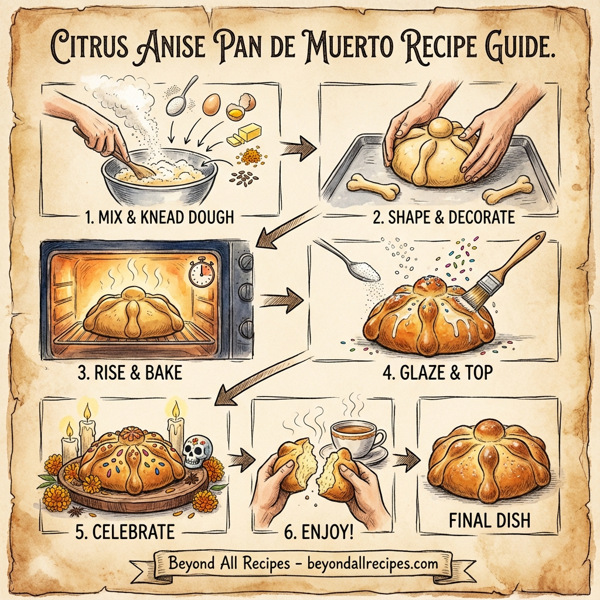
Indulge in the rich traditions of Mexico with this delightful Citrus Anise Pan De Muerto, a bread that celebrates life and remembrance. Adapted from 'The Rustic Table' by Constance Snow, this recipe stands out with its enchanting blend of warm spices and zesty orange notes, perfect for honoring loved ones during Día de Muertos. Soft, fluffy, and beautifully adorned, this bread becomes a centerpiece of any festive table. Whether enjoyed plain or adorned with the sweet glaze and colorful sprinkles, each bite is a divine experience that will leave you yearning for more.
N/A
Servings
N/A
Calories
18
Ingredients
Ingredients
warm water
1/2 cup
active dry yeast
2 1/4 teaspoons
bread flour
4 1/2 cups
anise seed, crushed
1 tablespoon
orange, zest of, grated
1
large eggs
5
unsalted butter, melted and cooled to lukewarm
1 cup
butter, for greasing pans
as needed
orange liqueur
3 tablespoons
sugar
1/3 cup
salt
2 teaspoons
powdered sugar
2 cups
unsalted butter, softened
2 tablespoons
orange juice (fresh)
2 tablespoons
lemon juice (fresh)
1 tablespoon
grated orange zest
1 teaspoon
yellow or orange colored crystal sugar
as needed
candy sprinkles
as needed
Instructions
Nutrition Information
Frequently Asked Questions
Frequently Asked Questions
What is Citrus Anise Pan De Muerto?
Citrus Anise Pan De Muerto is a traditional Mexican sweet bread prepared for Dia de Muertos, featuring orange and anise flavors.
What are the primary flavors in this Pan de Muerto recipe?
The primary flavors are zesty orange and warm, crushed anise seed, complemented by a sweet citrus glaze.
What kind of yeast is required for this bread?
This recipe calls for 2 1/4 teaspoons of active dry yeast dissolved in warm water.
Can I use all-purpose flour instead of bread flour?
While bread flour is recommended for a better structure and chew, all-purpose flour can be used as a substitute, though the texture may be slightly softer.
How many eggs are used in the Citrus Anise Pan De Muerto?
The recipe requires 5 large eggs to create a rich, brioche-like dough.
What role does orange liqueur play in the recipe?
Orange liqueur adds a deep, concentrated citrus aroma and flavor to the dough.
Is the butter used in this recipe salted or unsalted?
The recipe specifies unsalted butter, which allows you to control the salt content precisely using the 2 teaspoons of salt listed.
What is the purpose of crushed anise seed?
Crushed anise seed provides a distinct, licorice-like herbal note that is traditional for Mexican holiday breads.
How should I prepare the orange zest?
The orange zest should be finely grated to ensure even distribution of flavor throughout the bread dough.
What makes the glaze for this Pan de Muerto?
The glaze consists of powdered sugar, softened unsalted butter, fresh orange juice, fresh lemon juice, and grated orange zest.
Are there specific decorations used for the top of the bread?
Yes, the bread is typically adorned with yellow or orange colored crystal sugar and candy sprinkles.
Why is warm water used for the yeast?
Warm water, usually between 105 and 115 degrees Fahrenheit, is necessary to activate the dry yeast without killing it.
What texture should I expect from this bread?
This Pan de Muerto is described as soft, fluffy, and rich due to the high egg and butter content.
Can I make this bread without alcohol?
Yes, you can substitute the orange liqueur with an equal amount of orange juice or a teaspoon of orange extract mixed with water.
What is the significance of the bread's shape?
Traditionally, the dough is shaped with pieces on top that resemble bones and tears to honor deceased loved ones.
How do I grease the pans?
You should use additional butter as needed to grease the baking pans to prevent the sweet dough from sticking.
Does the recipe include salt?
Yes, 2 teaspoons of salt are included to balance the sweetness and enhance the overall flavor of the citrus and anise.
How much powdered sugar is needed for the topping?
The recipe uses 2 cups of powdered sugar as the base for the sweet citrus glaze.
Can I use bottled citrus juice for the glaze?
Fresh orange and lemon juices are recommended for the best flavor, but bottled juice can be used in a pinch.
Is this recipe considered traditional Mexican cuisine?
Yes, Pan de Muerto is a foundational element of Mexican Dia de Muertos celebrations and this recipe follows those traditions.
What is the best way to store leftovers?
Store the bread in an airtight container at room temperature for up to 3 days or freeze for longer storage.
Can I add other spices to this bread?
While anise is traditional, some variations include cinnamon or vanilla depending on regional preferences.
Should the melted butter be hot when added to the dough?
No, the butter should be melted and then cooled to lukewarm so it doesn't kill the yeast or cook the eggs.
Is this bread suitable for vegetarians?
Yes, this recipe is vegetarian-friendly as it contains no meat products, though it does use eggs and dairy.
What size eggs should I use?
The recipe is calibrated for large eggs.
Can I make the dough in a bread machine?
Yes, you can use the dough cycle of a bread machine, then shape and bake the loaves in a conventional oven.
How do I apply the crystal sugar?
The crystal sugar is typically sprinkled over the wet glaze so that it adheres to the surface of the bread.
What inspired this specific recipe?
This recipe was adapted from 'The Rustic Table' by Constance Snow.
How many ingredients are in this recipe?
There are 18 specific ingredients listed for the dough, glaze, and decoration.
Can I serve this plain?
Yes, the bread is delicious on its own, though it is traditionally finished with the glaze and decorative sugars.