Citrus and Ginger-Scented Sephardic Roast Chicken
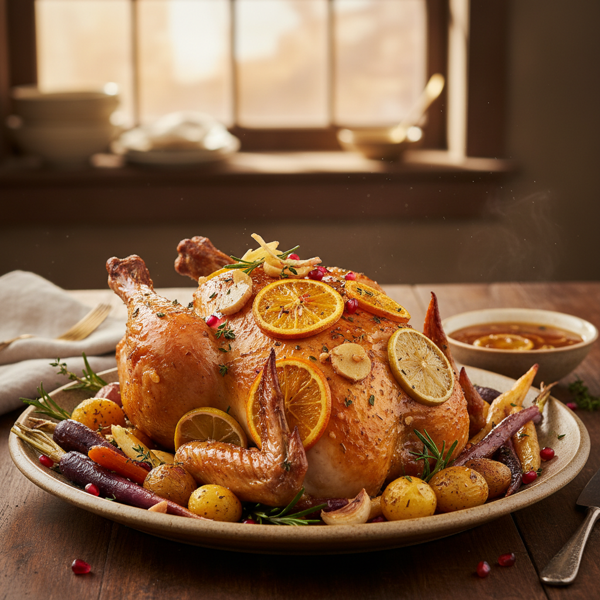
This fragrant and flavorful Roast Chicken combines the zesty brightness of citrus fruits with the warm spiciness of ginger. A cherished dish with deep roots, ginger has been used in Jewish cooking since its introduction by Sephardic Jewish emigrants. The careful balance of orange and lemon juices, along with the sweet notes of honey and the rich flavor of roasted chicken, makes this dish a perfect centerpiece for festive gatherings or family dinners. The method allows the chicken to roast slowly, absorbing the aromatic juices and creating a succulent meal that is sure to impress your guests.
N/A
Servings
400
Calories
11
Ingredients
Ingredients
Roasting chicken
1 (5 lb, cleaned and patted dry)
Orange
1 (zested and quartered)
Lemons
2 (zested and quartered)
Fresh ginger
2 tablespoons (grated, divided)
Salt
to taste
Pepper
to taste
Margarine or olive oil
5 tablespoons (melted)
Fresh lemon juice
1/4 cup
Fresh orange juice
1/2 cup
Honey
3 tablespoons
Orange for garnish
1 (sectioned)
Instructions
1
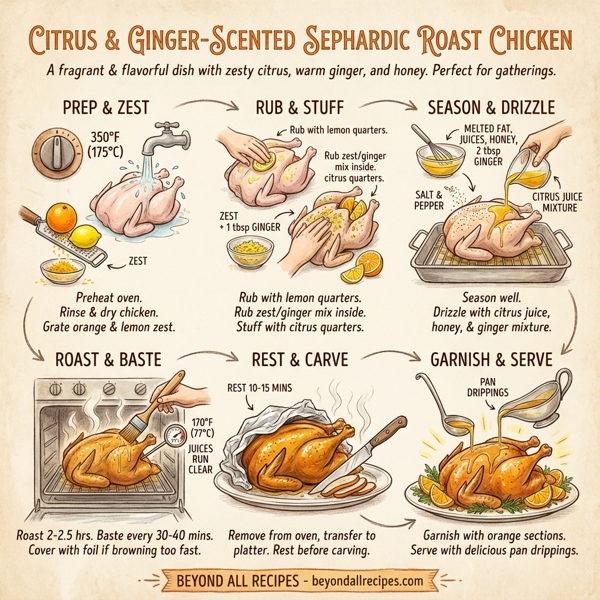
Preheat your oven to 350 degrees F (175 degrees C).
2
Thoroughly rinse the chicken under cold water and pat dry with paper towels.
3
Grate the zest from one of the oranges and from one of the lemons, and set aside.
4
Cut the zested lemon into quarters. Rub the chicken's exterior with the lemon quarters, then discard them.
5
Cut the zested orange into quarters and cut the other lemon into quarters, reserving them for later.
6
In a small bowl, mix together the lemon and orange zests with 1 tablespoon of the grated ginger. Rub this mixture evenly inside the cavity of the chicken.
7
Stuff the body and neck cavity of the chicken with the orange and remaining lemon quarters.
8
Season the entire chicken generously with salt and pepper.
9
Place the chicken on a roasting rack set in a shallow roasting pan.
10
In another small bowl, combine the melted margarine or olive oil, fresh lemon juice, fresh orange juice, honey, and the remaining 2 tablespoons of grated ginger.
11
Drizzle this citrus juice mixture over the chicken, ensuring it is evenly coated.
12
Roast the chicken in the preheated oven for 2 to 2 1/2 hours, or until the meat thermometer inserted into the thickest part of the thigh registers 170 degrees F and juices run clear.
13
Baste the chicken with the citrus juice mixture at least 4 times during roasting to keep it moist.
14
If the chicken is browning too rapidly, cover it loosely with aluminum foil.
15
Once done, remove the chicken from the oven and transfer it to a serving platter. Allow it to rest for 10 to 15 minutes before carving.
16
Garnish with sectioned orange and serve with the pan drippings.
Nutrition Information
20g
Fat
33g
Carbs
25g
Protein
Frequently Asked Questions
Frequently Asked Questions
What are the primary flavors of this Sephardic roast chicken?
The dish combines the zesty brightness of orange and lemon with the warm spiciness of ginger and the sweetness of honey.
What size chicken is recommended for this recipe?
A 5 lb roasting chicken, cleaned and patted dry, is recommended.
What is the recommended oven temperature?
The oven should be preheated to 350 degrees F (175 degrees C).
How do I prepare the citrus zest for the chicken?
Grate the zest from one orange and one lemon, then mix it with 1 tablespoon of grated ginger to rub inside the cavity.
What should be stuffed inside the chicken cavity?
Stuff the body and neck cavity with orange quarters and the remaining lemon quarters.
How do I prepare the chicken's exterior before roasting?
Rub the exterior with lemon quarters, then season generously with salt and pepper.
What ingredients are in the citrus juice glaze?
The glaze consists of melted margarine or olive oil, fresh lemon juice, fresh orange juice, honey, and 2 tablespoons of grated ginger.
How long does the chicken need to roast?
The chicken should roast for 2 to 2 1/2 hours.
What is the target internal temperature for the chicken?
The chicken is done when a meat thermometer in the thickest part of the thigh registers 170 degrees F.
How often should the chicken be basted?
Baste the chicken with the citrus juice mixture at least 4 times during the roasting process.
What is the benefit of basting the chicken?
Basting helps keep the chicken moist while it roasts.
What should I do if the chicken browns too quickly?
If the chicken is browning too rapidly, cover it loosely with aluminum foil.
Is resting the chicken necessary after cooking?
Yes, allow the chicken to rest for 10 to 15 minutes before carving to ensure it stays succulent.
How should the dish be garnished?
Garnish the final dish with sectioned orange.
How many calories are in a serving of this chicken?
Each serving contains approximately 400 calories.
What is the fat content per serving?
The dish contains 20g of fat per serving.
How many carbohydrates are in this recipe?
There are 33g of carbohydrates per serving.
What is the protein content per serving?
Each serving provides 25g of protein.
Is this recipe suitable for Passover?
Yes, this recipe is tagged specifically for Passover and festive meals.
What is the historical significance of ginger in this recipe?
Ginger has been used in Jewish cooking since its introduction by Sephardic Jewish emigrants.
Can I use olive oil instead of margarine?
Yes, the recipe allows for either 5 tablespoons of melted margarine or olive oil.
How much honey is required?
The recipe calls for 3 tablespoons of honey.
What total amount of fresh ginger is needed?
The recipe uses 3 tablespoons of grated ginger in total: 1 for the cavity rub and 2 for the glaze.
How much orange juice is used in the glaze?
The glaze requires 1/2 cup of fresh orange juice.
How much lemon juice is used in the glaze?
The glaze requires 1/4 cup of fresh lemon juice.
How many lemons are needed in total for the recipe?
Two lemons are used for zesting, rubbing, and stuffing the chicken.
How many oranges are needed in total?
Two oranges are used: one for zesting and stuffing, and one for the garnish.
What equipment is needed for roasting?
A shallow roasting pan and a roasting rack are required.
Should the chicken be served with any sauce?
Yes, it is recommended to serve the chicken with the pan drippings.
Is this considered a Mediterranean dish?
Yes, the recipe is categorized under Mediterranean and Sephardic cuisine.