Chilled Buckwheat Soba Noodles with Savory Dipping Sauce
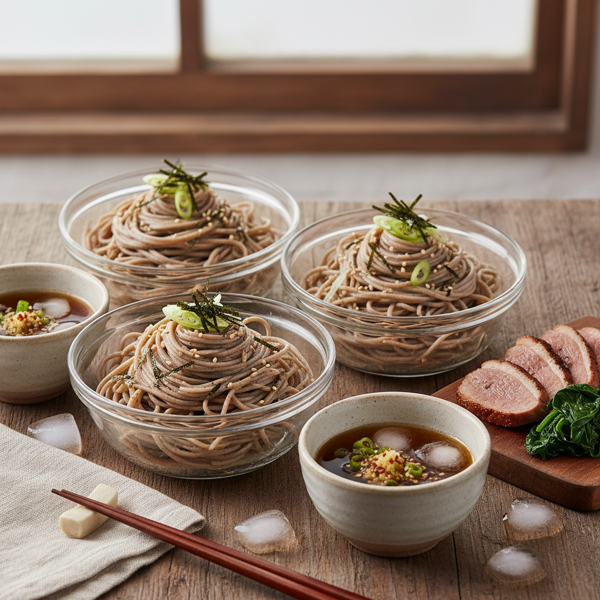
Experience the refreshing taste of Chilled Buckwheat Soba Noodles, a traditional Japanese summer dish perfect for warm days. Made from nutritious buckwheat, these noodles have a unique nutty flavor and a pleasing texture. Accompanied by a savory dipping sauce blended with soy sauce and mirin, this dish is garnished with fresh grated ginger, thinly sliced leeks, and crispy nori strips. A touch of wasabi adds an optional kick, making this a balanced and delightful one-dish meal that's not only delicious but also quick to prepare. Ideal for outdoor gatherings or a light lunch, this soba noodle dish will transport you to Japan with every bite.
N/A
Servings
N/A
Calories
8
Ingredients
Ingredients
sobanoodles
1 lb (Cooked according to package instructions)
water
2 1/2 cups (For boiling and making the dipping sauce)
Japanese soy sauce (shoyu)
1/2 cup (Used in dipping sauce)
mirin
1/2 cup (Used in dipping sauce)
ginger
4 teaspoons (Grated)
leeks
4 teaspoons (Sliced thinly)
nori
4 teaspoons (Cut into strips)
wasabi
to taste (Provided on the side for serving)
Instructions
1
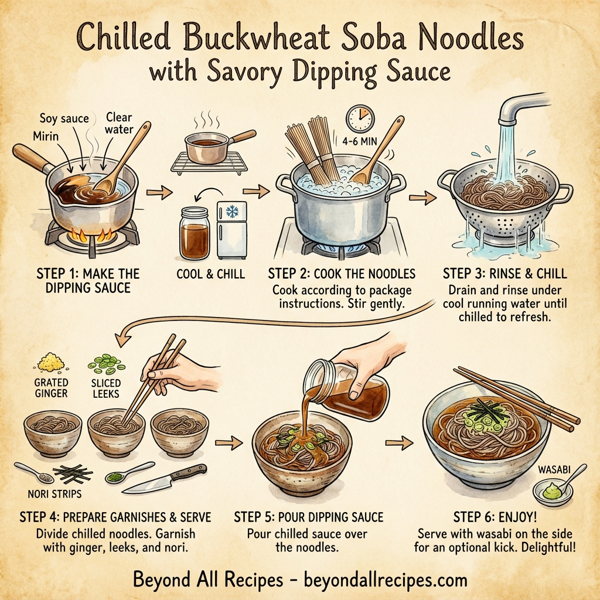
In a small pot, combine 2 1/2 cups of water, soy sauce, and mirin. Bring to a boil, then remove from heat and allow to cool. Once cooled, transfer the sauce to the refrigerator to chill.
2
Bring a large pot of water to a boil. Add the soba noodles and cook according to the package instructions, usually around 4-6 minutes. Stir gently to prevent sticking.
3
Once cooked, drain the soba noodles and rinse them under cool running water until chilled. This helps to stop the cooking process and refreshes the noodles.
4
To serve, divide the chilled soba noodles into individual bowls. Garnish each bowl with equal portions of grated ginger, sliced leeks, and nori strips.
5
Pour the chilled dipping sauce over the noodles in each bowl, allowing it to complement the ingredients.
6
Serve with wasabi on the side for guests to add according to their taste preference.
Nutrition Information
Frequently Asked Questions
Frequently Asked Questions
What are Chilled Buckwheat Soba Noodles?
They are a traditional Japanese summer dish made from nutritious buckwheat noodles, served cold with a savory dipping sauce.
What gives the noodles their unique flavor?
The noodles have a distinct nutty flavor derived from the buckwheat flour used to make them.
How long should I cook the soba noodles?
Soba noodles should be cooked for approximately 4 to 6 minutes, or according to the specific instructions on the package.
What ingredients are in the dipping sauce?
The savory dipping sauce is made from a blend of water, Japanese soy sauce (shoyu), and mirin.
How do I prevent the noodles from sticking together?
Stir the noodles gently while they are boiling and rinse them under cool running water immediately after draining.
Why do you rinse the noodles under cool water?
Rinsing stops the cooking process, refreshes the noodles, and removes excess starch for a better texture.
Is this recipe suitable for vegetarians?
Yes, this recipe is vegetarian as it uses plant-based ingredients like buckwheat, soy sauce, and ginger.
What garnishes are used in this dish?
The dish is garnished with grated ginger, thinly sliced leeks, and crispy nori strips.
Is the dipping sauce served hot or cold?
The dipping sauce should be chilled in the refrigerator after boiling and served cold over the noodles.
How do I add spice to the dish?
You can serve wasabi on the side, allowing each person to add it according to their own taste preference.
How much ginger should I prepare?
The recipe calls for 4 teaspoons of grated ginger to be divided among the servings.
What is the role of mirin in the sauce?
Mirin is a sweet Japanese rice wine that balances the saltiness of the soy sauce in the dipping mixture.
Can I use regular onions instead of leeks?
While leeks provide a specific mild flavor, you could use green onions as a substitute if leeks are unavailable.
How should the nori be prepared?
The nori should be cut into thin, crispy strips before being used as a garnish.
Is this dish considered healthy?
Yes, buckwheat noodles are nutritious and the dish is low in fat, making it a healthy one-dish meal.
How many ingredients are required for this recipe?
There are 8 main ingredients: soba noodles, water, soy sauce, mirin, ginger, leeks, nori, and wasabi.
Can this be served at a party?
Yes, it is ideal for outdoor gatherings and summer parties because it is refreshing and quick to prepare.
What is the texture of soba noodles?
Soba noodles have a pleasing, slightly firm texture with a smooth finish when cooked and chilled properly.
How do I prepare the sauce?
Combine water, soy sauce, and mirin in a small pot, bring to a boil, then remove from heat and chill.
How much water is needed for the dipping sauce?
You will need 2 1/2 cups of water for the sauce base.
What type of soy sauce is recommended?
The recipe specifies Japanese soy sauce, also known as shoyu, for an authentic flavor.
Is this a quick meal to make?
Yes, the noodles only take a few minutes to cook and the garnishes are easy to prepare.
Should I pour the sauce over the noodles or dip them?
This recipe suggests pouring the chilled sauce over the noodles in individual bowls to complement the ingredients.
Can I store leftovers?
Yes, but it is best to store the noodles and sauce separately in the refrigerator to maintain the best texture.
What is the serving size for the noodles?
The recipe uses 1 lb of soba noodles, which typically serves about 4 people.
Does this dish contain any cholesterol?
Based on the ingredients listed, this vegetarian noodle dish is naturally free of cholesterol.
Can I add other toppings?
While the recipe lists specific garnishes, you can customize it with items like toasted sesame seeds or sliced cucumber.
Is wasabi required?
No, wasabi is optional and should be served on the side for those who enjoy its spicy kick.
How much mirin is used?
The recipe calls for 1/2 cup of mirin for the dipping sauce.
What makes this a 'one-dish meal'?
It is a complete, satisfying dish on its own, providing carbohydrates, flavor, and nutrients without needing side dishes.