Chickpea Flour Noodles: Gluten-Free Delight
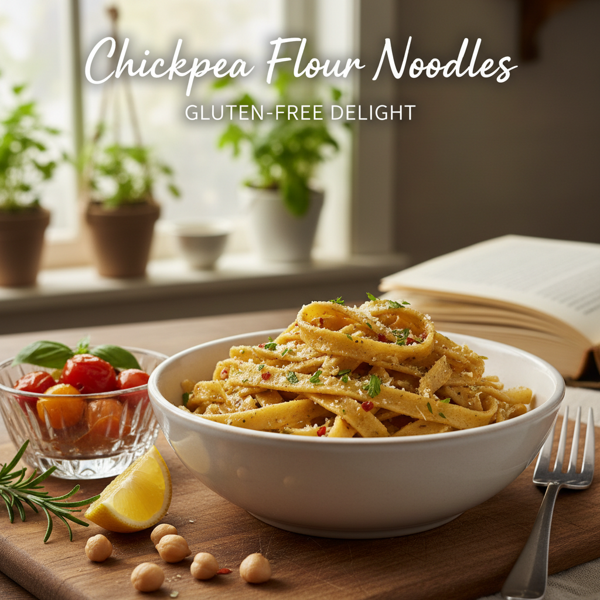
Indulge in the wholesome goodness of homemade gluten-free pasta with our Chickpea Flour Noodles. Crafted with protein-rich chickpea flour and a blend of tapioca or potato starch, this recipe is not only simple but also incredibly satisfying. With just seven ingredients, you can create delicate, flavorful noodles perfect for various sauces or dishes. Allow the dough to rest for optimal elasticity, and enjoy a nutritious meal that everyone can savor, no gluten required!
N/A
Servings
N/A
Calories
7
Ingredients
Ingredients
Chickpea Flour
300 g (plus extra for rolling)
Tapioca or Potato Starch
1/2 cup
Xanthan Gum
1 (1/3 ounce) package
Salt
1 1/2 teaspoons
Large Eggs
4 (about 6 ½ ounces)
Olive Oil
1 1/2 tablespoons
Water
1 tablespoon
Instructions
1
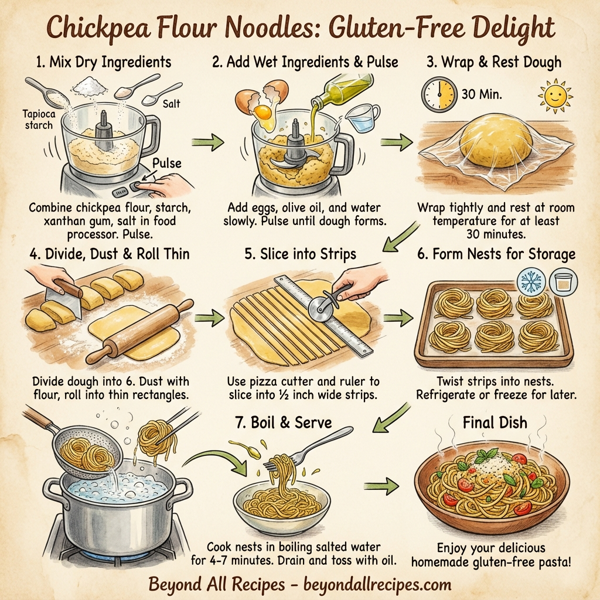
In a food processor, combine chickpea flour, tapioca starch (or potato starch), xanthan gum, and salt. Pulse to thoroughly mix the dry ingredients.
2
Add eggs, olive oil, and pulse until the mixture begins to come together in a sticky ball. If the mixture appears too dry, incorporate water slowly, pulsing until fully combined.
3
Wrap the formed dough tightly in plastic wrap and let it rest at room temperature for at least 30 minutes. This rest period enhances the dough's elasticity.
4
Once rested, divide the dough into 6 equal portions. Dust your work surface with additional chickpea flour to prevent sticking.
5
Using a rolling pin, gently roll each piece into a thin rectangle. Strive for a thickness that is as thin as possible without tearing the dough.
6
Use a pizza cutter and ruler to slice each rectangle into strips about ½ inch wide.
7
Twist the cut strips into nests and arrange them on a tray. These can be stored in the refrigerator or frozen for later use.
8
To cook the noodles, bring a large pot of salted water to a rolling boil. Add the nests of noodles and cook for 4-7 minutes if frozen. Drain and toss with a splash of olive oil to prevent sticking.
Nutrition Information
Frequently Asked Questions
Frequently Asked Questions
What are Chickpea Flour Noodles?
Chickpea Flour Noodles are a homemade, gluten-free pasta alternative made with protein-rich chickpea flour and starches.
Is this recipe gluten-free?
Yes, this recipe is specifically designed to be gluten-free, using chickpea flour and tapioca or potato starch.
What are the primary ingredients for these noodles?
The primary ingredients include chickpea flour, tapioca or potato starch, xanthan gum, salt, eggs, olive oil, and water.
Can I substitute tapioca starch?
Yes, you can use potato starch as a substitute for tapioca starch in this recipe.
What is the purpose of xanthan gum in this recipe?
Xanthan gum acts as a binder and helps provide the elasticity needed for the dough, which is usually provided by gluten in traditional pasta.
How long should the noodle dough rest?
The dough should rest tightly wrapped in plastic wrap at room temperature for at least 30 minutes.
Why does the dough need to rest?
Resting the dough is essential because it enhances the dough's elasticity, making it easier to roll and shape.
What equipment is recommended for mixing the dough?
A food processor is recommended to combine the dry and wet ingredients efficiently until a sticky ball forms.
How many eggs are required?
The recipe calls for 4 large eggs, which is approximately 6.5 ounces.
What should I do if the dough is too dry?
If the mixture appears too dry during the pulsing stage, incorporate water slowly until it fully combines into a sticky ball.
How do I prevent the dough from sticking to the counter?
You should dust your work surface with additional chickpea flour before rolling out the dough.
How thin should the dough be rolled?
You should strive to roll each piece of dough into a rectangle as thin as possible without tearing it.
What tools are used to cut the noodles?
The recipe suggests using a pizza cutter and a ruler to ensure even strips.
How wide should the noodle strips be?
The strips should be cut to approximately 1/2 inch in width.
How should the noodles be stored before cooking?
The cut strips should be twisted into nests and can be stored in the refrigerator or frozen for later use.
How long do frozen noodles take to cook?
If the noodles are frozen, they typically take between 4 and 7 minutes to cook in boiling water.
How do I prevent the cooked noodles from sticking together?
After draining the cooked noodles, toss them with a splash of olive oil to keep them from sticking.
Is this recipe considered vegan?
While it is tagged as vegan-friendly, the standard recipe contains eggs. A vegan alternative would require an egg substitute.
How many ingredients are in this recipe?
There are 7 total ingredients in this Chickpea Flour Noodles recipe.
What is the protein source in these noodles?
The protein comes primarily from the chickpea flour and the large eggs.
Can these noodles be used for meal prep?
Yes, because they can be frozen or refrigerated in nests, they are excellent for meal preparation.
Is this recipe suitable for lunch?
Yes, it is tagged as a lunch-appropriate dish and can be served with various sauces.
How much chickpea flour is needed?
You will need 300 grams of chickpea flour, plus extra for the rolling process.
How much salt is used in the dough?
The recipe uses 1 1/2 teaspoons of salt.
What amount of olive oil is required?
The dough requires 1 1/2 tablespoons of olive oil.
How many portions should the dough be divided into?
After the rest period, the dough should be divided into 6 equal portions for easier rolling.
Is the boiling water salted?
Yes, the noodles should be cooked in a large pot of salted water brought to a rolling boil.
Can these noodles be eaten as a snack?
Yes, the recipe tags suggest these noodles can be served as a snack or as a main meal.
What is the texture of the noodles described as?
The noodles are described as delicate and flavorful.
What is the best way to handle the dough if it is sticky?
The dough is naturally a bit sticky, so using plastic wrap during resting and extra flour during rolling is recommended.