Chiang Mai Chicken Curry Noodle Soup
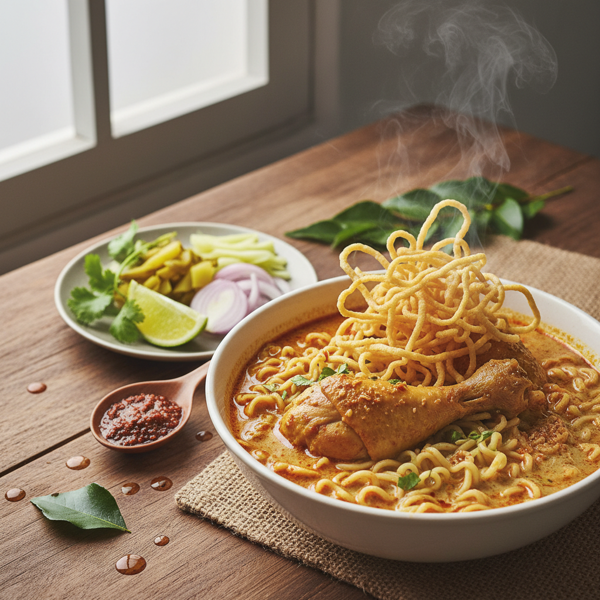
Originating from the culinary traditions of the Haw Muslim traders, the Chiang Mai Chicken Curry Noodle Soup, known as Kao Soi Gai, brings the vibrant flavors of Northern Thailand to your table. This dish features succulent chicken, a rich coconut curry broth, and perfectly cooked egg noodles, creating a harmonious balance of textures and tastes. Inspired by the renowned chef David Thompson, this recipe preserves the authenticity of the original while offering a warming and comforting meal. The addition of crispy fried noodles as a garnish adds an exciting crunch. Perfect for sharing, this dish is often accompanied by lime wedges, pickled mustard greens, and fresh herbs to further elevate its flavor profile.
2
Servings
N/A
Calories
17
Ingredients
Ingredients
Dried long red chilies
3 (deseeded, soaked, and drained)
Red shallots
4 (unpeeled)
Garlic cloves
3 (unpeeled)
Fresh turmeric
1 tablespoon (peeled and chopped)
Fresh ginger
2 tablespoons (peeled and chopped)
Fresh coriander
2 sprigs (roots scraped and chopped)
Coriander seed
1 teaspoon (roasted and ground)
Salt
1 pinch (to taste)
Coconut cream
4 tablespoons
Chicken leg
1 (quartered (100 grams or 3 ounces))
Palm sugar
1 tablespoon
Light soy sauce
2 tablespoons
Dark soy sauce
1 teaspoon
Stock or water
2 cups
Fresh egg noodles
75 g (about 1 handful)
Green onion
1 tablespoon (chopped)
Fresh coriander leaves
1 tablespoon (chopped)
Instructions
1
Preheat your oven to 200°C (390°F).
2
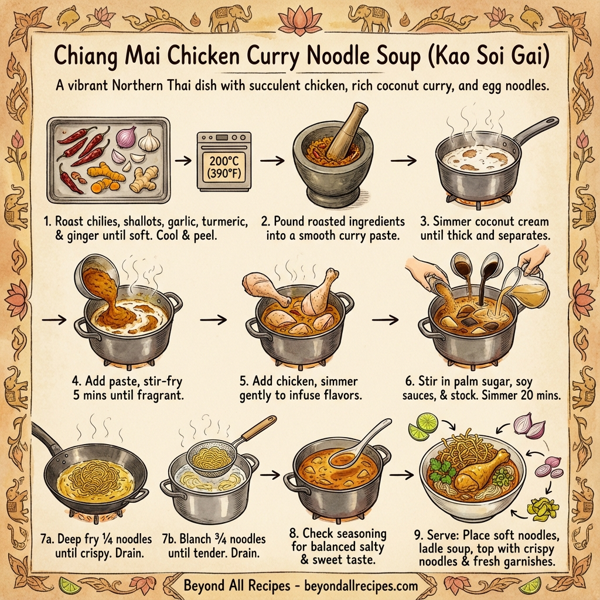
Prepare your curry paste by roasting the dried chilies, unpeeled shallots, unpeeled garlic, turmeric, and ginger on a baking tray until softened. Once cool enough to handle, peel the shallots and garlic. Then, using a mortar and pestle, pound these roasted ingredients until smooth.
3
In a saucepan, simmer the coconut cream over medium heat until it thickens and begins to separate, stirring frequently to prevent burning.
4
Add the prepared paste to the thickened coconut cream and stir-fry for about 5 minutes or until fragrant. Make sure to cook it well to develop the flavors.
5
Add the quartered chicken leg to the pot, reducing the heat and simmering gently for several minutes to infuse the chicken with the flavors.
6
Stir in the palm sugar and both soy sauces, followed by the stock (or water). Mix well and let the chicken simmer in the broth until fully cooked, approximately 20 minutes.
7
While the soup is simmering, prepare the egg noodles. Deep fry one-quarter of the noodles in hot oil until crispy, then drain on paper towels.
8
For the remaining noodles, blanch three-quarters in boiling water for a couple of minutes until they're tender, then drain.
9
Check the seasoning of your soup; it should have a balanced salty and slightly sweet profile thanks to the coconut cream.
10
To serve, place blanched noodles in a bowl, ladle over the aromatic curry soup, and finish with garnishes like chopped green onions and fresh coriander leaves.
11
Feel free to add slices of red shallots, lime wedges, and pickled mustard greens for extra flavor and texture.
Nutrition Information
Frequently Asked Questions
Frequently Asked Questions
What is Chiang Mai Chicken Curry Noodle Soup?
It is a traditional dish from Northern Thailand, known locally as Kao Soi Gai, featuring succulent chicken, a rich coconut curry broth, and egg noodles.
What is the origin of this dish?
This dish originates from the culinary traditions of the Haw Muslim traders in Northern Thailand.
Which chef inspired this specific recipe?
This recipe is inspired by the renowned chef David Thompson, preserving the authenticity of the original.
What are the primary ingredients for the curry paste?
The paste is made from dried long red chilies, red shallots, garlic, fresh turmeric, fresh ginger, coriander roots, and roasted coriander seeds.
How do I prepare the aromatics for the paste?
You should roast the dried chilies, unpeeled shallots, unpeeled garlic, turmeric, and ginger on a baking tray at 200°C (390°F) until softened.
Do I need to peel the shallots and garlic before roasting?
No, they should be roasted unpeeled and then peeled once they are cool enough to handle after roasting.
What is the best way to grind the curry paste?
A mortar and pestle is used to pound the roasted ingredients until they reach a smooth consistency.
How do I prepare the coconut cream for the curry?
Simmer the coconut cream over medium heat in a saucepan until it thickens and begins to separate into oil and cream.
How long should I cook the curry paste in the coconut cream?
Stir-fry the prepared paste in the thickened coconut cream for about 5 minutes or until it becomes fragrant.
What cut of chicken is used in this recipe?
The recipe calls for one chicken leg, quartered, which is approximately 100 grams or 3 ounces.
What provides the sweetness in the broth?
Palm sugar is used to provide the balanced sweetness characteristic of this Northern Thai dish.
Which types of soy sauce are required?
The recipe uses both light soy sauce for saltiness and dark soy sauce for depth of color and flavor.
Can I use water instead of stock for the soup?
Yes, you can use either 2 cups of stock or 2 cups of water for the liquid base of the soup.
How long should the chicken simmer in the curry broth?
The chicken should simmer in the broth for approximately 20 minutes until it is fully cooked and tender.
How are the egg noodles prepared for this dish?
The noodles are divided: one-quarter are deep-fried until crispy, and the remaining three-quarters are blanched in boiling water.
How long do I blanch the egg noodles?
Blanch the noodles in boiling water for a couple of minutes until they are tender, then drain them.
What is the purpose of the fried noodles?
The deep-fried noodles are used as a garnish to add an exciting crunch and texture to the soup.
What should the final flavor profile of the soup be?
The seasoning should result in a balanced profile that is salty and slightly sweet from the coconut cream.
What garnishes are recommended for serving?
Garnish with chopped green onions, fresh coriander leaves, and the crispy fried noodles.
What additional sides can be served with Kao Soi Gai?
It is often accompanied by lime wedges, pickled mustard greens, and slices of red shallots for extra flavor and texture.
How many servings does this recipe make?
This specific recipe is designed to serve 2 people.
How do I prepare the dried red chilies?
The 3 dried long red chilies should be deseeded, soaked in water, and then drained before roasting.
What is the role of turmeric and ginger in the paste?
They provide the vibrant color and warming aromatic base essential to the Northern Thai curry flavor.
How do I handle the coriander roots?
The roots should be scraped and chopped before being added to the mortar and pestle for the paste.
What temperature should the oil be for frying the noodles?
The oil should be hot enough to instantly puff and crisp the noodles; once golden, drain them on paper towels.
Why is it important to stir the coconut cream frequently?
Frequent stirring prevents the cream from burning while it is thickening and separating over medium heat.
Can I use a food processor for the paste instead of a mortar and pestle?
While a food processor is faster, the traditional mortar and pestle method better releases the oils and flavors of the roasted aromatics.
What color should the roasted aromatics be?
They should be roasted until they are softened, which helps develop a deep, smoky sweetness.
Is the salt added to the paste or the broth?
A pinch of salt is typically added during the pounding of the paste to help grind the ingredients and provide initial seasoning.
What is the final step before serving the soup?
Check the seasoning to ensure a perfect balance of salty and sweet before ladling the aromatic broth over the blanched noodles.