Cheesy Pull-Apart Buns with Parmesan Crust
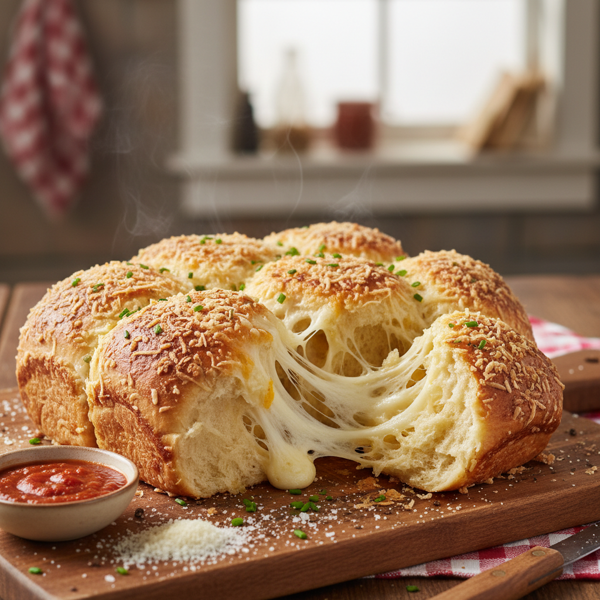
Indulge in the delightful flavors of these Cheesy Pull-Apart Buns, perfect for sharing at gatherings or enjoying during family dinners. These soft, fluffy buns are infused with sharp cheddar cheese and enveloped in a crispy Parmesan crust, making them a scrumptious addition to any meal. Their irresistible pull-apart texture allows for easy serving and sharing, ensuring everyone gets a cheesy bite. Baked to perfection, these buns are best enjoyed warm, but they can also be savored at room temperature. Experience the joy of homemade bread with this easy-to-follow recipe that yields 40 delicious servings!
40
Servings
80
Calories
10
Ingredients
Ingredients
flour
6 cups (all-purpose, divided)
active dry yeast
1/4 teaspoon (one packet)
granulated sugar
1 tablespoon (for activating yeast)
salt
2 teaspoons
sharp cheddar cheese
1 1/2 cups (shredded)
milk
1 cup (warm)
warm water
1 cup (to activate yeast)
olive oil
3 tablespoons
butter
1/3 cup (melted)
parmesan cheese
1 cup (grated)
Instructions
1
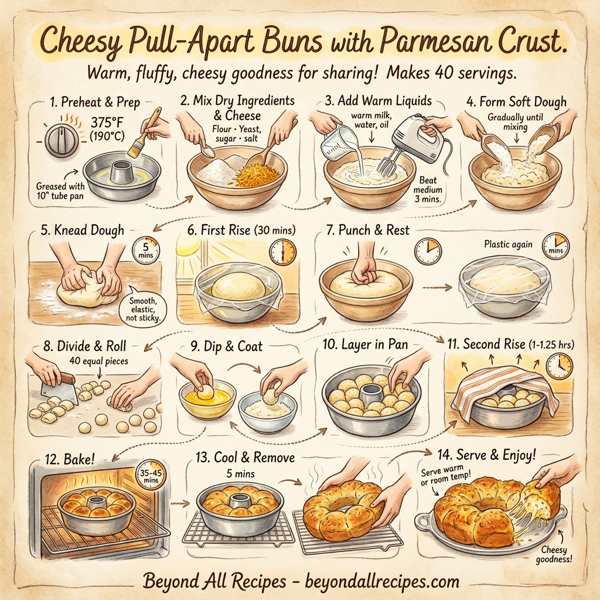
Preheat the oven to 375°F (190°C) and grease a 10-inch tube pan.
2
In a large mixing bowl, combine 3 cups of flour, active dry yeast, granulated sugar, and salt. Mix thoroughly, then fold in the shredded cheddar cheese.
3
Add the warm milk, warm water, and olive oil to the mixture. Beat on medium speed for about 3 minutes until well combined.
4
Gradually incorporate the remaining flour, mixing until a soft dough forms.
5
Turn the dough onto a lightly floured surface, kneading it for about 5 minutes until it becomes smooth, elastic, and not sticky.
6
Transfer the dough to a greased bowl, turning it over to coat the top with oil. Cover with plastic wrap and let it rise in a warm place for 30 minutes.
7
Once risen, punch down the dough, cover it again, and let it rest for an additional 10 minutes.
8
Divide the dough into 40 equal pieces. Roll each piece into a ball.
9
Dip each ball in the melted butter and then roll it in grated Parmesan cheese to coat.
10
Layer the coated balls in the greased tube pan, arranging them in two layers.
11
Cover the pan with a tea towel and allow it to rise in a warm place until the dough balls nearly reach the top of the pan, approximately 1 to 1.25 hours.
12
Bake the buns on the lower rack of the preheated oven for 35-45 minutes, or until they appear firm and golden brown.
13
After baking, cool for 5 minutes before carefully removing the buns from the pan.
14
Serve warm or at room temperature and enjoy the cheesy goodness!
Nutrition Information
4.1g
Fat
10.5g
Carbs
2.5g
Protein
Frequently Asked Questions
Frequently Asked Questions
What are Cheesy Pull-Apart Buns with Parmesan Crust?
These are soft, fluffy yeast buns infused with sharp cheddar cheese and coated in a crispy Parmesan crust, designed to be easily pulled apart and shared.
How many servings does this recipe provide?
This recipe yields approximately 40 delicious servings, making it ideal for large gatherings.
What type of cheese is inside the dough?
The dough is mixed with one and a half cups of shredded sharp cheddar cheese for a rich flavor.
What creates the crust on these buns?
Each dough ball is dipped in melted butter and then rolled in one cup of grated Parmesan cheese to create a savory, crispy exterior.
What is the calorie count per bun?
Each serving contains approximately 80 calories.
What temperature should the oven be set to?
The oven should be preheated to 375°F (190°C) before baking.
What kind of pan is best for this recipe?
A 10-inch tube pan is recommended and should be greased before use.
How long do I need to knead the dough?
You should knead the dough on a lightly floured surface for about 5 minutes until it is smooth, elastic, and no longer sticky.
How many rise cycles are required for this bread?
The recipe requires two main rise periods: an initial 30-minute rise for the dough ball, and a final 1 to 1.25-hour rise once the buns are shaped and placed in the pan.
How long do the buns take to bake?
The buns typically bake for 35-45 minutes on the lower rack of the oven until firm and golden brown.
Should I serve these buns warm?
Yes, they are best enjoyed warm but can also be served at room temperature.
What ingredients are used for the dough's liquid base?
The recipe uses 1 cup of warm milk, 1 cup of warm water, and 3 tablespoons of olive oil.
How much flour is needed in total?
The recipe calls for 6 cups of all-purpose flour, added in stages to reach the correct consistency.
How many dough balls should I make?
The dough should be divided into 40 equal pieces and rolled into balls.
How do I arrange the balls in the pan?
The buttered and cheesed dough balls should be layered in two layers inside the greased tube pan.
What is the protein content per serving?
Each bun provides about 2.5 grams of protein.
How long should the buns cool before removal from the pan?
Let the buns cool in the pan for 5 minutes before carefully removing them.
What type of yeast is required?
The recipe specifies using active dry yeast.
Can I substitute the cheddar cheese?
While the recipe calls for sharp cheddar, you could use other semi-hard cheeses like Monterey Jack or Gouda, though it will change the flavor profile.
Why do I need to punch down the dough?
Punching down the dough releases air bubbles and helps redistribute the yeast for a better second rise.
What is the fat content per bun?
Each serving contains 4.1 grams of fat.
Are there any carbohydrates in these buns?
Yes, there are 10.5 grams of carbohydrates per serving.
What is the role of sugar in this recipe?
One tablespoon of granulated sugar is used to help activate the yeast.
Do I need a special tool to mix the dough?
A large mixing bowl and a standard mixer can be used for the initial beating, but the dough is finished by hand kneading.
Can I use olive oil instead of butter for the coating?
The recipe calls for 1/3 cup of melted butter for dipping to help the Parmesan stick and add flavor, but oil could be a substitute if needed.
How do I know the dough has risen enough in the pan?
The dough balls should rise until they nearly reach the top of the tube pan.
Is this recipe categorized as a quick bread?
No, this is categorized as a Yeast Bread due to the use of yeast and multiple rise times.
What happens if I don't grease the pan?
If the pan isn't greased, the cheese and dough may stick to the sides, making it difficult to remove the pull-apart buns without breaking them.
Can these be made as individual rolls?
While designed for a tube pan, you could bake them in separate tins, but the baking time and 'pull-apart' texture would be different.
What should the dough feel like after kneading?
After about 5 minutes of kneading, the dough should feel smooth, elastic, and should no longer be sticky to the touch.