Cheddar Explosion Bread
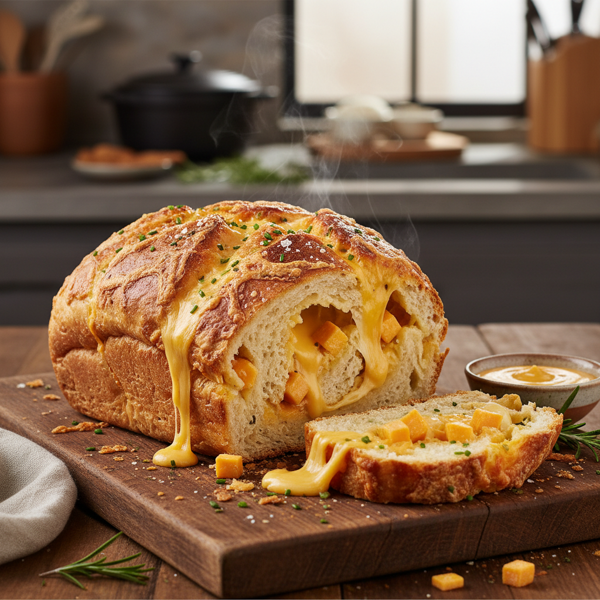
Indulge in the irresistible delight of Cheddar Explosion Bread, a highly versatile loaf that transforms any meal into a gourmet experience! This bread features the perfect medley of shredded and cubed cheddar cheese, artfully embedded in a soft, fluffy dough that rises to a mouth-watering finish. Enjoy it as a warm side to your favorite soup, such as creamy potato or clam chowder, or toast it to create gourmet ham sandwiches with gooey cheese baked right into the bread. Inspired by Marcy Goldman's *Passion For Baking*, this recipe promises to be a family favorite that will have everyone racing for the pan! Perfect for gatherings or everyday meals, this cheesy bread is sure to impress and satisfy. Remember, the preparation includes two critical rises, so plan accordingly!
12
Servings
240
Calories
13
Ingredients
Ingredients
warm water
1 1/2 cups (Warm to approximately 110°F (43°C))
yeast
2 tablespoons (Active dry yeast)
sugar
1/4 cup (Granulated sugar)
salt
2 1/2 teaspoons (Kosher salt)
dry mustard
1 1/2 teaspoons (Dry mustard powder)
eggs
2 (Large eggs, beaten)
oil
1/4 cup (Vegetable oil)
butter
2 tablespoons (Softened, unsalted butter)
flour
5 cups (All-purpose flour, with additional for dusting)
shredded cheddar cheese
2 cups (Shredded, for filling)
cubed cheddar cheese
2 cups (Cubed, for topping)
olive oil
2 tablespoons (Extra virgin olive oil or melted butter)
seasoning salt
1 teaspoon (Seasoned salt (such as 'Spike'))
Instructions
1
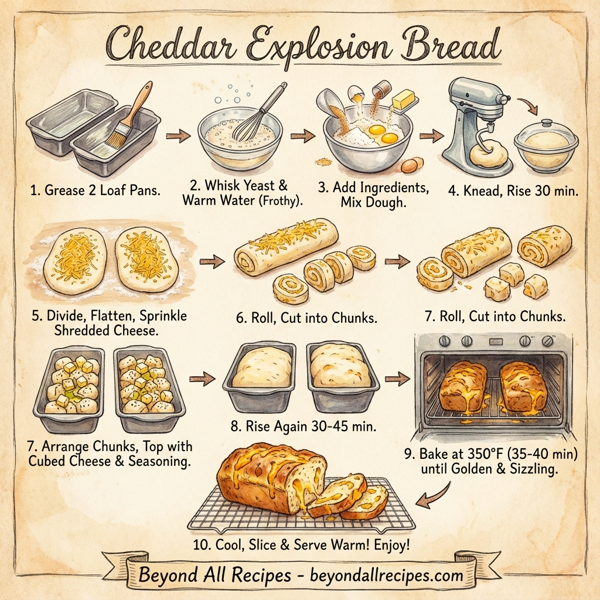
Generously grease two loaf pans and set aside.
2
In a mixing bowl, whisk together the warm water and yeast. Allow it to rest for 2-3 minutes until frothy.
3
Add in the sugar, salt, dry mustard, beaten eggs, oil, and softened butter. Stir to combine, then gradually mix in half of the flour.
4
Using a dough hook, knead the mixture on LOW speed for 5-8 minutes, adding more flour as needed to achieve a soft, elastic dough. Once ready, form it into a ball, spritz with oil spray, and cover loosely with plastic wrap. Let it rise for about 30 minutes in a warm location until doubled in size.
5
Gently punch the risen dough down and transfer it to a lightly floured work surface.
6
Divide the dough into two equal pieces. Press each piece into an oval shape and evenly sprinkle 1 cup of shredded cheddar cheese over each oval. Press the cheese into the dough, then roll each oval tightly from one end to the other to form a log or jelly roll shape.
7
Cut each log into thick slices, then slice the thick pieces in half, creating various chunk shapes.
8
Arrange the dough chunks in the prepared loaf pans. Scatter the cubed cheddar cheese generously over the arranged dough. Drizzle with olive oil or melted butter and sprinkle evenly with seasoning salt.
9
Cover the pans with plastic wrap and allow the dough to rise in a warm spot for another 30-45 minutes until puffy and nearly doubled.
10
Preheat your oven to 350°F (175°C). Bake the loaves for 35-40 minutes, or until they are golden brown and sizzling, with melted cheese visibly oozing.
11
Allow the bread to cool in the pans for 10 minutes before removing to a wire rack to cool slightly. Slice and serve warm.
Nutrition Information
10g
Fat
33g
Carbs
7g
Protein
Frequently Asked Questions
Frequently Asked Questions
What is Cheddar Explosion Bread?
Cheddar Explosion Bread is a versatile and flavorful loaf featuring a soft, fluffy dough filled with shredded cheddar and topped with cubed cheddar cheese.
How many rises are required for this bread recipe?
This recipe requires two critical rises: a first rise of about 30 minutes and a second rise of 30 to 45 minutes.
What should be the temperature of the water for the yeast?
The water should be warm, approximately 110 degrees Fahrenheit (43 degrees Celsius), to properly activate the yeast.
How long should I let the yeast rest in the water?
Allow the yeast to rest in the warm water for 2 to 3 minutes until it becomes frothy.
What types of cheddar are used in this recipe?
The recipe uses both shredded cheddar cheese for the internal filling and cubed cheddar cheese for the topping.
Can I use a different type of cheese for this bread?
Yes, while cheddar is recommended, you can experiment with other melting cheeses like Monterey Jack or Pepper Jack.
What is the purpose of adding dry mustard to the dough?
Dry mustard powder adds a subtle tang and enhances the savory notes of the cheddar cheese.
How long should I knead the dough?
Using a dough hook on low speed, knead the dough for 5 to 8 minutes until it becomes soft and elastic.
How do I know when the first rise is complete?
The first rise is complete when the dough has doubled in size, which usually takes about 30 minutes in a warm location.
How long is the second rise?
The second rise takes about 30 to 45 minutes until the dough chunks in the pan are puffy and nearly doubled.
How do I incorporate the shredded cheese into the dough?
Press the dough into an oval, sprinkle the shredded cheese over it, and then roll it tightly into a log shape.
Why is the dough log cut into chunks?
Cutting the log into chunks and arranging them in the pan allows the cheese to melt and ooze between the pieces for a better texture.
What toppings are applied before baking?
Before baking, top the dough with cubed cheddar cheese, a drizzle of olive oil or melted butter, and a sprinkle of seasoning salt.
At what temperature should the oven be preheated?
The oven should be preheated to 350 degrees Fahrenheit (175 degrees Celsius).
How long does the bread need to bake?
The loaves should bake for 35 to 40 minutes.
How can I tell if the Cheddar Explosion Bread is done?
The bread is ready when the crust is golden brown and sizzling, and the cheese is visibly melted and oozing.
How many loaves does this recipe produce?
This recipe makes two loaves of cheesy bread.
What are some good food pairings for this bread?
It pairs perfectly with creamy potato soup or clam chowder and is ideal for making gourmet ham sandwiches.
How many servings does this recipe provide?
This recipe provides approximately 12 servings.
What is the calorie count per serving?
There are approximately 240 calories per serving.
Is this bread suitable for making sandwiches?
Yes, it is excellent for toasted sandwiches, especially with ham and extra cheese.
Can I use a bread machine for this recipe?
You can use a bread machine for the mixing, kneading, and first rise steps before shaping the dough manually.
What kind of flour is best for this recipe?
All-purpose flour is recommended for this bread recipe.
Why should I let the bread cool in the pan for 10 minutes?
Letting it cool in the pan for 10 minutes helps the melted cheese set slightly, making it easier to remove the loaf without it falling apart.
What type of salt should be used in the dough?
Kosher salt is recommended for the dough mixture.
Which seasoning salt is recommended for the topping?
The recipe suggests using a seasoning salt like 'Spike' for the best flavor on the crust.
Who is the inspiration behind this recipe?
This recipe is inspired by Marcy Goldman's book, 'Passion For Baking'.
What is the fat content per serving?
Each serving contains approximately 10 grams of fat.
Can I use butter instead of olive oil for the drizzle?
Yes, you can use either melted butter or extra virgin olive oil to drizzle over the dough before baking.
How should the dough feel after the first rise?
The dough should be soft, airy, and easy to punch down after it has doubled in size.