Chagossian Coconut Rice Pudding
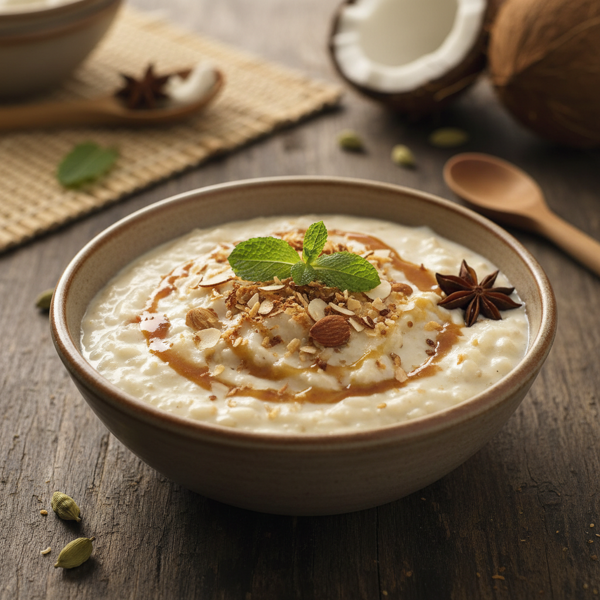
Discover the flavors of the British Indian Ocean Territory with this delectable Chagossian Coconut Rice Pudding, known locally as mouf. This delightful dessert combines the nutty richness of coconut with the simple, comforting texture of rice, creating a dish that's both satisfying and inviting. Featured in week 36 of my food blog, 'Travel by Stove,' this dish celebrates the unique culinary traditions of the Chagos Archipelago. Creamy and mildly sweet, this pudding is perfect for serving after a savory meal or as a treat at any time of the day. For an extra touch, drizzle with honey before serving to enhance the sweetness and bring in layers of flavor. Enjoy a taste of paradise with each bite!
N/A
Servings
150
Calories
5
Ingredients
Ingredients
White Rice
2 cups (Rinsed and soaked for 30 minutes)
Water
To cover rice for soaking (Fresh and clean)
Coconut Milk
1 cup (Full-fat for creaminess)
Sugar
1/2 cup (Granulated)
Banana Leaves
2 large square pieces (For wrapping)
Instructions
1
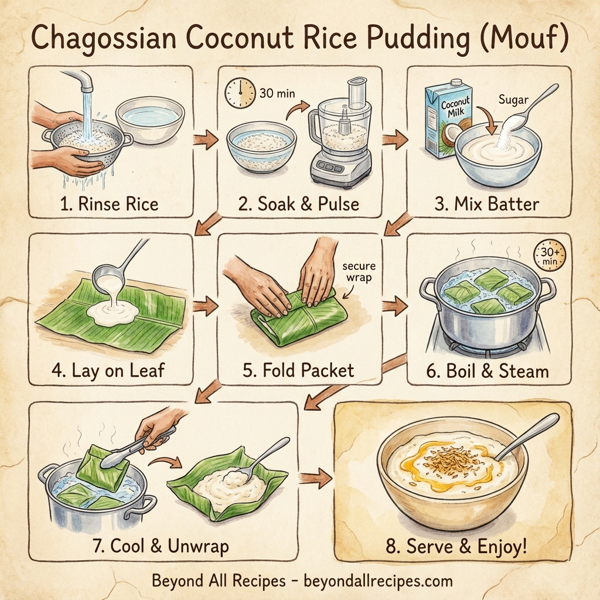
Begin by rinsing the white rice thoroughly under cold water until the water runs clear. This removes excess starch and ensures a better texture.
2
Soak the washed rice in fresh water for 30 minutes to soften it. After soaking, drain the water and place the rice in a food processor.
3
Pulse the rice in the food processor until it resembles small grains or beads (but do not over-process into a flour).
4
In a large bowl, combine the pulsed rice with the coconut milk and sugar. Mix well until the ingredients form a smooth batter.
5
On a clean surface, lay out the banana leaves flat. Pour an even layer of the batter onto the center of each leaf.
6
Fold the banana leaves over to wrap the batter securely, creating a neat packet. Ensure there are no openings for water to enter.
7
In a large pot, bring water to a rolling boil. Carefully submerge the wrapped packets into the boiling water, ensuring they are fully covered.
8
Steam the packets for about 30 minutes. After this time, check the consistency – the pudding should be soft. If the rice still feels crunchy, simmer for another 15 minutes until fully cooked.
9
Once done, carefully remove the packets from the boiling water. Allow to cool for a few minutes before unwrapping.
10
Serve the Chagossian Coconut Rice Pudding warm or at room temperature, drizzled with honey if desired.
Nutrition Information
4g
Fat
25g
Carbs
2g
Protein
7g
Sugar
Frequently Asked Questions
Frequently Asked Questions
What is Chagossian Coconut Rice Pudding?
Chagossian Coconut Rice Pudding, locally known as mouf, is a traditional dessert from the British Indian Ocean Territory that combines rice and coconut milk.
What is another name for this dish?
The dish is locally referred to as mouf.
Where does this recipe originate?
This recipe originates from the Chagos Archipelago in the British Indian Ocean Territory.
What are the main ingredients?
The main ingredients are white rice, water, coconut milk, sugar, and banana leaves.
How should the rice be prepared initially?
The white rice should be rinsed thoroughly under cold water until the water runs clear to remove excess starch.
How long should the rice be soaked?
The rice should be soaked in fresh water for 30 minutes to soften it before processing.
How do you process the rice after soaking?
The rice should be pulsed in a food processor until it resembles small grains or beads, but it should not be turned into flour.
What type of coconut milk is recommended?
Full-fat coconut milk is recommended to provide a creamy and rich texture.
How is the batter formed?
The pulsed rice is combined with coconut milk and sugar in a large bowl and mixed until smooth.
How are the banana leaves used?
Banana leaves are used to wrap the batter into secure packets before the cooking process.
How do you cook the pudding packets?
The wrapped packets are submerged in a pot of boiling water and steamed.
How long does the steaming process take?
The pudding is typically steamed for about 30 minutes, or until the rice is soft.
What should I do if the rice is still crunchy after 30 minutes?
If the rice is still crunchy, you should simmer the packets for an additional 15 minutes.
How should the pudding be served?
It can be served warm or at room temperature, often drizzled with honey.
What is the calorie count per serving?
Each serving contains approximately 150 calories.
How much fat is in this rice pudding?
There are 4g of fat per serving.
What is the carbohydrate content?
The dish contains 25g of carbohydrates per serving.
How much sugar is in the recipe?
There are 7g of sugar in each serving.
Does this dish contain protein?
Yes, each serving provides 2g of protein.
Is this recipe part of a specific blog series?
Yes, it was featured in week 36 of the 'Travel by Stove' food blog.
What is the flavor profile of this dessert?
It is creamy and mildly sweet with a nutty richness from the coconut milk.
Are there any specific serving suggestions for extra flavor?
Drizzling the pudding with honey before serving can enhance the sweetness and add layers of flavor.
Can you use rice flour instead of pulsed rice?
The recipe specifies pulsing whole rice into beads to achieve a specific texture rather than using flour.
What is the significance of using banana leaves?
Banana leaves are used traditionally for wrapping and steaming, which protects the batter while cooking.
Is this a traditional Chagossian dish?
Yes, it celebrates the unique culinary traditions of the Chagos Archipelago.
What kind of sugar should be used?
Granulated sugar is typically used for this recipe.
How many ingredients are required in total?
The recipe requires 5 ingredients: white rice, water, coconut milk, sugar, and banana leaves.
What is the texture of the finished pudding?
The finished pudding has a soft, comforting texture that is creamy yet holds the shape of the rice grains.
Should the pudding be cooled before unwrapping?
Yes, allow the packets to cool for a few minutes before unwrapping to ensure they are easy to handle.
Is this dish considered a healthy treat?
With 150 calories and 7g of sugar, it is a moderate dessert option featuring natural coconut fats.