Caribbean Beef and Pineapple Skewers
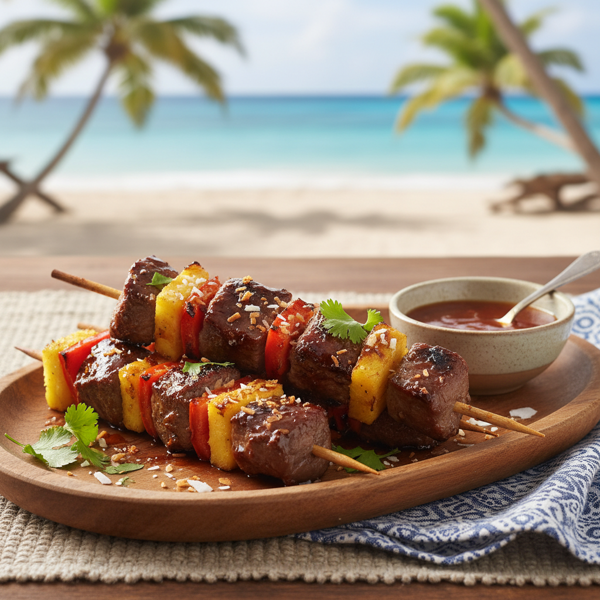
Savor the vibrant flavors of the Caribbean with these delectable Beef and Pineapple Skewers inspired by Anguillian cuisine. This recipe from my 'Travel by Stove' blog takes you on a culinary journey, combining tender beef marinated in a sweet and tangy mixture with fresh, juicy pineapple. Perfect for grilling during summer barbecues or as an exotic twist for indoor broiling, these kebabs are sure to impress your family and friends. Serve with a side of rice or a fresh salad for a complete meal that transports you to the picturesque beaches of Anguilla.
N/A
Servings
N/A
Calories
7
Ingredients
Ingredients
beef
2 lbs (cut into 1-inch chunks)
salt
1 tablespoon (to taste)
black pepper
to taste (freshly ground)
molasses
2 tablespoons (liquid)
pineapple juice
1/2 cup (fresh, or canned)
white wine vinegar
1/4 cup (liquid)
fresh pineapple
1/2 (cored and cubed)
Instructions
1
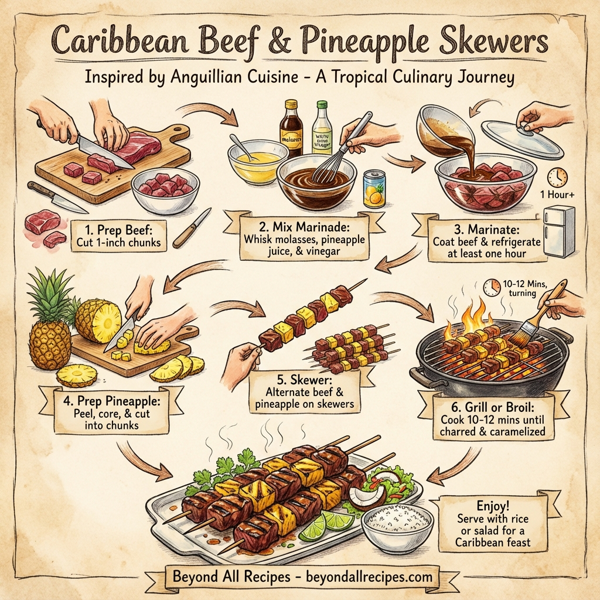
Start by cutting the beef into 1-inch chunks and placing them in a bowl.
2
In a separate bowl, whisk together the molasses, pineapple juice, and white wine vinegar until well combined to create a marinade.
3
Pour the marinade over the beef, ensuring all pieces are well-coated. Cover and refrigerate for at least one hour to allow the flavors to meld.
4
While the beef marinates, take a fresh pineapple, peel it, core it, and cut it into equal-sized chunks, approximately 1 inch.
5
After marinating, remove the beef from the refrigerator and skewer the beef and pineapple alternately onto your skewers, ensuring a good mix.
6
Preheat your grill to medium-high heat or set your broiler to high. If you have any remaining marinade, drizzle it over the skewers for added flavor.
7
Cook the skewers for about 10-12 minutes, turning occasionally until the beef is cooked to your preference and slightly charred, and the pineapple is caramelized and juicy.
8
Remove from heat, let rest for a few minutes, and serve with your favorite sides for a delightful Caribbean feast.
Nutrition Information
Frequently Asked Questions
Frequently Asked Questions
What are Caribbean Beef and Pineapple Skewers?
They are a vibrant and flavorful dish inspired by Anguillian cuisine, featuring tender beef marinated in a sweet and tangy sauce paired with fresh pineapple chunks.
How should I cut the beef for this recipe?
The beef should be cut into 1-inch chunks to ensure even cooking and a perfect fit on the skewers.
What ingredients are in the marinade?
The marinade consists of molasses, pineapple juice, and white wine vinegar whisked together.
How long does the beef need to marinate?
For the best results, you should refrigerate the marinated beef for at least one hour to allow the flavors to meld.
What type of pineapple is best for these skewers?
Fresh pineapple is recommended. You should peel, core, and cut it into 1-inch chunks.
What is the recommended cooking time for the skewers?
The skewers should be cooked for approximately 10 to 12 minutes, turning occasionally.
Can I cook these skewers indoors?
Yes, you can cook them under a broiler on high heat if you do not have access to an outdoor grill.
What temperature should the grill be?
Preheat your grill to medium-high heat for the best searing and caramelization.
Should I use the leftover marinade?
Yes, you can drizzle any remaining marinade over the skewers before cooking for added flavor.
What is the flavor profile of this dish?
The dish offers a balance of sweet and tangy notes from the molasses and pineapple juice, complemented by the savory beef.
How do I know when the skewers are done?
The beef should be cooked to your preference and slightly charred, while the pineapple should be caramelized and juicy.
Should I let the beef rest after cooking?
Yes, it is recommended to let the skewers rest for a few minutes after removing them from the heat before serving.
What side dishes go well with these beef skewers?
They pair excellently with a side of rice or a fresh garden salad for a complete Caribbean meal.
Is this recipe considered healthy?
Yes, it uses fresh fruit and lean beef, making it a nutritious option for a BBQ or dinner.
How much beef does this recipe require?
This specific recipe calls for 2 lbs of beef.
Can I use canned pineapple juice?
Yes, you can use either fresh or canned pineapple juice for the marinade.
What type of vinegar is used?
White wine vinegar is used to provide the necessary acidity to the marinade.
What kind of molasses should I use?
The recipe suggests using 2 tablespoons of liquid molasses.
How should I season the beef?
In addition to the marinade, you can season with salt and freshly ground black pepper to taste.
What culture inspired this recipe?
This recipe is inspired by the culinary traditions of Anguilla in the Caribbean.
Can I prepare the beef and pineapple in advance?
Yes, the beef can marinate in advance, and the pineapple can be cubed earlier to save time during assembly.
How do I assemble the skewers?
Alternate pieces of marinated beef and pineapple chunks onto the skewers to ensure a good mix of flavors.
Is fresh pineapple better than canned?
Fresh pineapple is preferred for its texture and ability to caramelize properly on the grill compared to canned versions.
Can I make this for a large group?
Absolutely, this recipe is ideal for summer barbecues and can easily be scaled up by increasing the ingredients proportionally.
What does the molasses add to the recipe?
The molasses provides a deep, rich sweetness and helps the beef develop a beautiful charred exterior.
Does this recipe use a lot of salt?
It calls for 1 tablespoon of salt, but this is used for 2 lbs of beef and can be adjusted to taste.
What makes this recipe 'tropical'?
The combination of pineapple, molasses, and its Anguillian inspiration gives it its signature tropical flavor.
How many ingredients are in this recipe?
There are 7 main ingredients: beef, salt, pepper, molasses, pineapple juice, white wine vinegar, and fresh pineapple.
Can I use this recipe for meal prep?
Yes, these skewers store well and can be served later over rice or in salads.
Where can I find more recipes like this?
This recipe is part of the 'Travel by Stove' blog series which explores global cuisines.