Caramelized Sweet Plantains with Cinnamon
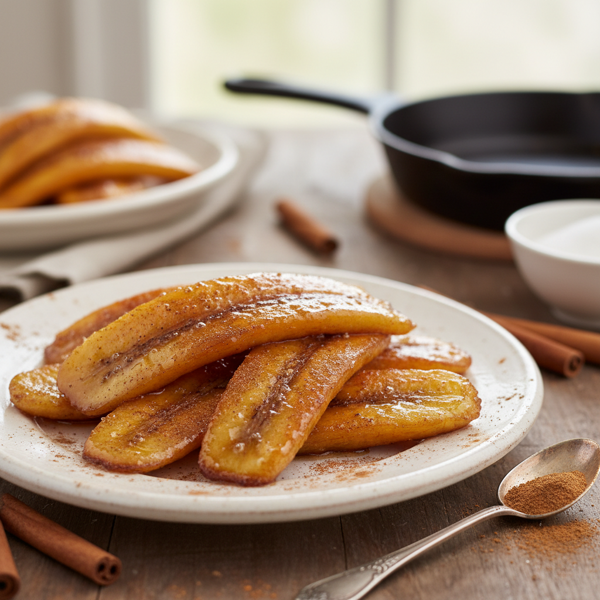
Indulge in the delightful flavors of Caramelized Sweet Plantains, a dish inspired by Tyler Florence's original recipe. These beautifully golden, tender plantains are simmered in a rich buttery sauce, enhanced with aromatic cinnamon and a hint of vanilla. Perfect as a stand-alone dessert or as a sweet side to savory Latin dishes such as Arroz Con Pollo, Lechon Asado, or Black Beans and Rice, this dish balances sweetness and savory notes beautifully. Treat yourself and your loved ones to this tropical delight that captures the spirit of Latin cuisine!
4
Servings
N/A
Calories
5
Ingredients
Ingredients
ripe black plantains
2-3 (peeled and split lengthwise)
unsalted butter
5 tablespoons, divided (divided for frying and finishing sauce)
ground cinnamon
1 teaspoon (for flavoring)
natural vanilla extract
1 teaspoon (to enhance sweetness)
brown sugar
2 tablespoons (to caramelize)
Instructions
1
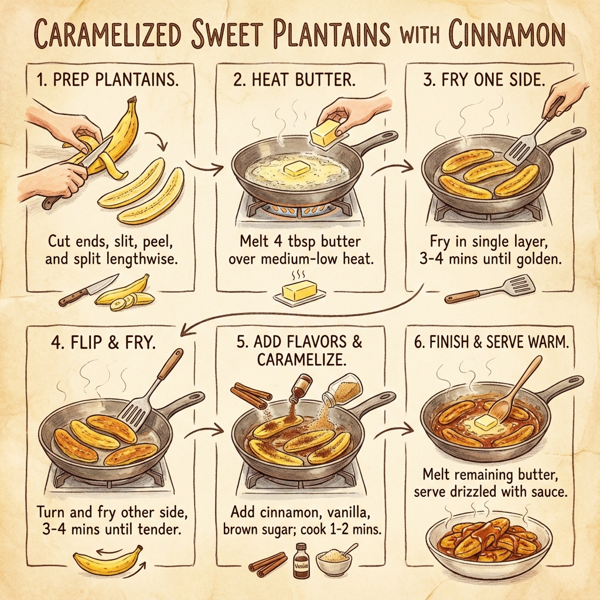
Start by preparing the plantains: cut off both ends and discard. With a paring knife, carefully make 3 shallow slits lengthwise along the seams of the skin, then peel away the skin. Split each plantain lengthwise into halves.
2
In a large skillet, heat 4 tablespoons of butter over medium-low heat. It's essential to maintain this low heat since plantains have a high sugar content and can burn easily.
3
Once the butter is melted and bubbling gently, add the plantains to the skillet in a single layer. Fry them for about 3 to 4 minutes or until they are golden brown on the bottom.
4
Using a spatula, carefully turn the plantains over to fry the other side, allowing another 3 to 4 minutes of cooking until they are golden and tender.
5
Add the ground cinnamon, vanilla extract, and brown sugar to the skillet, stirring gently to coat the plantains. Cook for an additional 1-2 minutes until the sugar begins to caramelize and coat the plantains.
6
Just before serving, melt the remaining tablespoon of butter in the skillet, stirring quickly to mix into the sauce. Serve the caramelized sweet plantains warm, drizzled with the buttery sauce.
Nutrition Information
Frequently Asked Questions
Frequently Asked Questions
What are Caramelized Sweet Plantains?
Caramelized Sweet Plantains are a tropical dish where ripe plantains are simmered in a buttery sauce with cinnamon, vanilla, and brown sugar until tender and golden.
How many plantains do I need for this recipe?
This recipe requires 2 to 3 ripe black plantains.
Why should I use black plantains instead of green ones?
Black plantains are much sweeter and softer than green ones, which is essential for achieving the right caramelized texture and flavor in this dessert or side dish.
What is the best way to peel a plantain?
Cut off both ends, make three shallow slits lengthwise along the seams of the skin with a paring knife, and then peel the skin away.
How should the plantains be cut before cooking?
After peeling, split each plantain lengthwise into halves.
How much butter is used in total?
A total of 5 tablespoons of unsalted butter is used, divided between the frying stage and the finishing sauce.
Why is it important to cook plantains on medium-low heat?
Plantains have a high sugar content and can burn very easily if the heat is too high.
How long do I fry the plantains on the first side?
Fry them for about 3 to 4 minutes or until the bottom is golden brown.
How do I know when to flip the plantains?
Flip them once the bottom side has reached a golden brown color and the fruit is starting to soften.
What spices are used for flavoring?
The recipe uses 1 teaspoon of ground cinnamon and 1 teaspoon of natural vanilla extract.
When do I add the brown sugar?
Add the brown sugar along with the cinnamon and vanilla after both sides of the plantains have been fried to a golden brown.
Can I use salted butter?
The recipe calls for unsalted butter to better control the salt levels, but you can use salted if you prefer a sweet-and-salty flavor profile.
How long does the caramelization process take?
After adding the sugar, cook for an additional 1-2 minutes until the sugar melts and coats the plantains.
What is the final step before serving?
The final step is to melt the remaining tablespoon of butter into the skillet to create a rich finishing sauce.
Is this recipe inspired by a specific chef?
Yes, this dish is inspired by a recipe from Tyler Florence.
How many servings does this recipe provide?
This recipe makes approximately 4 servings.
Can these plantains be served as a side dish?
Yes, they are excellent as a sweet side to savory Latin dishes like Arroz Con Pollo or Lechon Asado.
Are these plantains considered a dessert?
While they can be a side dish, their sweetness and caramelized sauce make them a perfect stand-alone dessert.
What savory pairings go well with this dish?
They pair beautifully with Black Beans and Rice, Lechon Asado (roasted pork), and Arroz Con Pollo (chicken and rice).
What type of sugar is best for this recipe?
Brown sugar is recommended because it provides a deep, molasses-like flavor that enhances the caramelization.
Should the plantains be firm or soft?
By the end of the cooking process, the plantains should be tender and soft throughout.
Can I add other spices?
While the recipe focuses on cinnamon and vanilla, you could experiment with a pinch of nutmeg or cloves for extra depth.
Is the vanilla extract necessary?
Vanilla extract is used to enhance the sweetness and provide a more aromatic flavor profile.
How many ingredients are in this recipe?
There are 5 main ingredients: plantains, butter, cinnamon, vanilla, and brown sugar.
What is the category of this recipe?
This recipe is categorized under Tropical Fruits.
Are plantains the same as bananas?
No, plantains are starchier and generally need to be cooked, whereas bananas are often eaten raw.
Should I use a specific type of skillet?
A large skillet is best to ensure the plantains can cook in a single layer for even browning.
How do I serve the sauce?
The buttery sauce from the skillet should be drizzled over the warm plantains just before serving.
Can I make this recipe in advance?
They are best served warm and fresh, but can be gently reheated if necessary.
What does 'divided' mean regarding the butter?
It means you use part of the butter (4 tablespoons) for the initial frying and the rest (1 tablespoon) to finish the sauce at the end.