Caramelized Oven-Roasted Butternut Squash with Dill
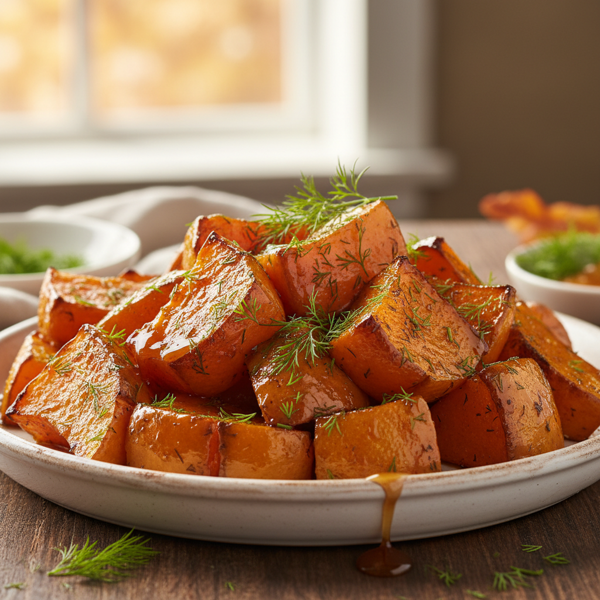
This delightful recipe for caramelized oven-roasted butternut squash is not only simple to prepare but also showcases the natural sweetness of this seasonal vegetable. As the squash roasts, the sugars will caramelize, creating a deliciously crunchy exterior that perfectly contrasts with the tender, creamy interior. The addition of aromatic dried dill adds a unique herbal note that enhances the dish's flavor profile, making it an ideal side dish for any meal or a healthy snack on its own.
4
Servings
52.5
Calories
3
Ingredients
Ingredients
Butternut Squash
1 (large, peeled and diced into 1/2 inch pieces)
Dried Dill Weed
3 (teaspoons)
Olive Oil
to taste (for drizzling)
Instructions
1
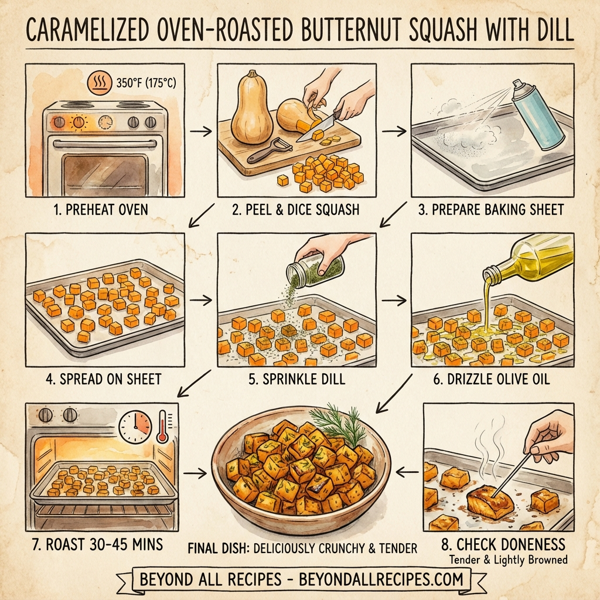
Preheat your oven to 350°F (175°C).
2
Carefully peel and dice the butternut squash into approximately 1/2 inch pieces. This size allows for even cooking and caramelization.
3
Prepare a large baking sheet by lightly spritzing it with non-stick cooking spray to prevent sticking.
4
Spread the diced butternut squash in a single layer on the prepared baking sheet for optimal roasting.
5
Evenly sprinkle the dried dill weed over the squash pieces, adjusting the amount according to your taste and the size of the squash.
6
Drizzle olive oil generously over the squash, ensuring all pieces are lightly coated for the best caramelization.
7
Place the baking sheet in the preheated oven and roast for 30 to 45 minutes. Check for doneness by skewering a piece of squash; it should be tender and lightly browned. Adjust the roasting time based on the size of your squash pieces.
Nutrition Information
2.5g
Fat
7.5g
Carbs
0.5g
Protein
1.5g
Fiber
1.25g
Sugar
Frequently Asked Questions
Frequently Asked Questions
What is the main vegetable in the Caramelized Oven-Roasted Butternut Squash with Dill recipe?
The main vegetable used in this recipe is a large butternut squash.
How many calories are in a single serving of this roasted squash?
There are 52.5 calories per serving.
Is this butternut squash recipe suitable for vegans?
Yes, this recipe is vegan-friendly.
Is the Caramelized Oven-Roasted Butternut Squash with Dill vegetarian?
Yes, this recipe is vegetarian.
What temperature should the oven be set to for roasting?
The oven should be preheated to 350°F (175°C).
How long does it take to roast the butternut squash?
The squash should be roasted for 30 to 45 minutes.
What size should the butternut squash be diced into?
The squash should be diced into approximately 1/2 inch pieces for even cooking.
What seasoning provides the herbal note in this dish?
Dried dill weed provides the unique aromatic herbal note.
How many ingredients are required for this recipe?
There are 3 primary ingredients: butternut squash, dried dill weed, and olive oil.
How many servings does this recipe yield?
This recipe yields 4 servings.
What oil is recommended for roasting the squash?
Olive oil is used to drizzle over the squash for optimal caramelization.
How do you prevent the squash from sticking to the baking sheet?
Lightly spritz the large baking sheet with non-stick cooking spray.
What is the expected texture of the roasted squash?
The dish features a crunchy caramelized exterior and a tender, creamy interior.
How much sugar is in one serving of this recipe?
There is 1.25g of sugar per serving.
What is the total fat content per serving?
Each serving contains 2.5g of fat.
How much protein does this side dish provide per serving?
There is 0.5g of protein per serving.
What is the fiber content of the roasted butternut squash?
Each serving contains 1.5g of fiber.
What are the total carbohydrates per serving?
There are 7.5g of carbohydrates per serving.
How do I check if the butternut squash is fully cooked?
Check for doneness by skewering a piece of squash; it should be tender and lightly browned.
Why should the squash be spread in a single layer on the pan?
Spreading the squash in a single layer ensures optimal roasting and even cooking.
What makes the exterior of the squash crunchy?
The natural sugars in the squash caramelize during the roasting process to create a crunchy exterior.
Can this dish be eaten as a snack?
Yes, it is described as an ideal side dish or a healthy snack on its own.
Is this recipe considered easy to prepare?
Yes, it is categorized as an easy recipe with simple preparation steps.
How much dried dill weed should I use?
The recipe suggests 3 teaspoons of dried dill weed, adjusted to taste.
Does the recipe require the squash to be peeled?
Yes, the instructions specify to carefully peel the squash before dicing.
What category does this recipe fall into?
It is categorized as a healthy side dish and comfort food.
Is there any cholesterol in this recipe?
The nutrition facts indicate that cholesterol is not present (null).
What tags are associated with this recipe?
Tags include butternut squash, roasted vegetables, healthy side dish, vegan, and vegetarian.
What is the sodium content per serving?
The sodium content for this recipe is not specified (null).
Can the roasting time vary?
Yes, roasting time may vary based on the exact size of your squash pieces.