Caramelized Honey Figs with Rich Sabayon Sauce
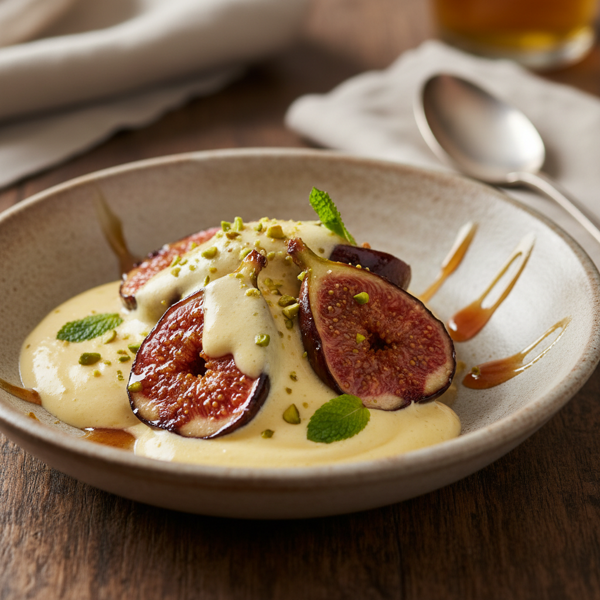
Indulge in a luxurious dessert that marries the natural sweetness of fresh figs with a luscious, creamy sabayon. This delightful dish features ripe figs broiled to perfection, caramelized with sticky honey, and enhanced by fragrant rosemary. The sabayon, made from whisked eggs and honey, adds a velvety richness that balances the figs' sweetness. Perfect for impressing guests or treating yourself, this dessert is not only delicious but also packed with fiber and iron, making it a health-conscious choice.
4
Servings
N/A
Calories
4
Ingredients

Ingredients
Fresh figs
8 (ripe, halved)
Honey
4 tablespoons (divided)
Fresh rosemary
2 sprigs (leaves finely chopped (optional))
Eggs
3 (large)
Instructions
Nutrition Information
Frequently Asked Questions
Frequently Asked Questions
What is Caramelized Honey Figs with Rich Sabayon Sauce?
It is a luxurious dessert featuring fresh, ripe figs broiled with honey and rosemary, served with a velvety sauce made from whisked eggs and honey.
What are the main ingredients in this fig dessert?
The main ingredients are 8 fresh figs, 4 tablespoons of honey, 2 sprigs of fresh rosemary, and 3 large eggs.
How many servings does this recipe yield?
This recipe is designed to serve 4 people.
Is this recipe suitable for a vegetarian diet?
Yes, this recipe is vegetarian-friendly as it contains only fruit, honey, herbs, and eggs.
Is Caramelized Honey Figs with Rich Sabayon Sauce gluten-free?
Yes, all the ingredients listed are naturally gluten-free.
What is a sabayon sauce?
A sabayon is a light, creamy, and velvety sauce traditionally made from whisked egg yolks and a sweetener, cooked gently to create a rich texture.
How should the figs be prepared for this recipe?
The figs should be ripe and halved before being broiled with honey and rosemary.
Can I omit the rosemary from the recipe?
Yes, the rosemary is optional, but it adds a fragrant, earthy note that complements the sweetness of the honey and figs.
How is the honey used in this dessert?
The honey is divided: part of it is used to caramelize the figs under the broiler, and the rest is whisked with the eggs to create the sabayon sauce.
Are there health benefits to eating this dessert?
Yes, this dessert is a source of fiber and iron, making it a more nutrient-dense choice than many traditional sweets.
What type of eggs are required?
The recipe calls for 3 large eggs.
How many figs are served per person?
Since the recipe uses 8 figs for 4 servings, each person typically receives 2 whole figs (4 halves).
Can I use dried figs instead of fresh?
Fresh figs are recommended for this recipe to achieve the proper texture when broiling and to pair best with the creamy sabayon.
How long does it take to broil the figs?
While specific times vary by broiler, they should be broiled until the honey is sticky and the figs are caramelized and soft.
What does the sabayon add to the dish?
The sabayon adds a velvety richness and a creamy mouthfeel that balances the natural acidity and sweetness of the caramelized figs.
Can I use a different sweetener instead of honey?
While honey is central to the flavor profile, you could experiment with maple syrup or agave nectar for a different taste.
What category of food does this fall into?
This dish is categorized as a Dessert, specifically a fruit-based dessert.
Does this recipe contain alcohol?
No, this specific version of sabayon uses honey and eggs, omitting the wine often found in traditional Italian Zabaglione.
How should the rosemary be prepared?
The rosemary leaves should be removed from the sprigs and finely chopped before being added to the figs.
Is this a difficult recipe to make?
No, it is considered an easy recipe that focuses on high-quality ingredients and simple cooking techniques like broiling and whisking.
Can I make the sabayon in advance?
Sabayon is best served immediately while it is airy and light, as it can deflate or separate if left to sit for too long.
What color should the caramelized figs be?
They should have a deep, rich color with a glossy sheen from the melted honey.
Should the figs be peeled?
No, the skins of fresh figs are edible and help the fruit hold its shape during the broiling process.
What type of honey works best?
Any high-quality honey works, but a floral honey like clover or orange blossom complements the figs and rosemary beautifully.
Is this dish high in sodium?
No, the ingredients used are naturally low in sodium.
What is the primary flavor profile of this dessert?
The flavor profile is sweet and honey-forward with earthy herbal notes and a rich, custardy finish.
Can I use different herbs instead of rosemary?
Yes, fresh thyme or lavender could also work well with the honey and fig combination.
What texture should the figs have after broiling?
They should be tender and soft but not falling apart, with a sticky, jam-like surface.
Is the sabayon served hot or cold?
Sabayon is typically served warm or at room temperature immediately after whisking over heat.
What makes this dessert 'health-conscious'?
It relies on the natural sweetness of fruit and honey and provides essential nutrients like fiber and iron without using processed flours.