Cape Malay Chicken and Apricot Curry
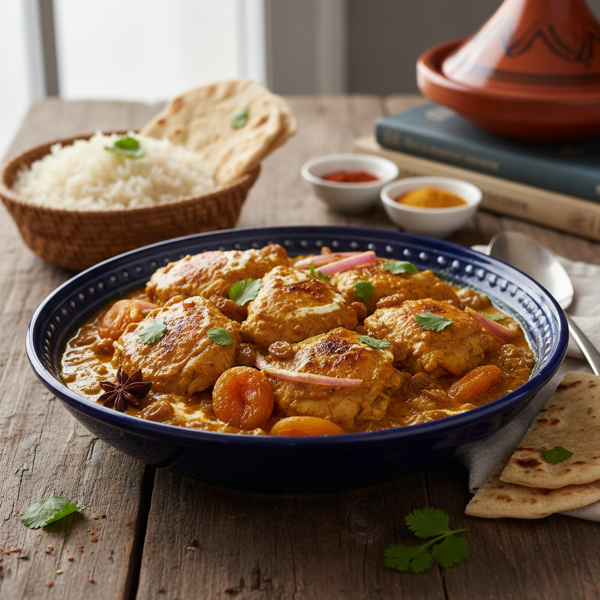
This delightful Cape Malay Curry, originating from the vibrant and diverse Malay community in the Western Cape, South Africa, offers a unique blend of flavors. The curry balances sweetness from apricot jam and chutney with a warm spiciness from garam masala paste. A hint of cinnamon and turmeric adds depth while garlic and ginger bring freshness to the dish. Perfectly complemented by tender chicken or lamb, this curry transports you to the streets of South Africa with every bite. Prepare this heartwarming dish and let it remind you of the rich culinary traditions of the Cape Malay community.
4
Servings
N/A
Calories
16
Ingredients
Ingredients
Chicken or lamb
As needed (Cut into pieces)
Vegetable oil
1 teaspoon
Onion
1 (Chopped)
Garlic clove
1 (Minced)
Ginger paste
1/2 teaspoon
Tomatoes
1 (Peeled and chopped)
Tomato paste
1 tablespoon (Optional)
Garam masala paste
2-4 tablespoons (Depending on desired heat)
Red wine vinegar
1 tablespoon
Chutney
1/2 cup (Preferably Mrs Balls brand)
Apricot jam
1/4 cup
Turmeric
1 teaspoon
Cinnamon
1 teaspoon
Water
As needed (To cover meat)
Salt
To taste
Potatoes
To taste (Optional, chopped and peeled)
Instructions
1
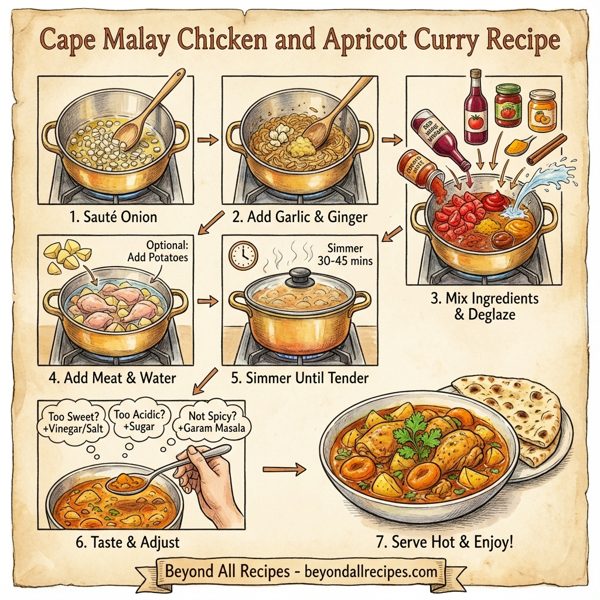
Heat the vegetable oil in a large pot over medium heat. Add the chopped onion and sauté until soft and golden brown.
2
Stir in the minced garlic and ginger paste and cook for another minute until fragrant.
3
Deglaze the pot by adding a splash of water and stirring any browned bits from the bottom.
4
Mix in the chopped tomatoes, red wine vinegar, tomato paste, chutney, apricot jam, turmeric, and cinnamon.
5
Add the chicken or lamb, and pour in enough water to cover the meat completely.
6
Optional: Add chopped and peeled potatoes at this stage for a hearty addition that eliminates the need for rice.
7
Reduce the heat to low and let the curry simmer gently for 30-45 minutes, or until the meat is tender and cooked through.
8
Throughout the cooking process, taste the curry and adjust the flavors as needed: if too sweet, add more vinegar and salt; if too acidic, add a touch of sugar; if not spicy enough, add more garam masala paste.
9
Serve hot, garnished with fresh cilantro if desired.
Nutrition Information
Frequently Asked Questions
Frequently Asked Questions
What is Cape Malay Chicken and Apricot Curry?
It is a traditional South African dish originating from the Malay community in the Western Cape, known for its unique balance of sweet and spicy flavors.
What is the origin of this dish?
This recipe comes from the vibrant and diverse Cape Malay community in South Africa.
Is this curry very spicy?
The curry offers a warm spiciness that is well-balanced by the sweetness of apricot jam and chutney.
Can I use lamb instead of chicken?
Yes, this curry is perfectly complemented by either tender chicken pieces or lamb.
What type of chutney is recommended?
Preferably use Mrs Balls brand chutney to achieve the most authentic flavor profile.
How long does it take to cook the meat?
The curry should simmer gently for 30 to 45 minutes, or until the meat is fully tender and cooked through.
Can I add potatoes to the recipe?
Yes, you can add chopped and peeled potatoes for a heartier dish that can even eliminate the need for rice.
What should I do if the curry is too sweet?
If the flavors are too sweet, you can adjust the balance by adding more red wine vinegar and salt.
How can I fix a curry that is too acidic?
If the curry tastes too acidic, you can add a small touch of sugar to balance the flavors.
How do I increase the spice level?
You can adjust the heat by adding more garam masala paste according to your preference.
Should the tomatoes be peeled?
Yes, the recipe suggests using one peeled and chopped tomato.
Why is apricot jam used in the recipe?
Apricot jam provides the signature sweetness and fruity depth characteristic of Cape Malay cuisine.
Is turmeric a necessary ingredient?
Yes, one teaspoon of turmeric is used to add depth and a vibrant color to the curry.
Can I use ginger paste?
Yes, the recipe calls for 1/2 teaspoon of ginger paste to bring freshness to the dish.
What is the best garnish for this dish?
The curry is best served hot and garnished with fresh cilantro.
How many servings does this recipe provide?
This specific recipe is designed to provide 4 servings.
How should the onions be prepared?
The onion should be chopped and sautéed in vegetable oil until it is soft and golden brown.
What does it mean to deglaze the pot?
Deglazing involves adding a splash of water and stirring to lift any browned bits from the bottom of the pot.
Is tomato paste required?
Tomato paste is an optional ingredient that can be added to enhance the base of the curry.
What kind of vinegar is best for this recipe?
Red wine vinegar is recommended to provide the necessary acidity for the flavor profile.
How much garam masala paste should I use?
You should use between 2 and 4 tablespoons, depending on your desired level of heat.
Should I boil the curry on high heat?
No, you should reduce the heat to low and let it simmer gently so the meat becomes tender.
Can I serve this with rice?
Yes, it is traditional to serve it with rice, though adding potatoes makes it a complete meal on its own.
Does the recipe include cinnamon?
Yes, one teaspoon of cinnamon is included to provide a warm aroma and depth.
What if the meat is not tender after 45 minutes?
Continue to simmer the curry on low heat until the meat reaches your desired tenderness.
What makes Cape Malay curry unique?
Its uniqueness lies in the blend of sweet fruity elements like apricot and chutney with savory, warm spices.
Can I substitute fresh ginger for the paste?
Yes, fresh minced ginger can be used as a substitute for ginger paste.
Is this dish suitable for meal prep?
Yes, curries often taste even better the next day as the flavors have more time to meld together.
How should I store leftovers?
Leftovers should be stored in an airtight container in the refrigerator and reheated thoroughly.
Can I make this curry vegetarian?
While the recipe calls for meat, you can substitute it with chickpeas or vegetables like cauliflower for a vegetarian version.