Cambodian Beef Lok Lak with Fresh Salad Wraps

Experience the vibrant flavors of Cambodia with this delicious Beef Lok Lak recipe. This popular Cambodian dish features tender sliced beef marinated in a savory mix of soy sauce and spices, stir-fried to perfection. Traditionally served with a refreshing salad of sliced tomatoes, cucumbers, and onions, this dish is perfect for wrapping in crisp lettuce leaves. Pair it with rice for a satisfying meal or indulge in a side of fries. The highlight of this dish is the tangy dipping sauce, which elevates every bite. Enjoy a culinary journey that showcases the fusion of flavors and textures, reminiscent of the bustling markets of Cambodia.
N/A
Servings
N/A
Calories
17
Ingredients
Ingredients
beef steaks
300 g (sliced)
light soy sauce
1/4 cup (as is)
oyster sauce
1 tablespoon (as is)
tomato sauce (ketchup)
1 tablespoon (as is)
sugar
3 tablespoons (as is)
fresh ground black pepper
1 teaspoon (as is)
fish sauce
1 teaspoon (as is)
garlic cloves
2 (finely sliced)
vegetable oil
2 tablespoons (for cooking)
small tomatoes
2 (sliced)
cucumber
1 (peeled and finely sliced)
small red onion
1/2 (finely sliced)
lettuce (iceberg or romaine)
as required (leaves separated)
lime
1 (juiced)
fresh ground black pepper
2 teaspoons (for dipping sauce (adjust to taste))
salt or fish sauce
1 teaspoon (for dipping sauce)
water
1 tablespoon (for dipping sauce)
Instructions
1
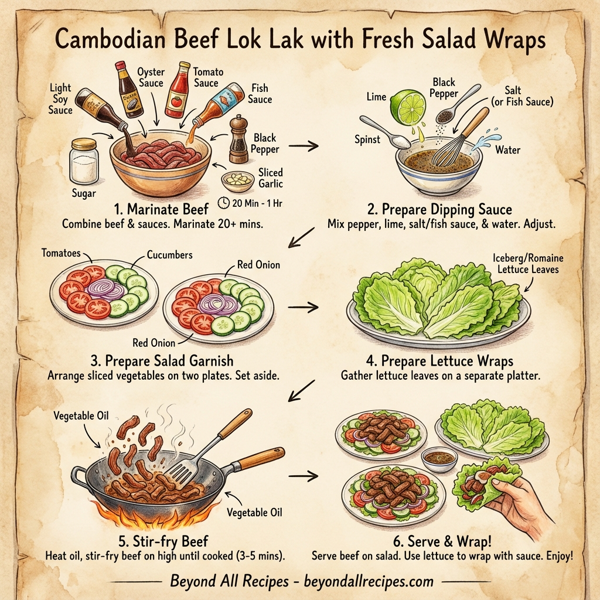
In a large bowl, combine the sliced beef with light soy sauce, oyster sauce, tomato sauce, sugar, fish sauce, ground black pepper, and finely sliced garlic. Mix well to coat the beef and allow it to marinate for at least 20 minutes, or refrigerate for up to one hour for deeper flavor.
2
While the beef marinates, prepare the dipping sauce: in a small bowl, mix together fresh ground black pepper, lime juice, salt (or fish sauce), and water. Adjust the flavors to your preference and set the sauce aside.
3
On two dinner plates, artfully arrange the sliced tomatoes, cucumbers, and red onion to create a colorful vegetable garnish. Set these plates aside for serving.
4
Gather the iceberg or romaine lettuce leaves on a separate platter—these will serve as your wraps.
5
Heat vegetable oil in a wok or large frying pan over high heat. Once hot, add the marinated beef to the wok. Stir-fry the beef until it is cooked through, about 3-5 minutes depending on the thickness. Ensure it is browned and deliciously caramelized.
6
Divide the cooked beef evenly between the two prepared dinner plates that are adorned with fresh vegetables. Serve alongside the lettuce leaves for wrapping, and provide the dipping sauce for an extra burst of flavor. Enjoy the experience of wrapping the beef and salad in the lettuce leaves for a delightful bite!
Nutrition Information
Frequently Asked Questions
Frequently Asked Questions
What is Cambodian Beef Lok Lak?
Cambodian Beef Lok Lak is a classic stir-fry dish featuring tender sliced beef marinated in a savory sauce, typically served with fresh tomatoes, cucumbers, onions, and lettuce wraps, accompanied by a signature lime and pepper dipping sauce.
What type of beef is best for this recipe?
High-quality beef steaks, such as sirloin or ribeye, are ideal for Lok Lak because they remain tender during the quick, high-heat stir-fry process.
How long should I marinate the beef?
You should marinate the beef for at least 20 minutes at room temperature, or up to one hour in the refrigerator for a deeper infusion of flavors.
What are the key ingredients in the Lok Lak marinade?
The marinade consists of light soy sauce, oyster sauce, tomato sauce (ketchup), sugar, fish sauce, ground black pepper, and finely sliced garlic.
What makes the Lok Lak dipping sauce unique?
The dipping sauce is a simple but powerful blend of fresh lime juice, ground black pepper, and salt (or fish sauce), providing a sharp, tangy contrast to the savory beef.
Is Beef Lok Lak spicy?
The dish itself is not traditionally spicy, as it relies on savory sauces and black pepper for heat rather than chili peppers.
How do I cook the beef for the best results?
Use a wok or large frying pan over high heat. Stir-fry the beef quickly for 3-5 minutes until it is browned and caramelized on the outside while remaining juicy inside.
Which lettuce is best for the salad wraps?
Iceberg or romaine lettuce leaves are recommended because they are sturdy enough to hold the beef and vegetables while providing a refreshing crunch.
What vegetables are traditionally served with Lok Lak?
It is traditionally served with a fresh garnish of sliced tomatoes, cucumbers, and red onions.
Can I serve Lok Lak with rice?
Yes, while it is often served as lettuce wraps, it is very common to pair Beef Lok Lak with steamed white rice or even jasmine rice.
What is the role of tomato sauce (ketchup) in this recipe?
Tomato sauce adds a touch of acidity and sweetness to the marinade, helping to create the signature glossy, reddish-brown glaze on the beef.
Do I need to peel the cucumber?
The recipe suggests peeling and finely slicing the cucumber for a more delicate texture in the salad garnish.
Can I use fish sauce instead of salt in the dipping sauce?
Yes, you can use either salt or fish sauce in the dipping sauce depending on your preference for saltiness and umami.
How should I slice the garlic?
The garlic should be finely sliced to ensure it distributes evenly in the marinade and cooks quickly without burning.
Can I substitute the light soy sauce?
If you don't have light soy sauce, regular soy sauce can be used, though you may want to adjust the amount of added salt accordingly.
Why is high heat necessary for stir-frying the beef?
High heat allows the beef to sear and caramelize quickly, locking in the juices and preventing the meat from becoming tough or rubbery.
How many tomatoes are needed for the garnish?
The recipe calls for two small tomatoes, sliced and artfully arranged on the serving plates.
Can I use vegetable oil for this recipe?
Yes, vegetable oil is recommended because it has a high smoke point, making it ideal for high-heat stir-frying.
Is the sugar necessary in the marinade?
The sugar balances the saltiness of the soy and fish sauces and aids in the caramelization of the beef during cooking.
How do I assemble the salad wraps?
Take a lettuce leaf, place a piece of beef and some of the sliced vegetables inside, fold or roll it up, and dip it into the lime-pepper sauce.
Can I use lime juice from a bottle?
Fresh lime juice is highly recommended for the dipping sauce to achieve the bright, vibrant acidity that defines the dish.
What if I don't have oyster sauce?
If you lack oyster sauce, you can try using a vegetarian stir-fry sauce or a mix of soy sauce and a little extra sugar, though the flavor profile will change slightly.
How should the red onion be prepared?
The recipe specifies using half of a small red onion, finely sliced, to be served raw as part of the vegetable garnish.
Is the dipping sauce spicy because of the pepper?
The sauce has a 'peppery' heat rather than a 'chili' heat; you can adjust the two teaspoons of black pepper to suit your personal preference.
Can I add other vegetables to the stir-fry?
While traditional Lok Lak focuses on the beef, you can add onions or peppers to the pan if you prefer more cooked vegetables.
How much beef is required for this recipe?
The recipe uses 300 grams of sliced beef steaks, which generally serves two people.
Can this dish be made in a regular frying pan?
Yes, a large frying pan works well if you don't have a wok, as long as it can handle high heat.
What is the origin of this dish?
Beef Lok Lak is a staple of Cambodian cuisine, often found in local markets and restaurants throughout the country.
Is there a specific way to plate the dish?
The beef is typically placed on top of or next to the arranged tomatoes, cucumbers, and onions, with the lettuce and dipping sauce served on the side.
Can I use brown sugar instead of white sugar?
Yes, brown sugar can be used; it will add a slightly more molasses-like depth to the marinade.