Buttery Sweet Bread Rolls
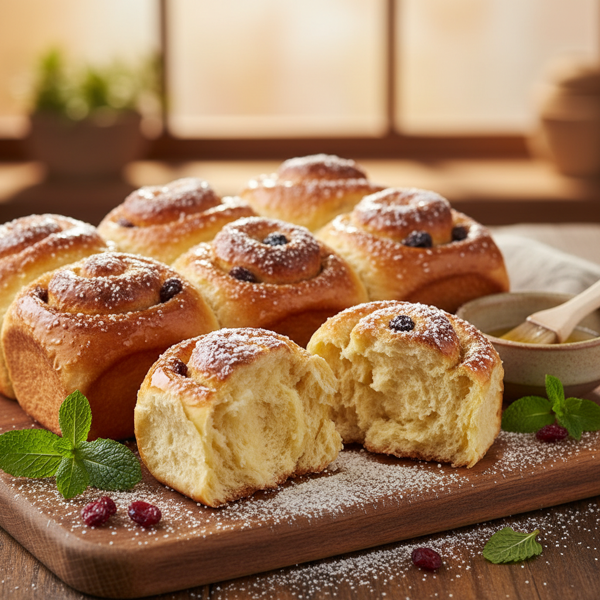
These Buttery Sweet Bread Rolls are the perfect companion to your favorite stew or soup, offering a delightful sweetness and soft, pillowy texture. Inspired by a classic cookbook, this recipe combines simple ingredients to create a versatile dough that can be shaped into various forms such as dinner rolls, cloverleaf rolls, and more. Whether you choose to brush them with melted butter for a shiny topping or serve them plain, each roll promises warmth and comfort. Ideal for family gatherings or a cozy dinner at home, these rolls are sure to impress. Enjoy the process of baking and share the joy with your loved ones!
24
Servings
N/A
Calories
9
Ingredients
Ingredients
Sugar
1 teaspoon (for yeast activation)
Water
1/2 cup (heated to 105-115°F)
Active dry yeast
1 package (to activate)
Milk
2/3 cup (heated to lukewarm)
Sugar
1/4 cup (for milk mixture)
Salt
1 teaspoon (for flavor)
Butter or shortening
1/4 cup (melted)
Egg
1 (beaten)
All-purpose flour
3-4 cups (as necessary for dough)
Instructions
1
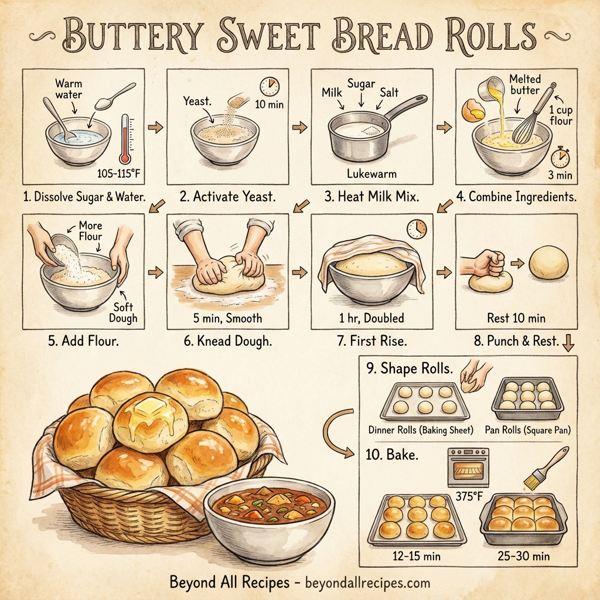
In a large bowl, dissolve 1 teaspoon of sugar in warm water (105-115°F).
2
Sprinkle the active dry yeast over the water and let it stand for 10 minutes until frothy.
3
Meanwhile, heat the milk until lukewarm. Stir in 1/4 cup sugar and salt until dissolved.
4
Add the lukewarm milk mixture, melted butter (or shortening), beaten egg, and 1 cup of flour to the activated yeast mixture. Beat well for about 3 minutes.
5
Gradually stir in the remaining flour, one cup at a time, until a soft dough forms that pulls away from the sides of the bowl.
6
Turn the dough out onto a lightly floured surface. Knead it for about 5 minutes until it is smooth and elastic, adding more flour as necessary to prevent sticking.
7
Place the dough in a lightly greased bowl, turning it to coat the top. Cover the bowl with greased wax paper and a tea towel.
8
Allow the dough to rise in a warm place for about 1 hour, or until it has doubled in size.
9
Once risen, punch down the dough, turn it out onto a lightly floured surface, and shape it into a ball. Cover and let it rest for 10 minutes.
10
Divide the dough into equal portions based on your desired roll size (16-24 pieces). Shape accordingly:
11
- For Dinner Rolls: Shape each piece into a ball, flatten slightly, and place on a greased baking sheet or in muffin cups. Cover and let rise for 30 minutes. Bake at 375°F for 12-15 minutes until golden, brushing with melted butter if desired.
12
- For Pan Rolls: Shape into balls and place in a greased 8-inch square pan, almost touching. Cover and let rise until doubled, then bake at 375°F for 25-30 minutes.
Nutrition Information
Frequently Asked Questions
Frequently Asked Questions
What are Buttery Sweet Bread Rolls?
These are soft, pillowy rolls with a delightful sweetness, perfect for serving with stews or soups.
How do I activate the yeast for this recipe?
Dissolve 1 teaspoon of sugar in 1/2 cup of warm water (105-115 degrees F), sprinkle the active dry yeast over it, and let it stand for 10 minutes until frothy.
What is the ideal water temperature for yeast activation?
The water should be between 105 degrees F and 115 degrees F.
Can I use butter or shortening?
Yes, you can use either 1/4 cup of melted butter or 1/4 cup of shortening.
How many rolls does this recipe produce?
The recipe makes between 16 and 24 rolls, depending on the size of the portions you shape.
How long should I knead the dough?
Knead the dough for approximately 5 minutes until it becomes smooth and elastic.
What type of flour is needed for these rolls?
You will need 3 to 4 cups of all-purpose flour, added gradually until a soft dough forms.
How long does the first rise take?
The dough should rise in a warm place for about 1 hour, or until it has doubled in size.
Why do I need to punch down the dough?
Punching down the dough releases air bubbles and prepares it for shaping into rolls.
What is the baking temperature for these rolls?
The oven should be preheated and the rolls baked at 375 degrees F.
How long do individual dinner rolls take to bake?
Dinner rolls take about 12-15 minutes to bake until they are golden.
How long do pan rolls need to bake?
Pan rolls should be baked for 25-30 minutes.
Can I shape the dough into different types of rolls?
Yes, the dough is versatile and can be shaped into dinner rolls, pan rolls, or cloverleaf rolls.
What is the temperature requirement for the milk?
The 2/3 cup of milk should be heated until lukewarm before stirring in the sugar and salt.
How do I know when the dough is ready to be punched down?
It is ready once it has risen in a warm place and has doubled in its original volume.
Is it possible to add a topping to the rolls?
Yes, you can brush the rolls with melted butter for a shiny topping if desired.
What should I do if the dough is sticking while kneading?
Turn the dough onto a lightly floured surface and add more flour as necessary during kneading to prevent sticking.
Does this recipe include eggs?
Yes, the recipe requires one beaten egg.
How much sugar is used in total for the dough?
The recipe uses 1 teaspoon of sugar for the initial yeast activation and 1/4 cup of sugar for the milk mixture.
What size pan should I use for pan rolls?
A greased 8-inch square pan is recommended for making pan rolls.
What are the best occasions for serving these rolls?
They are ideal for family gatherings, holiday dinners, or as a comfort food side for home meals.
What kind of yeast does the recipe call for?
The recipe specifies one package of active dry yeast.
How long should the dough rest after punching it down?
Let the dough rest for 10 minutes before you begin dividing and shaping it.
How much salt is needed for flavor?
The recipe calls for 1 teaspoon of salt.
How long should I beat the mixture during the initial mixing phase?
Beat the mixture well for about 3 minutes after adding the milk, butter, egg, and the first cup of flour.
Do I need to grease the bowl for the dough rise?
Yes, place the dough in a lightly greased bowl and turn it to coat the top.
What materials should I use to cover the dough while it rises?
Cover the bowl with greased wax paper and a clean tea towel.
How long is the second rise for individual dinner rolls?
Cover the shaped dinner rolls and let them rise for 30 minutes before baking.
How do I determine when the dough has enough flour?
Add flour gradually until a soft dough forms that pulls away from the sides of the bowl.
What is the description of the final texture of these rolls?
The rolls are described as having a soft, pillowy texture and a sweet flavor.