Brown Rice Flour Italian No-Yeast Bread
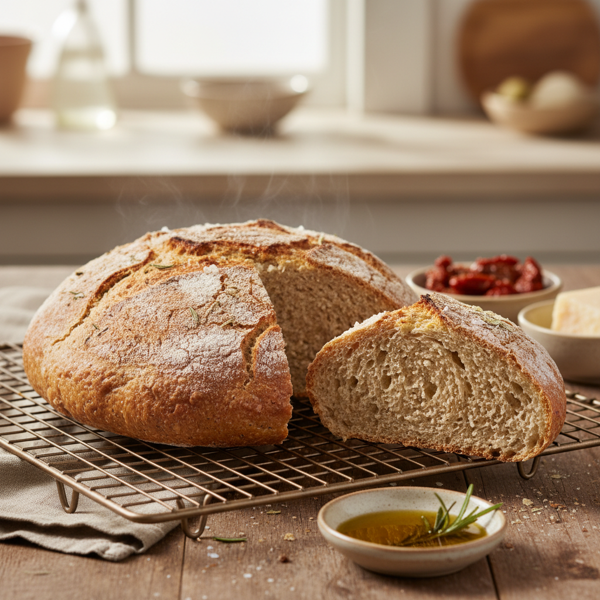
This delicious gluten and yeast-free Italian bread is a wonderful adaptation of a classic French bread recipe, made specifically for those with dietary restrictions. By using a combination of rice flours and tapioca, this bread achieves a delightful texture comparable to traditional loaves. The addition of melted butter and egg whites provides richness, while vinegar adds a touch of tang that elevates the flavor profile. Perfect for sandwiches, as a side to soup, or even transformed into a decadent bread pudding, this versatile bread will quickly become a staple in your kitchen. Enjoy the warm, comforting aroma of freshly baked bread without any gluten or yeast!
10
Servings
N/A
Calories
11
Ingredients
Ingredients
Rice flour
1 cup (Unprocessed, for mixing)
Brown rice flour
1 cup (Unprocessed, for mixing)
Tapioca flour
1 cup (Unprocessed, for mixing)
Xanthan gum
3 teaspoons (For binding)
Salt
1 1/2 teaspoons (For seasoning)
Sugar
2 tablespoons (For sweetness)
Water
1 1/2 cups (Room temperature)
Melted butter
2 tablespoons (For moisture)
Egg whites
3 (Beaten slightly for binding)
Vinegar
1 teaspoon (For flavor enhancement)
Melted butter
For brushing (Optional, for topping)
Instructions
1
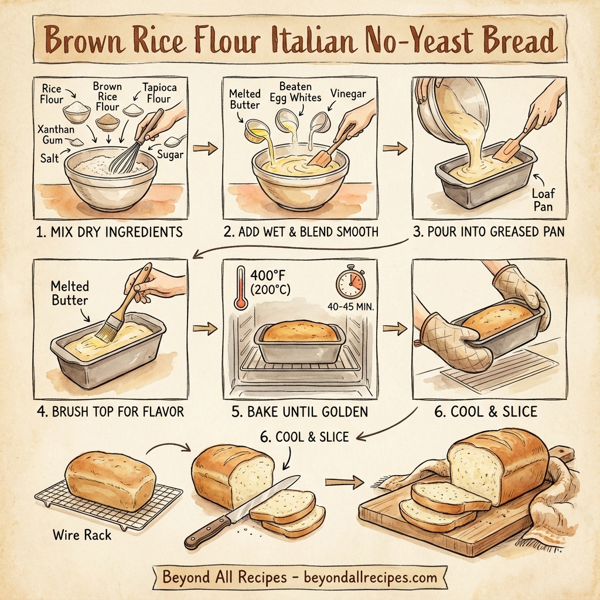
In a large mixing bowl, combine the rice flour, brown rice flour, tapioca flour, xanthan gum, salt, and sugar. Mix the dry ingredients together until evenly blended.
2
Add the melted butter, beaten egg whites, and vinegar to the dry mixture. Using a mixer on medium speed, blend the ingredients until the batter is smooth and well combined. If mixing by hand, use a whisk or spatula to ensure a thorough mix.
3
Grease a standard loaf pan with butter or non-stick spray. Pour the bread batter into the prepared pan, smoothing the top with a spatula.
4
For an extra touch of flavor and moisture, brush the top of the batter with melted butter or use a butter spray.
5
Preheat your oven to 400°F (200°C). Once heated, place the loaf pan in the oven and bake for 40 to 45 minutes, or until the bread is golden brown and a toothpick inserted into the center comes out clean.
6
Carefully remove the bread from the oven and allow it to cool in the pan for about 10 minutes. Then, transfer the bread to a wire rack to cool completely before slicing. Enjoy!
Nutrition Information
Frequently Asked Questions
Frequently Asked Questions
What is Brown Rice Flour Italian No-Yeast Bread?
It is a gluten and yeast-free adaptation of a classic French bread recipe made with rice and tapioca flours.
Is this bread suitable for gluten-free diets?
Yes, the recipe specifically uses rice and tapioca flours making it safe for those with gluten sensitivities.
Does this bread require yeast?
No, this is a yeast-free recipe that relies on binders and egg whites for structure.
What flours are used in this recipe?
The bread uses a combination of white rice flour, brown rice flour, and tapioca flour.
What is the purpose of xanthan gum?
Xanthan gum acts as a binding agent to provide the elasticity usually found in gluten-based breads.
Why is tapioca flour included?
Tapioca flour helps achieve a delightful texture that is comparable to traditional wheat-based loaves.
What temperature should I set my oven to?
The oven should be preheated to 400 degrees Fahrenheit or 200 degrees Celsius.
How long does this bread take to bake?
The bread typically takes between 40 to 45 minutes to bake fully.
What size pan should I use?
A standard loaf pan is recommended for this recipe.
How can I tell if the bread is done?
The loaf is done when it turns golden brown and a toothpick inserted into the center comes out clean.
Can I make this recipe vegan?
To make it vegan, you would need to substitute the butter with oil and find a suitable replacement for the egg whites.
What role does vinegar play in the recipe?
Vinegar adds a touch of tang to the flavor profile and helps with the bread's texture.
Why are egg whites used?
Egg whites provide richness and help the bread rise slightly during the baking process.
Should the egg whites be beaten?
Yes, the egg whites should be beaten slightly before being added to the dry ingredients.
Can I use oil instead of butter?
Yes, you can use melted butter or a non-stick spray, and liquid oils can often be used as a substitute.
How should the bread be stored?
Store the bread in an airtight container at room temperature or in the refrigerator.
Can I freeze this bread?
Yes, this bread freezes well when wrapped tightly to prevent freezer burn.
What does the bread taste like?
It has a mild, wholesome flavor with a slight nuttiness from the brown rice flour and a tangy finish.
Is this bread good for sandwiches?
Yes, its versatile nature and sturdy texture make it perfect for making sandwiches.
Can I use this for bread pudding?
Yes, this bread can be transformed into a decadent gluten-free bread pudding.
How many servings does this loaf provide?
One loaf typically provides about 10 servings.
What is the texture of the finished bread?
The texture is designed to be comparable to traditional wheat loaves, being neither too dense nor too crumbly.
Do I need to let the dough rise?
No, because there is no yeast, there is no need for a rising period before baking.
Can I substitute the sugar?
You can use alternative sweeteners, though sugar helps with the browning and flavor of the crust.
Can I add herbs to this bread?
Adding Italian herbs like oregano or basil would be a great way to enhance the flavor.
Why brush the top with butter before baking?
Brushing with melted butter adds moisture and encourages a beautiful golden-brown crust.
How long should it cool before slicing?
Allow it to cool in the pan for 10 minutes, then transfer to a wire rack to cool completely.
Is this a healthy baking option?
Yes, it uses whole grain brown rice flour and is free from processed yeast.
Does this bread have a strong vinegar taste?
No, the vinegar is used in a small amount to enhance the flavor without being overpowering.
What are the best serving suggestions?
It is wonderful served warm with butter, as a side for soup, or toasted with jam.