Braised Chicken Thigh Osso Buco
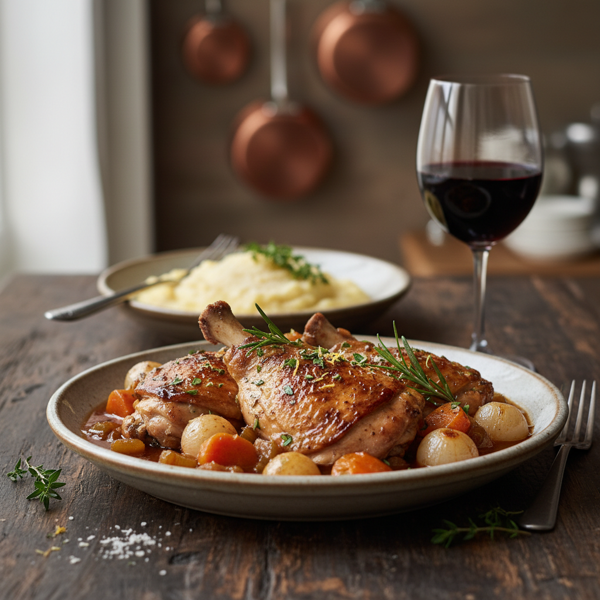
This Braised Chicken Thigh Osso Buco is a delightful twist on the traditional Italian dish, offering a rich, hearty flavor while being budget-friendly compared to veal. The chicken thighs are tender and soak up the deeply flavored sauce created from luscious vegetables and aromatic herbs. Slow-cooked to perfection, this dish allows the ingredients to meld beautifully, resulting in a sauce that becomes more intense the longer it simmers. This recipe is perfect for family gatherings and will satisfy even the most discerning palates.
N/A
Servings
300
Calories
13
Ingredients
Ingredients
chicken thighs
8 (boneless, skinless)
onion
1 medium (finely minced)
carrot
1 medium (finely minced)
celery
1 (finely minced)
garlic cloves
2 (minced)
red wine
3/4 cup (dry)
diced tomatoes
1 (16 ounce) can (with juices)
tomato sauce
1 (16 ounce) can (plain)
oregano
1 teaspoon (dried)
rosemary
1 teaspoon (dried)
parsley
3 tablespoons (fresh, chopped)
lemon zest
1 tablespoon (freshly grated)
garlic clove
1 (minced (for gremolata))
Instructions
1
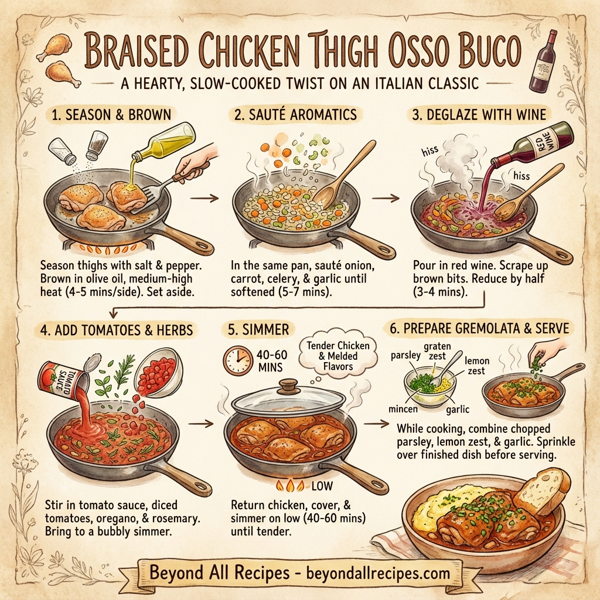
1. Start by seasoning the chicken thighs generously with salt and pepper. Heat 1 tablespoon of olive oil in a large, heavy-bottomed skillet over medium-high heat.
2
2. Add the chicken thighs to the pan, browning them on both sides for about 4-5 minutes each. Once brown, remove the thighs from the pan and set them aside.
3
3. In the same pan, add the finely minced onion, carrot, celery, and garlic. Sauté until the vegetables are softened, about 5-7 minutes.
4
4. Pour in the red wine to deglaze the pan, scraping up any brown bits from the bottom. Allow the wine to reduce by half, which should take about 3-4 minutes.
5
5. Stir in the tomato sauce, diced tomatoes, oregano, and rosemary. Bring the mixture to a bubbly simmer.
6
6. Return the chicken thighs to the sauce, nestling them in carefully. Reduce the heat to low, cover the pan, and let it simmer for 40-60 minutes, or until the chicken is tender and the flavors have melded.
7
7. While the chicken is cooking, prepare the gremolata by combining the chopped parsley, lemon zest, and minced garlic in a small bowl.
8
8. Once the chicken is cooked, remove the pan from heat and sprinkle the gremolata over the dish just before serving for a fresh finish.
Nutrition Information
15g
Fat
20g
Carbs
22.5g
Protein
Frequently Asked Questions
Frequently Asked Questions
What is Braised Chicken Thigh Osso Buco?
It is a budget-friendly twist on the classic Italian veal dish, using chicken thighs simmered in a rich tomato and red wine sauce.
What makes this recipe budget-friendly?
Using chicken thighs instead of the traditional veal shanks significantly reduces the cost while maintaining a rich and hearty flavor.
What type of chicken is best for this recipe?
The recipe calls for 8 boneless, skinless chicken thighs which stay tender and juicy during the braising process.
Can I use bone-in chicken thighs?
Yes, bone-in thighs can be used and may provide even more flavor, though they may require a slightly longer simmering time.
What are the primary aromatic vegetables used?
The base of the sauce consists of finely minced onion, carrot, celery, and garlic.
What type of wine should I use for deglazing?
A dry red wine is recommended to provide depth and acidity to the sauce.
Can I omit the red wine?
Yes, you can substitute the red wine with chicken broth and a teaspoon of balsamic vinegar if you prefer an alcohol-free version.
How long does the chicken need to simmer?
The chicken should simmer in the sauce for 40 to 60 minutes until it is tender and the flavors have melded.
What is a gremolata?
A gremolata is a fresh condiment made of chopped parsley, lemon zest, and minced garlic, used to add a bright finish to the dish.
When should I add the gremolata?
Sprinkle the gremolata over the dish just before serving to maintain its fresh flavor and bright color.
How many calories are in a serving?
Each serving contains approximately 300 calories.
What is the protein content of this dish?
This recipe provides 22.5g of protein per serving.
Is this recipe suitable for family gatherings?
Yes, it is a hearty and satisfying meal that is perfect for serving larger groups or families.
What can I serve with Chicken Osso Buco?
It pairs beautifully with creamy polenta, mashed potatoes, risotto, or a crusty piece of Italian bread.
How do I thicken the sauce if it is too thin?
You can simmer the sauce uncovered for the last 10-15 minutes to allow it to reduce and intensify.
Can I make this in a slow cooker?
Yes, brown the chicken and vegetables first, then transfer everything to a slow cooker and cook on low for 4-6 hours.
Is this recipe gluten-free?
The core ingredients are naturally gluten-free, but always check your tomato sauce and canned tomato labels to ensure no additives contain gluten.
How should I store leftovers?
Store leftovers in an airtight container in the refrigerator for up to 3 to 4 days.
Can I freeze Braised Chicken Osso Buco?
Yes, this dish freezes well for up to 3 months. Thaw it in the refrigerator before reheating thoroughly.
What herbs are used in the sauce?
The recipe uses dried oregano and dried rosemary to season the tomato base.
Why do I need to brown the chicken first?
Browning the chicken creates a flavorful crust and leaves behind brown bits in the pan that enhance the overall sauce flavor.
Can I use fresh herbs instead of dried?
Yes, you can use fresh herbs, but you should generally use three times the amount of fresh herbs compared to dried.
What size cans of tomatoes are needed?
The recipe requires one 16-ounce can of diced tomatoes and one 16-ounce can of plain tomato sauce.
How much fat is in one serving?
There is approximately 15g of fat per serving in this recipe.
What if I don't have a heavy-bottomed skillet?
A Dutch oven or any large pot with a thick base will work well to ensure even heat distribution.
Can I add other vegetables?
Yes, adding mushrooms or bell peppers during the sautéing phase can add extra texture and flavor.
Is it necessary to reduce the wine?
Reducing the wine by half is important as it concentrates the flavor and cooks off the harsh alcohol taste.
How many chicken thighs are used?
The recipe calls for 8 chicken thighs, which typically serves about 4 to 6 people.
What does 'deglazing' mean?
Deglazing involves adding liquid to a hot pan to loosen and incorporate the browned food particles stuck to the bottom.
Can I prepare this dish in advance?
Yes, this dish often tastes even better the next day as the flavors continue to develop in the refrigerator.