Bolivian Silpancho Feast
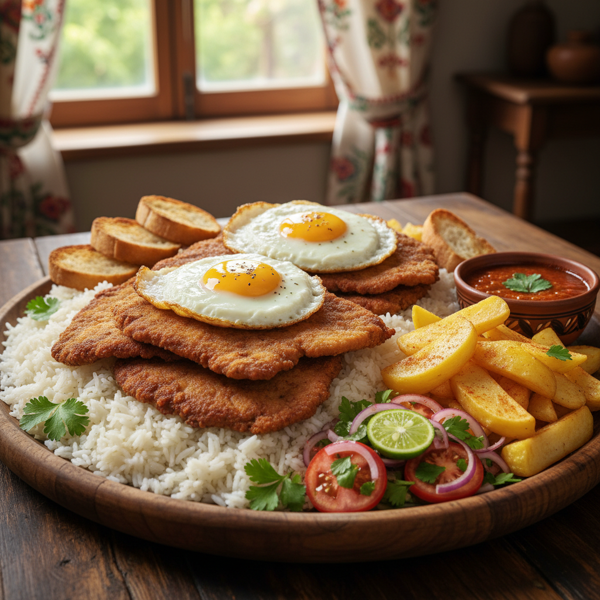
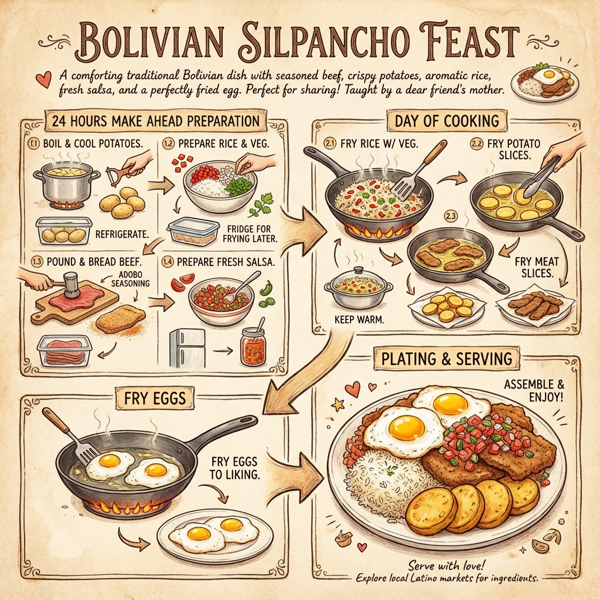
Silpancho is a traditional Bolivian dish that brings together the vibrant flavors of seasoned beef, crispy fried potatoes, aromatic rice, and fresh salsa, topped with a perfectly fried egg. This comforting meal was taught to me by a dear friend's mother, and it's become a staple in my own cooking. The preparation includes marinating tender beef, boiling and slicing Yukon gold potatoes, and making a flavorful salsa with fresh tomatoes and jalapeños. To maximize your cooking experience and efficiency, many elements of the dish can be prepped the day before. Whether you're celebrating a special occasion or enjoying a hearty meal with loved ones, this Silpancho is sure to impress. Don't forget to explore your local Latino market for the best ingredients and embrace the culinary roots of Bolivia with this delightful recipe.
N/A
Servings
N/A
Calories
12
Ingredients
Ingredients
thin sliced soft beef
1 lb (Thinly sliced, dusted with adobo seasoning.)
breadcrumbs
2 cups (Use as needed for coating meat.)
adobo seasoning (with cumin)
to taste (For seasoning the meat.)
vegetable oil
as needed (For frying potatoes, meat, and eggs.)
uncooked white rice
3 cups (Cook according to package instructions.)
red pepper
1/2 (Diced.)
red onion
1/4 cup (Diced.)
fresh cilantro
1 tablespoon (Chopped, or 1 tsp dried.)
vine-in plum tomatoes
2 (Seeded and diced (about 1 cup).)
jalapeño
1 (Finely diced.)
yukon gold potatoes
6 medium (Peeled and boiled.)
eggs
8 (For frying.)
Instructions
1
[object Object]
2
[object Object]
Nutrition Information
Frequently Asked Questions
Frequently Asked Questions
What is Silpancho?
Silpancho is a traditional Bolivian dish featuring seasoned beef, crispy fried potatoes, aromatic rice, and fresh salsa, topped with a fried egg.
What is the origin of the Silpancho Feast recipe?
This recipe is rooted in Bolivian culinary traditions and was passed down by the mother of a close friend of the cook.
Can Silpancho be prepared in advance?
Yes, several elements like boiling the potatoes, cooking the rice, prepping the meat, and making the salsa can be done 24 hours in advance.
What type of beef is best for Silpancho?
Thinly sliced soft beef is ideal, as it is dusted with seasoning and flattened further with a meat mallet.
How is the meat seasoned in this recipe?
The beef is dusted on both sides with adobo seasoning, which typically includes cumin, and then coated in breadcrumbs.
What kind of potatoes are recommended?
Medium Yukon gold potatoes are used for their texture and flavor when boiled and then fried.
How should the potatoes be cooked?
Potatoes should be peeled and boiled whole for 20-25 minutes until firm, then cooled, sliced into 1/2-inch rounds, and fried until golden brown.
What ingredients are in the Silpancho salsa?
The fresh salsa consists of diced vine-in plum tomatoes, red onions, and finely diced jalapeños.
How do you prepare the rice for this dish?
White rice is first cooked according to package instructions, then later fried with diced red pepper, onion, and cilantro.
Can I use dried cilantro instead of fresh?
Yes, you can substitute 1 tablespoon of fresh cilantro with 1 teaspoon of dried cilantro.
What is the serving size for the meat and eggs per plate?
Each plate is served with 2-3 pieces of meat and 2 fried eggs.
How long does it take to fry the meat?
The breaded meat slices should be fried for about 1.5 minutes on each side until they are golden and fully cooked.
What is the recommended plating arrangement?
Place a cup of fried rice and 5 potato slices on a plate, then serve 2-3 pieces of meat topped with salsa and 2 fried eggs.
What type of oil should be used for frying?
Vegetable oil is recommended for frying the rice, potatoes, meat, and eggs.
How do you achieve the flat texture of the beef?
Use a meat mallet to pound and flatten the beef slices while coating them with breadcrumbs.
Should the tomatoes for the salsa be seeded?
Yes, the recipe specifies that the plum tomatoes should be seeded before dicing.
How long should the rice be fried?
The rice should be tossed in a skillet with vegetables for 10-15 minutes over medium heat.
What is the best way to fry the eggs?
Fry the eggs individually on medium-low heat, flipping once to ensure even cooking and that the yolks are cooked to your preference.
How much oil is needed for frying the potatoes?
The oil should cover the bottom of the skillet to a depth of about 1/8 inch.
Where can I find authentic ingredients for this recipe?
Local Latino markets are recommended for finding the best quality and most authentic ingredients for Silpancho.
Does the rice need to be cold before frying?
Yes, the instructions suggest cooking the rice ahead of time and storing it in the fridge before frying it on the day of cooking.
How many potatoes are required for the feast?
The recipe calls for 6 medium Yukon gold potatoes.
What is the total count of ingredients used?
The Silpancho Feast requires 12 main ingredients, including the beef, vegetables, rice, and seasonings.
Is the salsa served hot or cold?
The salsa is a fresh preparation of diced raw vegetables, typically served cold or at room temperature over the hot meat.
What heat level should be used for the meat?
The oil should be hot but not smoking before adding the meat slices to ensure a golden crust without burning.
What is the purpose of dicing the jalapeño finely?
Finely dicing the jalapeño allows its spice to be distributed evenly throughout the fresh salsa.
How much rice is used in the recipe?
The recipe uses 3 cups of uncooked white rice, which is cooked and then fried.
Is Silpancho considered a comfort food?
Yes, it is described as a comforting, hearty meal often shared with loved ones or during special occasions.
Can I use any other potato variety?
While Yukon gold is recommended for its buttery texture, other waxy potatoes that hold their shape when boiled and fried can be used.
What seasonings are in adobo?
Adobo used in this recipe typically includes salt, garlic, and specifically cumin to match the traditional Bolivian flavor profile.