Basil-Infused Herbal Vinegar
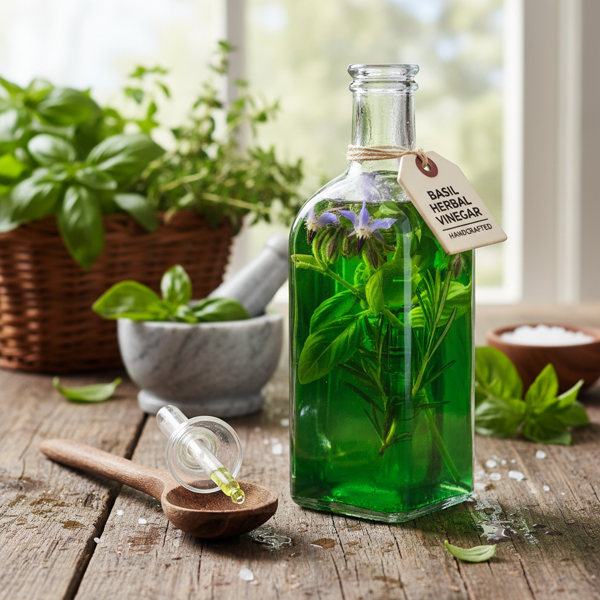
Elevate your culinary creations with this vibrant Basil-Infused Herbal Vinegar. Not only is it a feast for the eyes with its rich colors and aromatic herbs, but it also brings a burst of fresh flavor to your dishes, salads, and marinades. Homemade herbal vinegars are simple to make, allowing you to harness the essence of your garden's freshest herbs while providing an exquisite gift option. With just a few ingredients and a short infusion time, you can create a pantry staple that lasts for months. Remember to store your creation properly to maintain its delightful flavor, and enjoy the beauty of nature bottled in your kitchen!
N/A
Servings
N/A
Calories
2
Ingredients
Ingredients
Fresh Sweet Basil Leaves
2 cups (Chopped and bruised)
Red Wine Vinegar
1 quart (Warm but not boiling)
Instructions
1
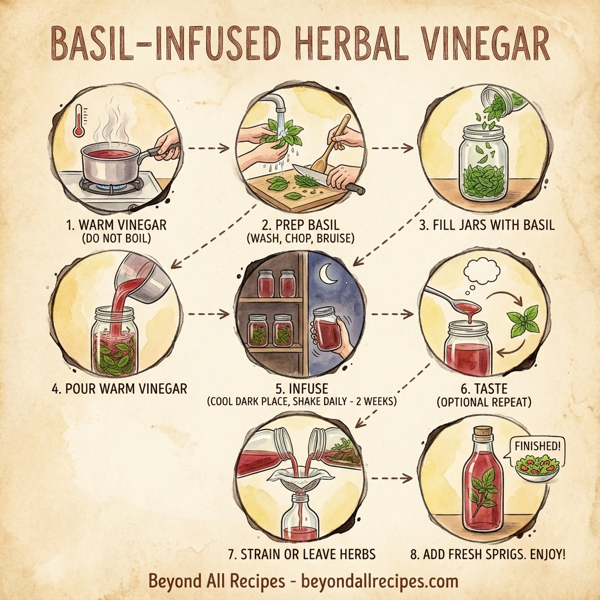
In a glass or stainless steel saucepan, gently heat the red wine vinegar over low heat until it warms up but does not reach a boiling point.
2
While the vinegar is warming, wash and chop the fresh basil leaves to help release their natural oils and flavors.
3
Bruise the basil leaves slightly with your fingers or a wooden spoon, then loosely fill clean, dry glass jars with the basil.
4
Once the vinegar is warm, carefully pour it over the basil in each jar, ensuring that the herbs are fully submerged. Leave a small space at the top of the jar.
5
Seal the jars with acid-proof lids and store them in a cool, dark place. Remember to shake the jars gently every day for the next two weeks to encourage infusion.
6
After two weeks, taste the vinegar. If you desire a more robust basil flavor, strain out the old herbs and refill the jars with fresh basil leaves, repeating the infusion process.
7
You can choose to strain the vinegar through cheesecloth for a clearer finish or leave the herbs in for added aesthetic appeal. If straining, rebottle the vinegar in a clean jar.
8
Add a few fresh sprigs of basil into the final bottle for a delightful visual touch and to enhance its aroma.
Nutrition Information
Frequently Asked Questions
Frequently Asked Questions
What is Basil-Infused Herbal Vinegar?
It is a flavorful condiment created by steeping fresh basil leaves in red wine vinegar to capture the herb's aromatic oils and essence.
What type of vinegar is recommended for this recipe?
This recipe uses red wine vinegar, which provides a robust base that complements the fresh basil flavor.
How much basil do I need?
You will need 2 cups of fresh sweet basil leaves for every quart of vinegar.
Why do I need to heat the vinegar?
Gently warming the vinegar helps to more effectively extract the natural oils and flavors from the basil leaves.
Should I boil the vinegar?
No, you should only warm the vinegar over low heat until it is warm but not boiling.
What does 'bruising' the basil leaves mean?
Bruising involves slightly crushing the leaves with your fingers or a wooden spoon to release their aromatic oils before infusion.
How long should the vinegar infuse?
The initial infusion process takes two weeks to develop a good flavor profile.
Where should I store the jars during the infusion process?
Store the jars in a cool, dark place to maintain the quality and prevent the light from degrading the herbs.
Do I need to shake the jars?
Yes, you should gently shake the jars every day for the two-week infusion period to encourage flavor distribution.
How can I make the basil flavor even stronger?
If after two weeks the flavor is not strong enough, strain out the old herbs and refill the jar with fresh basil for another infusion cycle.
What kind of lids should I use for the jars?
Use acid-proof lids to ensure the vinegar does not react with or corrode the container seal.
Is it necessary to strain the vinegar?
Straining is optional; you can strain it through cheesecloth for a clearer look or leave the herbs in for aesthetic appeal.
Can I add fresh herbs to the final bottle?
Yes, adding a few fresh sprigs of basil to the final bottle adds a beautiful visual touch and enhances the aroma.
What are the primary uses for basil-infused vinegar?
It is excellent for dressing salads, creating marinades, and adding a burst of flavor to various culinary dishes.
How long does this homemade vinegar last?
When stored properly in a cool, dark place, the herbal vinegar can last for several months.
Can I use this as a gift?
Absolutely, homemade herbal vinegars make exquisite and thoughtful gifts for friends and family.
What equipment is needed for heating the vinegar?
You should use a glass or stainless steel saucepan to avoid any chemical reactions between the acid and the metal.
Do I need to wash the basil first?
Yes, always wash the fresh basil leaves and ensure they are dry before starting the infusion.
How much space should I leave at the top of the jar?
Leave a small amount of headspace at the top of the jar after pouring the warm vinegar over the herbs.
Should the basil be completely submerged?
Yes, ensure the vinegar fully covers all the basil leaves in the jar to prevent any spoilage.
Can I use dried basil instead of fresh?
While fresh basil provides the best flavor and color, fresh sweet basil leaves are specifically recommended for this recipe.
Is this recipe difficult for beginners?
No, this is a very simple DIY project that requires only two ingredients and basic kitchen tools.
Can I use a different type of vinegar?
While this recipe specifies red wine vinegar, you can experiment with others, though the flavor profile will change.
Does the vinegar change color?
Yes, the vinegar will often take on a vibrant tint from the basil leaves during the two-week steeping process.
How do I prepare the jars?
Ensure your glass jars are clean and completely dry before adding the herbs and vinegar.
Can I use a wooden spoon to bruise the herbs?
Yes, a wooden spoon is an excellent tool for gently bruising the leaves inside the jar.
What should the vinegar smell like when finished?
It should have a bright, aromatic scent of fresh basil combined with the tanginess of the red wine vinegar.
Should I chop the basil finely?
Roughly chopping the leaves is sufficient to help release the oils for the infusion.
How many ingredients are in this recipe?
There are only two ingredients: fresh sweet basil leaves and red wine vinegar.
What is the first step of the process?
The first step is to gently heat the red wine vinegar in a glass or stainless steel saucepan over low heat.