Balanced Sweet and Sour Sauce
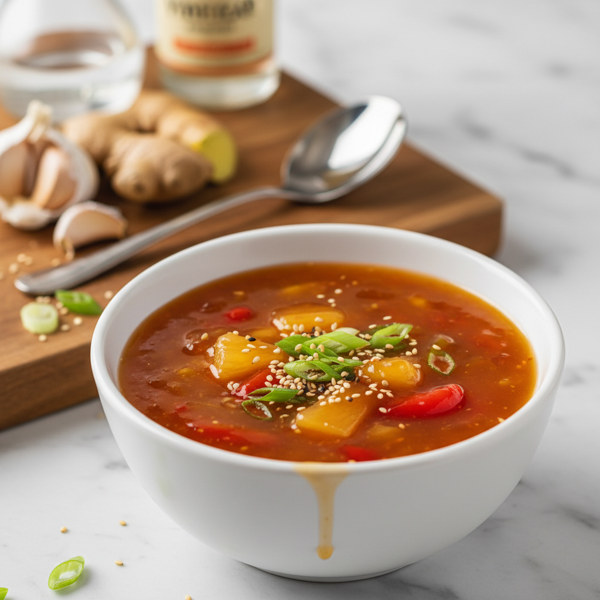
This Balanced Sweet and Sour Sauce is crafted for those who find conventional sweet and sour sauces overly sugary or artificial. By combining the tanginess of white wine vinegar with the rich sweetness of soft brown sugar, and a touch of umami from soy sauce, this recipe achieves the perfect harmony of flavors. The inclusion of tomato paste adds depth, while optional ingredients like tamarind and sherry wine provide an extra layer of complexity. This sauce is versatile and pairs beautifully with egg fried rice and stir-fried vegetables, making it a delightful addition to your culinary repertoire.
1.33
Servings
225
Calories
8
Ingredients
Ingredients
white wine vinegar
6 tablespoons (none)
soft brown sugar
4 tablespoons (none)
soy sauce
2 tablespoons (none)
tomato paste
3-4 tablespoons (none)
tamarind paste
1/4 teaspoon (optional)
water
1 cup (divided)
cornstarch
2 tablespoons (none)
sherry wine
1 tablespoon (optional)
Instructions
1
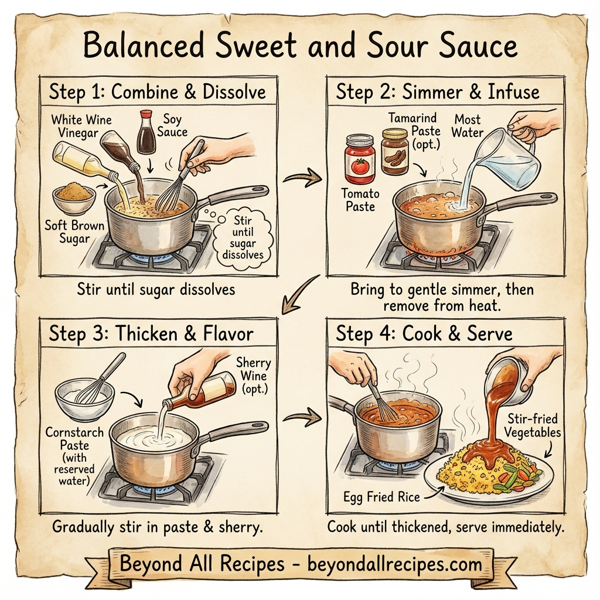
In a medium saucepan, combine the white wine vinegar, soft brown sugar, and soy sauce. Place the saucepan over low heat and stir the mixture until the sugar has completely dissolved.
2
Stir in the tomato paste and optional tamarind paste, then pour in most of the water, reserving a little for later. Increase the heat to medium and bring the sauce to a gentle simmer, stirring occasionally. Once it is nearly boiling, remove it from the heat.
3
In a separate bowl, mix the cornstarch with the reserved water to create a smooth paste. Gradually stir this paste into the sauce. If using, add the sherry wine.
4
Return the saucepan to the heat and cook, stirring continuously, until the sauce thickens and starts to bubble gently. Once thickened, remove from heat and serve immediately over fried rice or stir-fried vegetables.
Nutrition Information
0.75g
Fat
54g
Carbs
3g
Protein
Frequently Asked Questions
Frequently Asked Questions
What is Balanced Sweet and Sour Sauce?
It is a homemade sauce designed to be less sugary and more natural than commercial versions, using vinegar, brown sugar, and soy sauce.
What makes this recipe balanced?
The balance comes from the combination of tangy white wine vinegar, sweet brown sugar, and savory soy sauce for umami depth.
What type of vinegar is used?
This recipe specifically uses six tablespoons of white wine vinegar for its sharp yet clean acidity.
Can I use a different type of sugar?
The recipe calls for soft brown sugar to provide a rich sweetness, but you could substitute it with white sugar or honey if needed.
What role does soy sauce play in the sauce?
Soy sauce adds a touch of umami and saltiness that rounds out the sweet and sour profile.
Why is tomato paste included?
Tomato paste adds depth of flavor and contributes to the classic reddish color of the sauce.
Is tamarind paste necessary for this recipe?
No, tamarind paste is an optional ingredient used to add an extra layer of complexity and tanginess.
How much tamarind paste should I use if I include it?
The recipe suggests using one-quarter of a teaspoon of tamarind paste.
What is the purpose of cornstarch in this sauce?
Cornstarch acts as a thickening agent to give the sauce a glossy and coating consistency.
Do I need to add sherry wine?
Sherry wine is optional; it adds a sophisticated aromatic note to the finished sauce.
How do I prepare the cornstarch?
Mix two tablespoons of cornstarch with a small amount of reserved water to create a smooth paste before adding it to the heat.
What is the first step in making the sauce?
Combine the vinegar, brown sugar, and soy sauce in a saucepan over low heat until the sugar dissolves.
How much water is required?
The recipe calls for one cup of water, with a small portion reserved for the cornstarch slurry.
What should I do after adding the tomato paste?
Increase the heat to medium and bring the mixture to a gentle simmer before removing it from the heat to add the thickener.
When should I add the sherry wine?
If you choose to use sherry wine, stir it into the sauce along with the cornstarch paste.
How long should I cook the sauce after adding the cornstarch?
Cook and stir continuously until the sauce thickens and begins to bubble gently.
What dishes pair well with this sauce?
It pairs beautifully with egg fried rice and stir-fried vegetables.
Is this sauce suitable for vegetarians?
Yes, this sauce is categorized as a vegetarian-friendly recipe.
How many servings does this recipe make?
This recipe yields approximately 1.33 servings based on the provided ingredients.
What is the calorie count for this sauce?
One serving of this sauce contains approximately 225 calories.
How much fat is in the sauce?
The sauce is very low in fat, containing only 0.75 grams per serving.
What is the carbohydrate content?
There are 54 grams of carbohydrates per serving in this sauce.
Does this sauce provide any protein?
Yes, it contains approximately 3 grams of protein per serving.
Can I make this sauce ahead of time?
Yes, you can prepare the sauce and reheat it, though you may need to add a splash of water if it thickens too much while cooling.
How do I avoid lumps in the sauce?
Always mix the cornstarch with cold water first and add it gradually while stirring the hot liquid.
Can I use rice vinegar instead of white wine vinegar?
Yes, rice vinegar is a common substitute and will provide a slightly milder flavor profile.
Is this recipe considered easy?
Yes, it is tagged as an easy recipe that involves simple stovetop preparation.
What should I do if the sauce is too thick?
If the sauce becomes too thick, simply stir in a small amount of additional water until you reach the desired consistency.
Does this sauce contain artificial flavors?
No, this recipe is specifically crafted to avoid artificial ingredients found in store-bought versions.
Can I use this as a dipping sauce?
Absolutely, it works great as a dip for spring rolls, wontons, or chicken strips.