Autumn Harvest Salmon Chowder
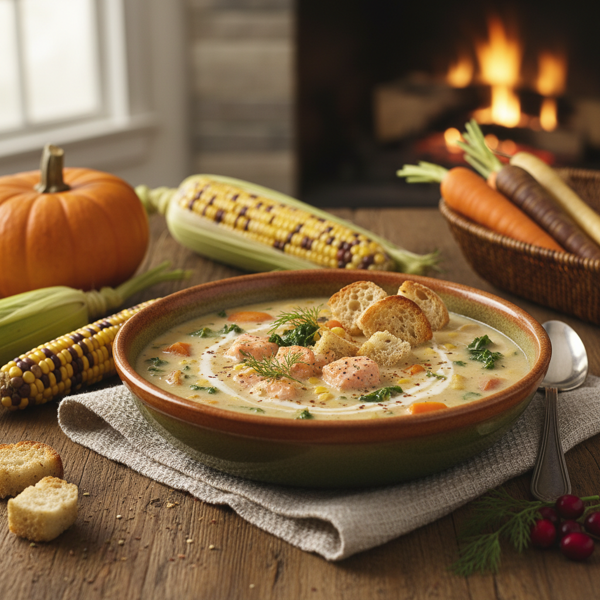
Warm up with this hearty and flavorful Autumn Harvest Salmon Chowder, perfect for chilly nights when comfort food is a must. This rich and creamy chowder is packed with tender salmon, hearty potatoes, and a delightful blend of corn, creating a satisfying meal that warms you from the inside out. Enjoy this chowder with crunchy oyster crackers and a tangy pickle on the side for the ultimate comfort experience. Whether you’re feeding a crowd or just your family, this recipe is sure to impress and become a new favorite in your seasonal repertoire.
N/A
Servings
N/A
Calories
9
Ingredients

Ingredients
Fresh skinless salmon fillets
2 lbs (Cut into 1-inch cubes or use 2 (15 oz) cans of flaked salmon with skin and bones removed, reserving juice)
Potatoes
8 large (Peeled and cubed into 1-inch squares)
Onions
2 large (Cut in half and thinly sliced)
Cream-style corn
2 (14 3/4 ounce) cans (Or 1 can cream-style and 1 can whole-kernel corn)
Whole milk
2 quarts (Best quality)
Evaporated milk
1 (12 ounce) can (N/A)
Margarine
1/2 cup (N/A)
Salt
to taste (N/A)
Pepper
to taste (N/A)
Instructions
1
In a large pot, combine the cubed potatoes, sliced onions, and salmon. Add enough water to cover all the ingredients and season with salt and pepper.
2
Bring the mixture to a boil over medium-high heat and let it cook for about 15 minutes, or until the potatoes are tender.
3
Carefully drain excess water from the pot, ensuring that just enough liquid remains to cover the potatoes.
4
Stir in the cream-style corn (and whole kernel corn if using), the whole milk, evaporated milk, and the reserved juice from canned salmon, mixing well.
5
Add the stick of margarine to the pot and stir until melted and fully incorporated.
6
Reduce the heat to medium and let the chowder simmer for 20 minutes, stirring occasionally.
7
Taste the chowder and adjust the seasoning with additional salt and pepper if desired.
8
To thicken the chowder, in a separate bowl, whisk together ½ cup of flour with 2 cups of cold water, ensuring there are no lumps. Gradually add this mixture to the chowder, stirring frequently until desired thickness is reached.
9
Once thickened, serve hot and enjoy with oyster crackers and pickles.
Nutrition Information
Frequently Asked Questions
Frequently Asked Questions
What is Autumn Harvest Salmon Chowder?
It is a hearty and flavorful creamy chowder packed with tender salmon, potatoes, and corn, perfect for chilly autumn nights.
What kind of salmon is recommended for this recipe?
You can use 2 lbs of fresh skinless salmon fillets cut into cubes or 2 cans of flaked salmon with skin and bones removed.
How should I prepare the potatoes?
Peel 8 large potatoes and cube them into 1-inch squares before cooking.
What type of onions should I use and how?
The recipe calls for 2 large onions, which should be cut in half and then thinly sliced.
Can I use different types of corn?
Yes, you can use 2 cans of cream-style corn, or a combination of one cream-style and one whole-kernel corn.
What kind of milk is best for this chowder?
The recipe specifies 2 quarts of high-quality whole milk and one 12-ounce can of evaporated milk for richness.
How much margarine is needed?
One stick of margarine, which is equivalent to 1/2 cup, is used in this recipe.
How long do the potatoes and salmon need to boil?
They should be boiled for about 15 minutes or until the potatoes are tender.
Do I need to drain the water after boiling?
Yes, carefully drain the excess water, leaving just enough to cover the potatoes.
When do I add the dairy products?
Add the whole milk, evaporated milk, and cream-style corn after the potatoes and salmon have been boiled and drained.
What should I do with the juice from canned salmon?
If using canned salmon, reserve the juice and add it to the pot when stirring in the milk.
How long does the chowder need to simmer?
After adding all main ingredients, let the chowder simmer on medium heat for 20 minutes.
How can I thicken the salmon chowder?
Whisk 1/2 cup of flour with 2 cups of cold water until smooth, then gradually stir it into the simmering chowder.
What are the suggested side dishes for this meal?
It is best enjoyed with crunchy oyster crackers and a tangy pickle on the side.
Is this recipe suitable for large groups?
Yes, the recipe is designed to impress and is suitable for feeding either a crowd or a family.
Can I substitute butter for margarine?
While the recipe calls for margarine, butter can be used as a standard substitution.
What seasonings are required?
Salt and pepper are used to taste throughout the cooking and simmering process.
How do I ensure the flour mixture doesn't clump?
Whisk the flour and cold water in a separate bowl until there are no lumps before adding it to the pot.
At what point should I add the margarine?
Add the margarine after stirring in the corn and milk, stirring until it is fully melted and incorporated.
What heat setting should I use for simmering?
The chowder should be simmered over medium heat, stirring occasionally to prevent burning.
Can I add more vegetables to this chowder?
While the recipe focuses on potatoes, onions, and corn, you can customize it with other harvest vegetables if desired.
How many ingredients total are in this salmon chowder?
There are 9 primary ingredients listed, including the thickening agents and seasonings.
What is the first step of the recipe?
Combine cubed potatoes, sliced onions, and salmon in a large pot with enough water to cover them.
How big should the salmon pieces be?
If using fresh fillets, they should be cut into 1-inch cubes.
Does the recipe use whole kernel corn?
You can optionally use one can of whole-kernel corn alongside one can of cream-style corn.
What type of texture does this chowder have?
It has a rich and creamy texture with hearty chunks of potato and tender salmon.
Is the salmon skinless?
Yes, the recipe recommends fresh skinless salmon fillets or removing skin from canned salmon.
When should I adjust the salt and pepper?
You should taste the chowder after it has simmered for 20 minutes and adjust the seasoning then.
How do I know the potatoes are done?
The potatoes are done when they are fork-tender, usually after 15 minutes of boiling.
What is the goal of the final simmering stage?
The 20-minute simmer allows the flavors to meld and the chowder to reach its peak creaminess.