Authentic Vietnamese Chicken Pho
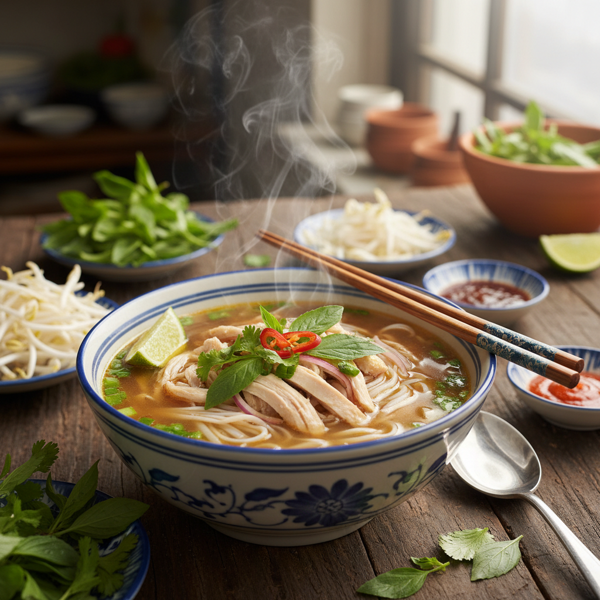
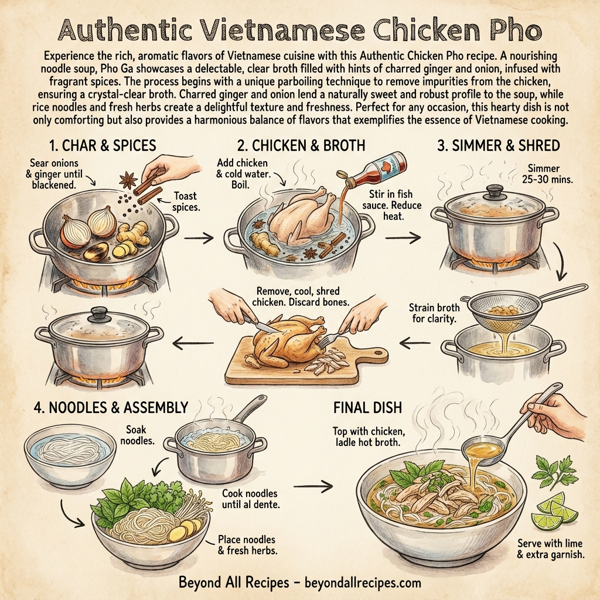
Experience the rich, aromatic flavors of Vietnamese cuisine with this Authentic Chicken Pho recipe. A nourishing noodle soup, Pho Ga showcases a delectable, clear broth filled with hints of charred ginger and onion, infused with fragrant spices. The process begins with a unique parboiling technique to remove impurities from the chicken, ensuring a crystal-clear broth. Charred ginger and onion lend a naturally sweet and robust profile to the soup, while rice noodles and fresh herbs create a delightful texture and freshness. Perfect for any occasion, this hearty dish is not only comforting but also provides a harmonious balance of flavors that exemplifies the essence of Vietnamese cooking.
N/A
Servings
N/A
Calories
17
Ingredients
Ingredients
Chicken
3 pounds (Rinsed and dried)
Water
As needed (Cold for initial boil)
Fresh Ginger
2 pieces (3 inches each) (1 halved, 1 grated with a microplane)
Onions
2 (Cut in half)
Whole Cloves
3 (Whole)
Star Anise
2 (Whole)
Cinnamon Sticks
3 (Whole)
Fish Sauce
1 tablespoon (Liquid)
Black Peppercorns
1 teaspoon (Whole)
Rice Noodles
10 ounces (Thin, soaked and drained)
Scallions
2 (Thinly sliced)
Fresh Cilantro
1 cup (Chopped)
Fresh Mint
2 stems (Whole)
Thai Basil
2 stems (Whole)
Limes
2 (Cut into wedges)
Kosher Salt
To taste (Seasoning)
Basil
To taste (Fresh, for garnish)
Instructions
1
In a heavy large pot over high heat, add the halved onions (cut side down) and the two halves of fresh ginger. Sear until they blacken, about 5-7 minutes.
2
Once charred, add the black peppercorns, star anise, cinnamon sticks, and whole cloves to the pot. Stir for about 1 minute to toast the spices and release their aromas.
3
Carefully add the rinsed chicken and enough cold water to completely cover the chicken. Bring to a rapid boil over high heat.
4
Once boiling, stir in the fish sauce and allow it to boil for an additional minute before reducing the heat to low.
5
Simmer the broth, partially covered, for 25-30 minutes, or until the chicken is fully cooked. Be cautious not to overcook the chicken, as it will cook further when served.
6
Remove the chicken from the broth and place it on a cutting board to cool. Once cool enough to handle, shred the meat into pieces and set aside. Discard the bones.
7
Strain the broth through a fine sieve into another pot, discarding all solids to achieve a crystal-clear liquid.
8
In a large bowl, soak the rice noodles in cold water for about 10 minutes. In a separate large pot, bring water to a vigorous boil. Add the softened noodles and cook them until nearly al dente, approximately 2 minutes.
9
Drain the noodles and rinse them under cold water to remove excess starch. Set aside.
10
To serve, place a bed of drained noodles in large bowls. Arrange portions of fresh ginger, bean sprouts, Thai basil, mint, cilantro, and lime juice over the noodles.
11
Top each bowl with shredded chicken and ladle hot broth over the top. Serve immediately with extra herbs and lime wedges on the side for garnish.
Nutrition Information
Frequently Asked Questions
Frequently Asked Questions
What is Authentic Vietnamese Chicken Pho?
Authentic Vietnamese Chicken Pho, known as Pho Ga, is a traditional noodle soup featuring a clear, aromatic broth made by simmering chicken with charred aromatics and warming spices like star anise and cinnamon.
How do I ensure the Pho broth is clear?
To achieve a crystal-clear broth, rinse the chicken before cooking, simmer gently rather than at a hard boil, and strain the finished liquid through a fine sieve to remove all solids and impurities.
Why is it necessary to char the ginger and onions?
Charring the ginger and onions over high heat until they blacken creates a naturally sweet, smoky, and robust flavor profile that is essential for the depth of an authentic Pho broth.
What spices are used in this Pho Ga recipe?
The aromatic spice blend for this recipe includes black peppercorns, star anise, cinnamon sticks, and whole cloves, which are toasted to release their essential oils.
How long should I cook the chicken in the broth?
The chicken should be simmered in the broth for approximately 25 to 30 minutes. It is important to remove it once fully cooked to prevent it from becoming tough or overcooked.
What kind of noodles are best for Chicken Pho?
Thin rice noodles are the traditional choice for Pho. They should be soaked in cold water first and then briefly boiled until nearly al dente before serving.
How do I prepare the rice noodles correctly?
Soak the rice noodles in cold water for 10 minutes to soften them, then boil them in a separate pot for about 2 minutes. Rinse them under cold water immediately after draining to stop the cooking and remove excess starch.
What is the role of fish sauce in Pho?
Fish sauce is a key ingredient that provides umami and saltiness, balancing the sweetness of the charred aromatics and the richness of the chicken broth.
Which fresh herbs are used as garnishes?
Classic garnishes for Chicken Pho include Thai basil, fresh mint, cilantro, and scallions, which provide a burst of freshness and texture to the hot soup.
How is the dish assembled for serving?
Place a bed of cooked rice noodles in a bowl, add the shredded chicken and fresh herbs, then ladle the piping hot broth over the top. Serve immediately with lime wedges on the side.
Can I use ground spices instead of whole spices?
For an authentic clear broth, whole spices like star anise and cinnamon sticks are preferred. Ground spices can make the broth cloudy and may overpower the delicate chicken flavor.
How do I toast the spices?
After charring the onions and ginger, add the whole spices to the hot pot for about one minute, stirring constantly until they become fragrant before adding the water.
What type of chicken is best for this recipe?
This recipe calls for a whole 3-pound chicken, which provides both the meat for the soup and the bones necessary to create a flavorful, authentic broth.
Should I peel the ginger before charring it?
No, you can char the ginger halves with the skin on. After charring and simmering, the ginger is strained out of the broth along with the other solids.
How long does it take to char the onions and ginger?
It typically takes about 5 to 7 minutes over high heat in a heavy pot to properly blacken the cut side of the onions and the ginger pieces.
Is bean sprouts a traditional topping for Pho?
Yes, fresh bean sprouts are a traditional accompaniment that adds a crunchy texture and refreshing contrast to the warm noodles and broth.
What should I do with the chicken bones after simmering?
Once the chicken is cooked and the meat has been shredded, the bones should be discarded along with the spices and charred aromatics after straining the broth.
Can I make the Pho broth in advance?
Yes, the broth can be prepared ahead of time and stored. Reheat it to a vigorous boil before ladling it over fresh noodles and shredded chicken for the best results.
What can I use if I cannot find Thai basil?
If Thai basil is unavailable, you can use regular fresh basil, though the flavor profile will be slightly different as Thai basil has a more distinct anise-like quality.
Why do I rinse the noodles after boiling?
Rinsing the boiled rice noodles under cold water removes excess surface starch, which prevents the noodles from sticking together and keeps the soup broth clear.
How much water should I use for the broth?
You should use enough cold water to completely cover the 3-pound chicken in your pot to ensure all parts of the bird contribute to the broth flavor.
Does this recipe contain gluten?
The main components like chicken, rice noodles, and spices are naturally gluten-free, but you should check your fish sauce label to ensure it is certified gluten-free.
What is the purpose of adding lime juice?
Lime juice adds essential acidity that cuts through the richness of the chicken and brightens the overall flavor of the aromatic broth.
Can I add spice to my bowl of Pho?
While the broth itself is fragrant rather than spicy, you can add fresh chili slices or Sriracha at the table to customize the heat level to your preference.
How many people does this recipe serve?
Based on a 3-pound chicken and 10 ounces of rice noodles, this recipe typically serves 4 to 6 people depending on the portion sizes.
Why is cold water used to start the broth?
Starting with cold water helps to slowly extract the proteins and flavors from the chicken, resulting in a cleaner and more flavorful broth.
Can I use chicken breast instead of a whole chicken?
While you can use breasts, a whole chicken is recommended because the bones and dark meat provide significantly more depth and body to the Pho broth.
Is Pho Ga a healthy dish?
Pho Ga is generally considered a healthy, nourishing dish as it consists of lean protein, hydrating broth, rice noodles, and an abundance of fresh herbs.
How do I shred the chicken?
After removing the chicken from the broth and letting it cool, use your hands or two forks to pull the meat away from the bones into bite-sized strips.
What makes this recipe 'authentic'?
The authenticity comes from the traditional techniques of charring aromatics, toasting whole spices, and using fish sauce to create a complex, layered clear broth.