Authentic Thai Sticky Rice
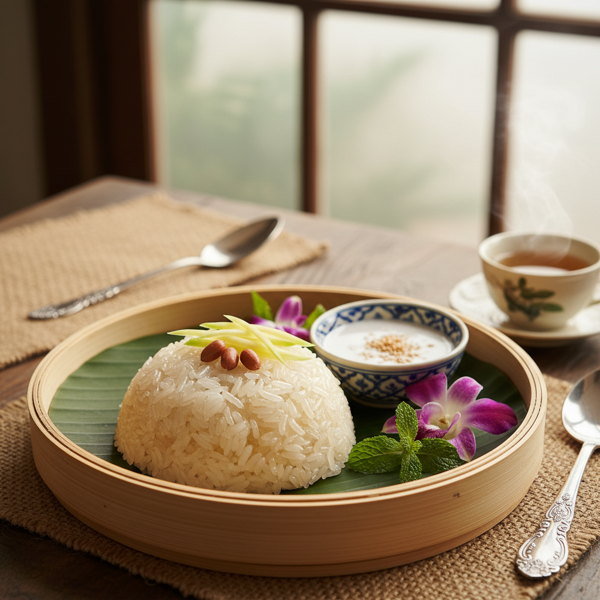
Discover the delightful experience of making Authentic Thai Sticky Rice, a staple in Thai cuisine that complements a variety of dishes. This short-grain glutinous rice is known for its unique texture and ability to absorb flavors, making it the perfect accompaniment to savory meats, fresh vegetables, and even sweet desserts. Often enjoyed with your hands, it's a communal dish that brings friends and family together at the dining table. Serve it alongside some grilled meats, spicy curries, or use it as a base for delicious Thai desserts for an ideal lunch or snack.
4
Servings
N/A
Calories
2
Ingredients
Ingredients
Glutinous rice (sticky rice)
1 1/2 cups (Rinsed and soaked)
Water
As needed (For soaking and steaming)
Instructions
1
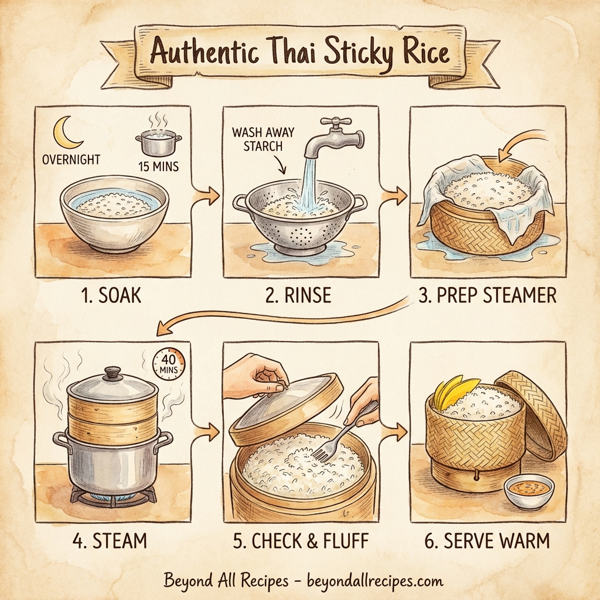
Begin by soaking the glutinous rice in cold water overnight. If you're in a hurry, you can soak it in boiling water for about 15 minutes. This step is crucial for achieving the desired texture.
2
After soaking, drain the rice thoroughly and rinse it under cold water to wash away excess starch.
3
Lay a clean, wet cloth inside your steamer basket. Spread the rinsed rice evenly over the cloth, making sure it’s not packed too tightly to allow steam to circulate.
4
Fill a pot with water and bring it to a rolling boil. Place the steamer over the pot, making sure the water doesn’t touch the rice, and cover it with a lid.
5
Steam the rice for about 40 minutes, checking every 10 to ensure it doesn't dry out. The rice is done when it's tender and translucent.
6
Remove from the heat, fluff the rice with a fork or spatula, and allow it to cool slightly before serving. Enjoy it warm as you would in a Thai restaurant!
Nutrition Information
Frequently Asked Questions
Frequently Asked Questions
What is Authentic Thai Sticky Rice?
Authentic Thai Sticky Rice is a staple short-grain glutinous rice in Thai cuisine known for its unique sticky texture and ability to absorb flavors.
What type of rice should I use for this recipe?
You should use short-grain glutinous rice, which is specifically designed to become sticky when cooked.
How long does it take to soak the glutinous rice?
Ideally, the rice should be soaked in cold water overnight for the best texture.
Is there a faster way to soak sticky rice?
Yes, if you are in a hurry, you can soak the rice in boiling water for approximately 15 minutes.
Why is soaking the rice important?
Soaking is a crucial step to ensure the rice achieves its desired tender and translucent texture during steaming.
Do I need to rinse the rice after soaking?
Yes, you should drain the rice thoroughly and rinse it under cold water to wash away excess starch.
What equipment do I need to cook Thai sticky rice?
You will need a pot to boil water, a steamer basket, and a clean, wet cloth.
How should I prepare the steamer basket?
Lay a clean, wet cloth inside the steamer basket and spread the rinsed rice evenly over it.
Should the rice be packed tightly in the steamer?
No, you should avoid packing it too tightly to allow the steam to circulate properly.
How much water should I use in the pot?
Fill the pot with enough water to create a rolling boil, but ensure the water level does not touch the rice in the steamer.
How long does the steaming process take?
The rice typically takes about 40 minutes to steam until it is tender.
How often should I check the rice while it is steaming?
It is recommended to check the rice every 10 minutes to ensure it does not dry out.
How can I tell when the sticky rice is finished cooking?
The rice is done when the grains appear translucent and feel tender to the touch.
What should I do once the rice is done?
Remove the rice from the heat, fluff it with a fork or spatula, and allow it to cool slightly before serving.
How is Thai sticky rice traditionally eaten?
It is often enjoyed by hand and serves as a communal dish shared among friends and family.
What dishes pair well with Thai sticky rice?
It pairs excellently with grilled meats, spicy curries, and fresh vegetables.
Can sticky rice be used for desserts?
Yes, it is frequently used as a base for many delicious traditional Thai desserts.
How many servings does this recipe provide?
This recipe yields approximately 4 servings.
Is this recipe gluten-free?
Yes, glutinous rice is naturally gluten-free, making it suitable for those with gluten sensitivities.
Is Thai sticky rice vegetarian and vegan friendly?
Yes, the ingredients for the rice itself are both vegetarian and vegan as it only uses rice and water.
Is there any dairy in this recipe?
No, this is a dairy-free recipe.
What is the calorie count for this recipe?
The specific calorie count is not provided, but it consists primarily of carbohydrates from the glutinous rice.
Can I serve this as a snack?
Yes, it is categorized as a great option for both lunch and snacks.
What is the primary ingredient?
The primary ingredient is 1 1/2 cups of glutinous rice.
Do I need to add salt to the water?
The recipe does not require salt, as the rice is designed to absorb the flavors of the dishes it is served with.
Why should I use a wet cloth?
A wet cloth prevents the sticky rice from sticking to the steamer basket and helps maintain moisture.
Can I store leftover sticky rice?
While best enjoyed fresh and warm, you can store it in an airtight container to keep it from drying out.
What is the origin of this dish?
This is an authentic recipe from Thai cuisine.
Can I use a rice cooker for this?
This specific authentic method uses a steamer, though some specialized rice cookers have a sticky rice setting.
Is this a difficult recipe to make?
No, it is tagged as an easy recipe, though it requires patience for the soaking and steaming process.