Authentic Thai Chicken Pad Thai (No Tamarind)

Delve into the heart of Thailand with this Easy Chicken Pad Thai recipe, inspired by traditional methods that exclude tamarind. This version of Pad Thai is essential for anyone craving the authentic taste and vibrant flavors of this classic dish without the hassle of sourcing rare ingredients. Each bite showcases tender chicken strips, perfectly cooked rice noodles, and a delightful medley of fresh veggies and crunchy peanuts, all seasoned with a homemade sauce that balances sweetness, sourness, and saltiness. Whether you're preparing a weeknight dinner or hosting friends, this easy recipe promises a satisfying and delicious Thai experience. Best served fresh with a squirt of lime and an optional dash of chili sauce for those who like an extra kick. Enjoy your culinary journey to Thailand right at home!
N/A
Servings
N/A
Calories
17
Ingredients
Ingredients
Pad Thai rice noodles
9 ounces (soaked in hot water until flexible)
Boneless chicken thighs
3/4 lb (cut into small strips)
Soy sauce
2 1/2 tablespoons (1 1/2 tablespoons for marinade + 1 tablespoon for sauce) (used for marinating and in sauce)
Garlic cloves
4 (minced)
Fresh ginger
1 thumb-sized piece (grated)
Green onions
4 (sliced (reserve half for garnish))
Egg
1 (beaten)
Bean sprouts
2-3 cups (fresh)
Dry-roasted unsalted peanuts
1/3 cup (roughly chopped)
Fresh lime
1 (sliced into wedges)
Vegetable oil
2 tablespoons (for cooking)
Chicken stock
1/3 cup (good-quality)
Rice vinegar
3 tablespoons (or substitute with white vinegar)
Lime juice
1 tablespoon (freshly squeezed)
Brown sugar
3-4 tablespoons (to taste)
Fish sauce
2 tablespoons (to taste)
White pepper
1/8 teaspoon (to taste)
Instructions
1
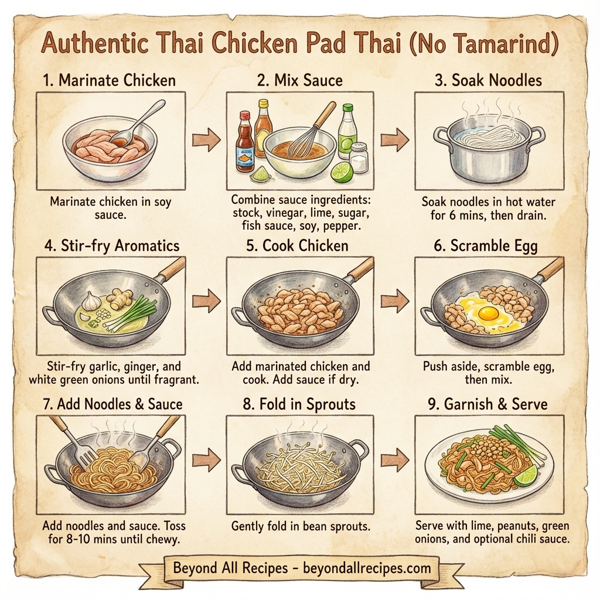
Begin by marinating the chicken thighs in a bowl with 1.5 tablespoons soy sauce. Allow it to sit while you prepare other ingredients.
2
In a separate bowl, mix together the 'pad Thai sauce' ingredients: combine chicken stock, rice vinegar, lime juice, brown sugar, fish sauce, second soy sauce, and white pepper. Stir well until the sugar is completely dissolved. The sauce should be a harmonious blend of sweet, sour, and salty—taste and adjust as necessary. Set this mixture aside.
3
Bring a large pot of water to a boil. Add the pad Thai rice noodles and turn off the heat immediately. Let the noodles soak for about 6 minutes, until they are soft enough to bend but still slightly firm. Drain and rinse briefly with cold water to prevent sticking.
4
Heat a wok or large frying pan over medium-high heat. Add vegetable oil and swirl it around to coat the pan. Once hot, add minced garlic and ginger, along with the white parts of the green onions. Stir-fry for about a minute until fragrant.
5
Add the marinated chicken to the pan and stir-fry for 3-4 minutes, until fully cooked. If the pan looks dry, add 1-2 tablespoons of the pad Thai sauce to keep things moist.
6
Push the mixture to the side of the pan and crack the egg into the center. Quickly scramble the egg until cooked, then mix it into the chicken.
7
Add the soaked noodles and pour in 3-4 tablespoons of the pad Thai sauce. Use two utensils to lift and stir-fry the noodles, making sure they are fully integrated with the other ingredients. Continue this process, adding more sauce every couple of minutes for 8-10 minutes, or until the noodles are chewy and slightly sticky.
8
Just before removing from heat, gently fold in the bean sprouts, preserving their crunch.
9
Taste and adjust with additional fish sauce if needed. Transfer to serving plates and garnish with a lime wedge. Top each serving with the remaining green onion and a generous sprinkle of the chopped peanuts. For a spicy finish, serve with Thai chili sauce on the side.
10
Enjoy your delicious homemade Pad Thai!
Nutrition Information
Frequently Asked Questions
Frequently Asked Questions
What makes this Pad Thai recipe unique?
This recipe is unique because it is an authentic Thai version that does not require tamarind, using rice vinegar and lime juice to achieve the classic flavor profile.
What type of protein is used in this dish?
This recipe uses 3/4 lb of boneless chicken thighs cut into small strips.
How should the chicken be prepared?
The chicken should be marinated in 1.5 tablespoons of soy sauce while you prepare the other ingredients.
What kind of noodles are needed for Pad Thai?
The recipe calls for 9 ounces of Pad Thai rice noodles.
How do I prepare the rice noodles?
Soak the noodles in a pot of boiled water (with the heat turned off) for about 6 minutes until they are flexible but slightly firm, then drain and rinse with cold water.
What ingredients are in the tamarind-free Pad Thai sauce?
The sauce consists of chicken stock, rice vinegar, lime juice, brown sugar, fish sauce, soy sauce, and white pepper.
What is the flavor profile of the homemade sauce?
The sauce is designed to be a harmonious blend of sweet, sour, and salty flavors.
Can I substitute rice vinegar in this recipe?
Yes, you can substitute rice vinegar with white vinegar if needed.
How much garlic and ginger should I use?
Use 4 minced garlic cloves and one thumb-sized piece of grated fresh ginger.
How are the green onions divided in this recipe?
The white parts are stir-fried with the aromatics, while the green parts are reserved for garnish.
When do I add the egg?
After the chicken is cooked, push it to the side of the pan and crack the egg into the center to scramble it before mixing it back in.
How long does it take to cook the chicken?
The marinated chicken should be stir-fried for approximately 3-4 minutes until fully cooked.
What should I do if the pan looks dry while cooking the chicken?
Add 1-2 tablespoons of the prepared Pad Thai sauce to keep the mixture moist.
How do I incorporate the noodles into the stir-fry?
Add the soaked noodles and pour in 3-4 tablespoons of sauce, using two utensils to lift and stir-fry them for 8-10 minutes.
How do I know when the noodles are done?
The noodles are ready when they are chewy, slightly sticky, and have fully absorbed the sauce.
When should the bean sprouts be added?
Fold in the fresh bean sprouts just before removing the pan from the heat.
Why are the bean sprouts added at the end?
They are added at the very end to preserve their fresh crunch.
What is the recommended garnish for Pad Thai?
Garnish with lime wedges, the remaining green onions, and a generous sprinkle of chopped dry-roasted peanuts.
How can I make the Pad Thai spicy?
You can serve the dish with Thai chili sauce on the side for an extra kick.
What type of oil is best for this recipe?
The recipe recommends using 2 tablespoons of vegetable oil for stir-frying.
What type of peanuts should I use?
Use 1/3 cup of dry-roasted unsalted peanuts, roughly chopped.
How much brown sugar is needed?
The recipe suggests 3-4 tablespoons of brown sugar, adjusted to your taste preference.
Is fish sauce necessary for this dish?
Yes, fish sauce is a key component of the sauce for providing the essential salty flavor profile.
How much chicken stock is used in the sauce?
The recipe uses 1/3 cup of good-quality chicken stock.
What is the purpose of the white pepper?
A small amount (1/8 teaspoon) of white pepper is added to the sauce to add a subtle heat and depth.
How many servings does this recipe provide?
While not explicitly stated, the ingredient amounts (9oz noodles, 3/4lb chicken) typically serve 2 to 3 people.
What is the total amount of soy sauce used?
A total of 2.5 tablespoons is used: 1.5 for the marinade and 1 for the sauce mixture.
Can I use a regular frying pan if I don't have a wok?
Yes, a large frying pan can be used as a substitute for a wok.
How should the lime be prepared?
Use 1 tablespoon of freshly squeezed lime juice for the sauce and slice the rest into wedges for garnish.
Is this recipe suitable for a quick weeknight dinner?
Yes, it is described as an easy recipe with a quick cooking process once the ingredients are prepared.