Authentic Swedish Thin Pancakes (Pannkakor)
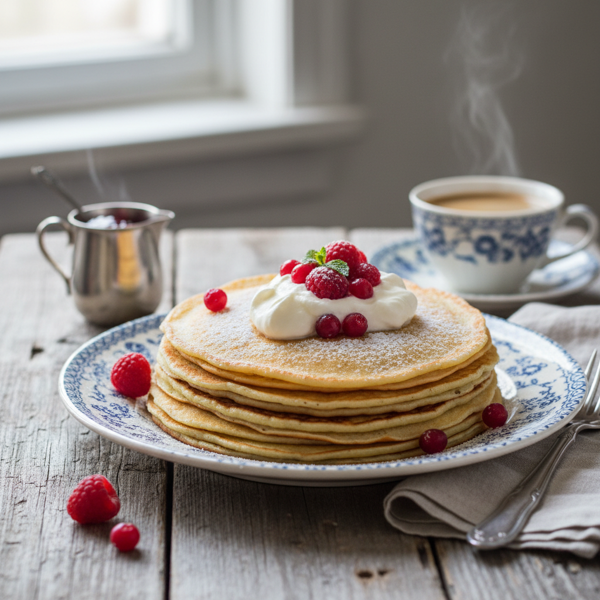
Experience the true taste of Sweden with these deliciously thin pancakes known as Pannkakor. Passed down through generations, this recipe reflects a cherished family tradition that has been perfected in Swedish households. These delicate pancakes are lighter than traditional American pancakes, reminiscent of crêpes, making them a versatile base for both sweet and savory fillings. Ideal for breakfast, brunch, or even dessert, they are best enjoyed warm, topped with whipped cream and fruit preserves. The method requires a hot skillet for optimal results, allowing for a perfectly cooked pancake every time. You'll find yourself reaching for seconds, and even leftovers make for a delightful snack any time of the day!
N/A
Servings
N/A
Calories
5
Ingredients
Ingredients
eggs
2 (large, beaten)
plain wheat flour
1 1/4 cups (sifted)
milk
2 1/2 cups (whole or low-fat)
salt
1 teaspoon
butter
to taste (for frying)
Instructions
1
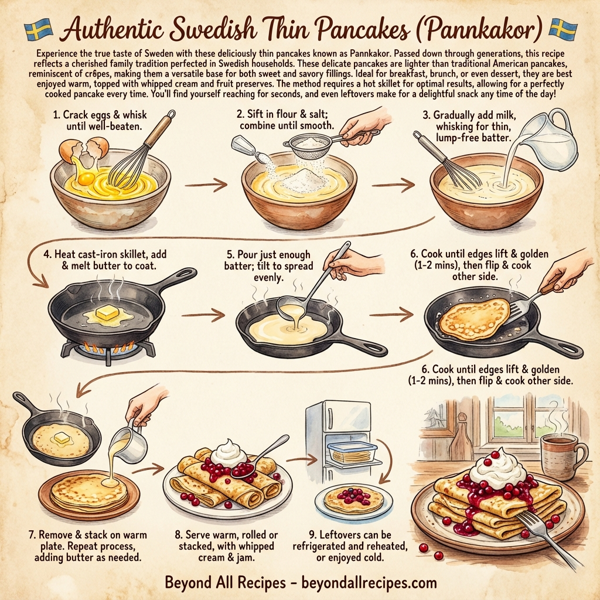
In a large mixing bowl, crack the eggs and whisk them until they are well-beaten.
2
Sift in the flour and salt, combining with the eggs until the mixture is smooth and free of lumps.
3
Gradually add the milk, pouring in a small amount at a time while whisking continuously to ensure the batter is thin and lump-free.
4
Heat a cast-iron skillet over medium heat, achieving an even temperature before cooking. Add a teaspoon of butter and let it melt, coating the bottom of the skillet.
5
Pour just enough batter into the skillet to cover the surface; tilt the skillet to spread it evenly.
6
Cook the pancake until the edges begin to lift and the bottom is golden brown (about 1-2 minutes). Flip the pancake carefully and cook the other side until golden brown.
7
Remove the pancake from the skillet and place it on a warm serving plate. Repeat the process for the remaining batter, adding a little more butter to the skillet as needed.
8
Serve the pancakes warm, rolled or stacked, accompanied by whipped cream and your choice of jam.
9
Any leftovers can be refrigerated and reheated, or enjoyed cold with the same delicious toppings.
Nutrition Information
Frequently Asked Questions
Frequently Asked Questions
What are Swedish Thin Pancakes traditionally called?
In Sweden, these thin pancakes are traditionally known as Pannkakor.
How do Swedish pancakes differ from American-style pancakes?
Swedish pancakes are much thinner and lighter than American pancakes, having a texture and appearance similar to French crépes.
How many eggs are required for this Pannkakor recipe?
This recipe requires 2 large eggs, which should be beaten before mixing with other ingredients.
What type of flour is best for Swedish thin pancakes?
The recipe calls for 1 1/4 cups of plain wheat flour, which should be sifted to ensure a smooth batter.
How much milk is needed for the batter?
You will need 2 1/2 cups of milk, which can be either whole or low-fat.
What is the secret to a lump-free pancake batter?
To avoid lumps, add the milk gradually in small amounts while whisking continuously.
What kind of pan should I use to cook these pancakes?
A cast-iron skillet is recommended for optimal results as it provides even heat distribution.
What heat setting is best for cooking Pannkakor?
The pancakes should be cooked over medium heat to achieve an even golden brown color.
How much salt does the recipe require?
The recipe uses 1 teaspoon of salt, which is sifted in with the flour.
What fat should be used for frying the pancakes?
Butter is used for frying to coat the bottom of the skillet and add flavor.
How long does it take to cook each side of the pancake?
The first side takes about 1-2 minutes until golden brown, and then the second side is cooked until it also turns golden.
How do I know when it is time to flip the pancake?
You should flip the pancake when the edges begin to lift and the bottom side is golden brown.
What is the best way to spread the batter in the pan?
Pour just enough batter to cover the surface and tilt the skillet to spread it evenly across the bottom.
Can these pancakes be served for dessert?
Yes, they are very versatile and ideal for breakfast, brunch, or dessert.
What are the traditional toppings for Swedish pancakes?
They are best enjoyed warm with whipped cream and fruit preserves or jam.
Can I use low-fat milk for this recipe?
Yes, the recipe specifically notes that either whole or low-fat milk can be used.
How should Pannkakor be presented on a plate?
They can be served warm, either rolled up or stacked on top of each other.
Are these pancakes suitable for savory fillings?
Yes, their delicate nature makes them a perfect base for both sweet and savory fillings.
How should I store leftover pancakes?
Any leftovers can be refrigerated and either reheated or enjoyed cold.
Can I eat Swedish pancakes cold?
Yes, leftovers make for a delightful snack when eaten cold with your choice of toppings.
What is the total number of ingredients in this recipe?
This recipe is simple and requires only 5 ingredients: eggs, flour, milk, salt, and butter.
Is it necessary to sift the flour?
Yes, sifting the flour with the salt helps ensure the mixture is smooth and free of lumps.
Why is a hot skillet important for this recipe?
A preheated skillet ensures the pancake cooks quickly and achieves the desired golden brown texture without sticking.
Is this a traditional recipe?
Yes, it is described as a cherished family tradition passed down through Swedish households.
What is the first step in making the batter?
The first step is to crack the eggs into a large mixing bowl and whisk them until they are well-beaten.
Do I need to add butter for every pancake?
You should add a little more butter to the skillet as needed between pancakes to prevent sticking.
What texture should the finished pancake have?
The finished pancakes should be thin, delicate, and perfectly golden brown on both sides.
Should I use a specific type of flour?
The recipe specifies plain wheat flour for the most authentic results.
How do I keep the pancakes warm while cooking the rest?
You should place each finished pancake on a warm serving plate as you repeat the process for the remaining batter.
What is the origin of this pancake recipe?
This is an authentic Swedish recipe, reflecting traditional preparation methods used in Sweden.