Authentic Subterranean Barbacoa
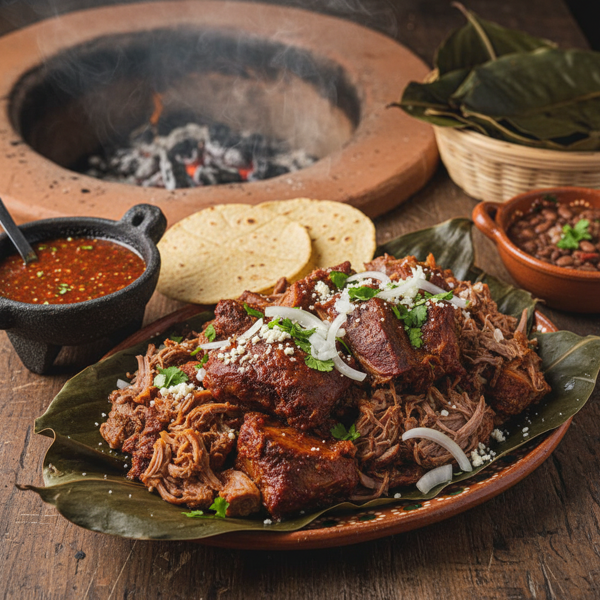
Experience the rich culinary tradition of Mexico's high central plains with this authentic Barbacoa recipe. Traditionally prepared in a deep pit fired with wood, the meat is enveloped in maguey leaves and steamed underground to absorb the smoky flavors and retain its juiciness. This version substitutes maguey leaves with aromatic avocado, bay, and optional plum leaves, and utilizes a pressure cooker or steamer to imitate the original cooking method. The result is tender, flavorful meat infused with a blend of spices and herbs, perfect for tacos or enjoyed on its own. Celebrate the essence of Mexican culture with a dish that brings family and friends together around the table.
N/A
Servings
N/A
Calories
16
Ingredients
Ingredients
Boneless beef roast or goat meat
4 lbs (cut into large chunks)
Dried avocado leaves
14 (whole)
Dried bay leaves
17 (whole)
Dried plum leaves (optional)
10 (whole)
Dried guajillo chilies
12 (seeds and membranes removed)
Dried ancho chiles
3 (seeds and membranes removed)
Garlic cloves
4 (peeled)
Onion
1/8 (chopped)
Fresh thyme
2 sprigs (whole)
Fresh marjoram
2 sprigs (whole)
Dried oregano
1 tablespoon (whole)
Cloves
10 (whole)
Black peppercorns
1 tablespoon (whole)
Red wine vinegar
1 teaspoon (whole)
Water
2 cups (for blending)
Coarse salt
2 tablespoons (whole)
Instructions
1
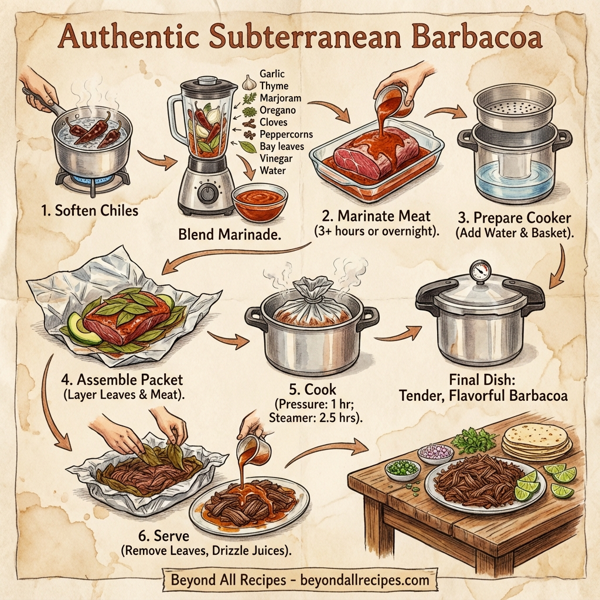
To start, prepare the marinade by cooking the dried guajillo and ancho chiles in a saucepan of boiling water for 10 minutes until softened. Drain the chiles and transfer them to a blender along with the garlic cloves, onion, thyme, marjoram, oregano, cloves, black peppercorns, 3 bay leaves, red wine vinegar, water, and salt. Blend the mixture until smooth and well combined.
2
Place the chosen meat (beef roast or goat) in a glass or ceramic dish. Pour the marinade over the meat, ensuring it is fully coated. Cover the dish and marinate in the refrigerator for at least 3 hours; for best results, allow the meat to marinate overnight, turning it occasionally to promote even flavor distribution.
3
When ready to cook, prepare your pressure cooker by adding approximately 5 cups of water to the bottom. Position the steamer basket above the water.
4
Create a heavy-duty aluminum foil envelope to hold the meat. Lay out a large sheet of foil in the steamer basket and shape it to catch drippings. Arrange half of the dried avocado leaves on the bottom of the foil. Place 7 bay leaves and half of the optional plum leaves on top, then lay the marinated meat over this bed of leaves.
5
Top the meat with the remaining avocado leaves and plum leaves, then close the ends of the foil without sealing it tightly to allow steam to escape.
6
Secure the lid on the pressure cooker and cook under pressure for 1 hour. If you are using a steamer instead, maintain low heat and steam for 2 1/2 hours, monitoring the water level to ensure it doesn’t evaporate completely.
7
Once cooking is complete, remove the pot from heat and let it cool for 10 minutes before carefully opening the foil envelope. Transfer the cooked meat to a large serving platter, remove and discard the leaves, and drizzle the reserved cooking juices over the top for added flavor.
Nutrition Information
Frequently Asked Questions
Frequently Asked Questions
What is Authentic Subterranean Barbacoa?
It is a traditional Mexican dish from the high central plains, historically prepared in a wood-fired pit where meat is wrapped in maguey leaves and steamed underground.
What kind of meat is recommended for this recipe?
This recipe calls for 4 lbs of boneless beef roast or goat meat, cut into large chunks.
How do I replicate the subterranean flavor at home?
By using aromatic avocado, bay, and optional plum leaves inside a pressure cooker or steamer, you can imitate the smoky, earthy flavors of traditional pit cooking.
How many avocado leaves are needed?
You will need 14 dried avocado leaves to properly infuse the meat with flavor.
How many bay leaves should I use?
The recipe requires a total of 17 dried bay leaves: 3 for the marinade and 14 for the steaming bed.
What types of dried chiles are used in the marinade?
The marinade uses 12 dried guajillo chilies and 3 dried ancho chiles, both with seeds and membranes removed.
How do I prepare the dried chiles?
Cook the chiles in boiling water for 10 minutes until softened, then drain them before blending with other ingredients.
What ingredients are in the marinade?
The marinade consists of softened chiles, garlic, onion, thyme, marjoram, oregano, cloves, black peppercorns, bay leaves, red wine vinegar, water, and salt.
How long should the meat marinate?
The meat should marinate for at least 3 hours, though for best results, it is recommended to leave it overnight.
How much water is needed for the pressure cooker?
Add approximately 5 cups of water to the bottom of the pressure cooker, ensuring the steamer basket sits above the water level.
What is the cooking time in a pressure cooker?
The meat should be cooked under pressure for 1 hour.
Can I make this without a pressure cooker?
Yes, you can use a standard steamer; maintain low heat and steam the meat for 2.5 hours.
How do I use the leaves during cooking?
Layer half of the avocado and plum leaves on the bottom of a foil envelope, place the meat on top, and cover with the remaining leaves.
Why use aluminum foil?
The foil acts as an envelope to catch the meat's drippings and hold the aromatic leaves close to the meat during the steaming process.
Should the foil envelope be sealed?
Close the ends of the foil but do not seal it tightly, as steam needs to escape for proper cooking.
What herbs are used in the marinade?
The recipe uses 2 sprigs of fresh thyme, 2 sprigs of fresh marjoram, and 1 tablespoon of dried oregano.
What spices are included in the spice blend?
The blend includes 10 whole cloves, 1 tablespoon of black peppercorns, and 2 tablespoons of coarse salt.
How much vinegar is used?
The recipe uses 1 teaspoon of red wine vinegar.
What size should the meat be cut into?
The boneless beef or goat should be cut into large chunks before marinating.
How much onion is required?
You only need 1/8 of an onion, chopped, for the marinade.
Are plum leaves mandatory?
No, the 10 dried plum leaves are listed as an optional ingredient to enhance the flavor.
What do I do with the cooking juices?
After cooking, drizzle the reserved juices from the foil envelope over the meat for added flavor.
What should I do with the leaves after the meat is cooked?
Once the meat is finished, you should remove and discard all the avocado, bay, and plum leaves.
How many garlic cloves are in the recipe?
The recipe calls for 4 peeled garlic cloves.
How much water is used for blending the marinade?
You will need 2 cups of water to blend the marinade ingredients into a smooth mixture.
Does the meat need to be turned while marinating?
Yes, turning the meat occasionally helps promote even flavor distribution.
Is this recipe suitable for tacos?
Yes, the tender, shredded meat is perfect for serving in tacos.
What should I check when using a steamer?
When steaming for 2.5 hours, monitor the water level to ensure it does not evaporate completely.
How long should the meat rest after cooking?
Let the meat cool for 10 minutes after removing it from the heat before opening the foil envelope.
What are the primary flavor profiles of this dish?
The dish is characterized by smoky, earthy flavors from the dried leaves and a rich, spicy depth from the guajillo and ancho chiles.