Authentic Rustic French Bread
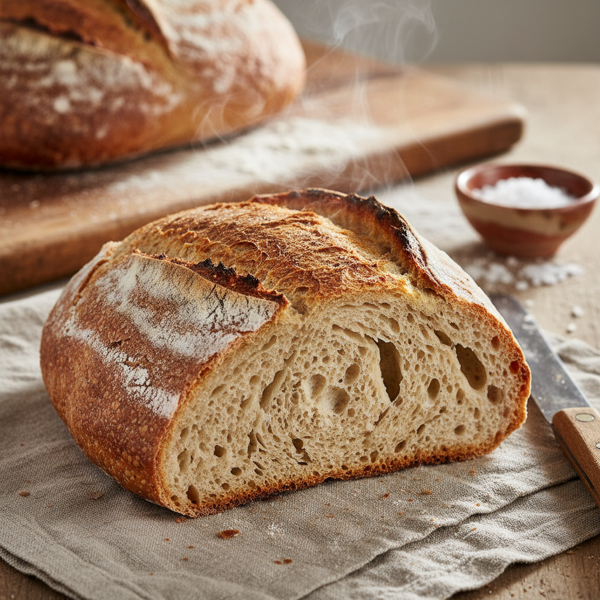
Experience the time-honored tradition of baking rustic French bread with this authentic recipe that only requires four simple ingredients. This artisanal bread delivers a delightful crust and a soft, airy interior, perfect for sandwiches, toasting, or simply enjoying with butter. With variations to make either classic loaves or elongated baguettes, this recipe invites you to immerse yourself in the art of bread making. Gather around the table with freshly baked loaves, and let the warm, mouthwatering aroma fill your home as you savor every slice of this genuine French delight!
N/A
Servings
N/A
Calories
5
Ingredients
Ingredients
Bread Flour or All-Purpose Flour
4 cups (plus additional for kneading surface)
Yeast
1 tablespoon (dry active yeast)
Salt
1 tablespoon (fine sea salt)
Lukewarm Water
1.5-2 cups (for dough)
Water
1/2 cup (for steaming in oven)
Instructions
1
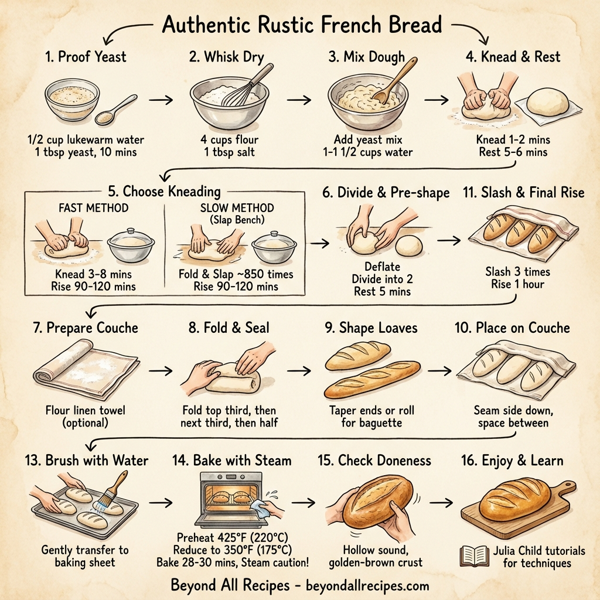
1. In a small bowl, combine 1 tablespoon of yeast with 1/2 cup of lukewarm water. Allow it to proof for about 10 minutes, or until it becomes frothy.
2
2. In a large mixing bowl, whisk together 4 cups of flour and 1 tablespoon of salt. This prevents the salt from immediately activating the yeast.
3
3. Pour the yeast mixture into the flour mixture and stir with a wooden spoon. Gradually add 1 to 1 1/2 cups of lukewarm water until a shaggy dough forms that pulls away from the sides of the bowl.
4
4. Lightly flour your work surface and turn out the dough. Knead for about 1-2 minutes until it forms a rough ball. Cover it with a clean towel and let it rest for 5-6 minutes.
5
5. Clean and dry your bowl. Choose your kneading method: Fast or Slow.
6
- Fast: Knead the dough on a floured surface for 3-8 minutes until it becomes smooth and elastic, then place it in the bowl, cover with plastic wrap, and let it rise for 90-120 minutes until doubled.
7
- Slow: Use the slap bench method by flattening the dough, folding it like a book, and slapping it down on the surface. Repeat this process roughly 850 times until the dough becomes elastic. Round it into a ball, place it in the bowl, cover, and let it rise for 90-120 minutes.
8
6. Once risen, turn the dough out onto a floured surface. Flatten it gently to release the gases, then divide it into two equal pieces. Shape each piece into a ball and allow them to rest for 5 minutes.
9
7. Prepare a couche by flouring a piece of linen or a non-terrycloth towel to cradle your loaves. This step isn’t essential but helps support the dough as it rises.
10
8. For one piece of dough, flatten it out again and fold the top third down to the center, sealing it with the heel of your hand. Repeat this with the next third and then fold the dough in half from top to bottom, sealing the seam.
11
9. Shape the ends of the dough by gently rolling them to taper off, creating the classic French bread shape. Alternatively, roll the dough to form a baguette.
12
10. Place the formed dough, seam side down, onto the couche with some space between them for expansion.
13
11. Make three diagonal slashes on the top of each loaf. Cover them with the towel and allow them to rise for about one hour.
14
12. Carefully peel the couche away from the loaves and transfer them onto a lightly floured baking sheet or paddle, handling them gently.
15
13. Brush the tops of the loaves with cool water for a shiny crust.
16
14. Preheat your oven to 425°F (220°C). Toss 1/2 cup of water onto the bottom of the oven for steam—be careful, steam is hot! Place the loaves in the oven and immediately reduce the temperature to 350°F (175°C). Bake for 28-30 minutes.
17
15. The bread is done when it sounds hollow when tapped on the bottom and has a rich, golden-brown crust.
18
16. For an in-depth understanding of the traditional techniques, consider watching French bread tutorials by Julia Child.
Nutrition Information
Frequently Asked Questions
Frequently Asked Questions
What are the four simple ingredients needed for this authentic rustic French bread?
The four simple ingredients required are flour (bread or all-purpose), yeast, salt, and lukewarm water.
What type of flour is recommended for this recipe?
You can use either Bread Flour or All-Purpose Flour.
How much yeast is used in this French bread recipe?
The recipe calls for 1 tablespoon of dry active yeast.
How long should I proof the yeast?
The yeast should be proofed in lukewarm water for about 10 minutes, or until it becomes frothy.
Why do I need to whisk the flour and salt together before adding the yeast?
Whisking them together first prevents the salt from immediately activating and potentially harming the yeast.
What should the dough look like after adding the water?
It should form a shaggy dough that pulls away from the sides of the mixing bowl.
How long should the dough rest before the main kneading process?
After a quick 1-2 minute initial knead into a rough ball, the dough should rest covered for 5-6 minutes.
What is the 'Fast' kneading method?
The Fast method involves kneading the dough on a floured surface for 3-8 minutes until it becomes smooth and elastic.
What is the 'Slow' or slap bench method of kneading?
This involves flattening the dough, folding it like a book, and slapping it down on the surface repeatedly.
How many times should I repeat the slap bench method?
The recipe suggests repeating the process roughly 850 times until the dough becomes elastic.
How long is the first rise (fermentation) period?
The dough should rise for 90-120 minutes until it has doubled in size.
How many loaves does this recipe make?
The recipe makes two equal loaves or baguettes.
What is a couche and do I need one?
A couche is a floured piece of linen or non-terrycloth towel used to cradle loaves. It is not essential but helps support the dough's shape during the rise.
How do you shape a traditional French loaf according to this recipe?
Flatten the dough, fold the top third down, then the next third, and finally fold it in half, sealing the seam with the heel of your hand.
Can I make baguettes with this dough?
Yes, instead of the standard loaf shape, you can roll the dough into elongated baguette shapes.
How should the dough be placed on the towel for its final rise?
The dough should be placed seam side down onto the couche or towel.
How many slashes should be made on the top of the bread?
You should make three diagonal slashes on the top of each loaf.
How long is the second rise time?
The formed loaves should rise for approximately one hour.
How can I get a shiny crust on my French bread?
Brush the tops of the loaves with cool water just before placing them in the oven.
What is the initial preheat temperature for the oven?
The oven should be preheated to 425°F (220°C).
Why is water tossed onto the bottom of the oven?
Tossing 1/2 cup of water onto the bottom of the oven creates steam, which is essential for a traditional crust.
Does the baking temperature change during the process?
Yes, once the loaves are in the oven, immediately reduce the temperature from 425°F to 350°F (175°C).
How long should the bread bake?
The bread typically bakes for 28-30 minutes.
How can I tell if the bread is fully baked?
The bread is done when it has a rich, golden-brown crust and sounds hollow when tapped on the bottom.
Whose tutorials are recommended for learning traditional techniques?
The instructions recommend watching French bread tutorials by Julia Child for in-depth understanding.
How much salt is needed for this recipe?
The recipe requires 1 tablespoon of fine sea salt.
What is the total amount of water used in the dough?
The recipe uses between 1.5 and 2 cups of lukewarm water total for the dough.
Should the water used in the dough be hot?
No, the water should be lukewarm to ensure the yeast remains active without being killed.
How do you handle the loaves when transferring them to the baking sheet?
You should handle them very gently to avoid collapsing the air bubbles created during the rise.
What is the purpose of the 5-minute rest after dividing the dough?
This rest allows the gluten to relax, making it easier to shape the dough into loaves or baguettes.