Authentic Roman Spaghetti Carbonara
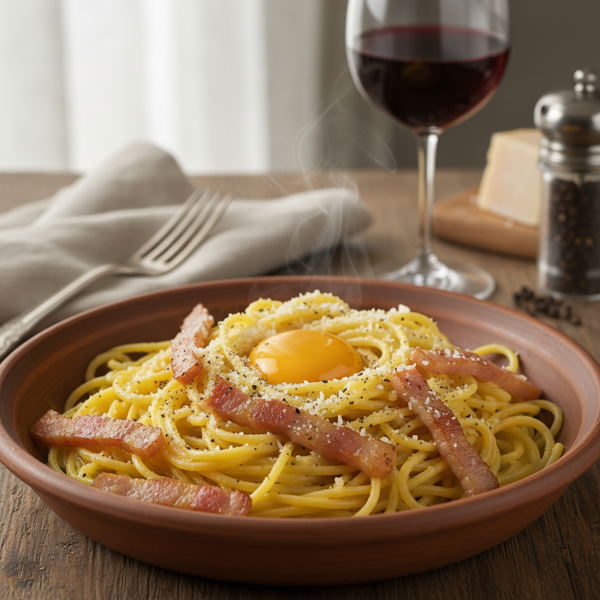
Experience the rich, classic flavors of Italy with this authentic Spaghetti Carbonara recipe, inspired by Mario Batali. Using high-quality ingredients like pancetta or guanciale, fresh eggs, and Parmigiano-Reggiano cheese, this dish combines simplicity and flavor to deliver a comforting yet sophisticated pasta experience. Perfect for a cozy dinner or impressing guests, each bite offers a creamy texture without the use of heavy cream, allowing the ingredients to genuinely shine. Enjoy this traditional Roman dish that has become beloved worldwide.
4
Servings
N/A
Calories
6
Ingredients

Ingredients
Extra Virgin Olive Oil
3 tablespoons (none)
Pancetta
8 ounces (diced)
Spaghetti
1 pound (none)
Parmigiano-Reggiano Cheese
1 1/4 cups (freshly grated)
Eggs
4 large (separated into yolks and whites)
Fresh Ground Black Pepper
to taste (none)
Instructions
1
Fill a large pot with 6 quarts of water, bring to a rolling boil, and add 2 tablespoons of salt to season the water.
2
In a 12- to 14-inch sauté pan, heat the olive oil over medium heat. Add the diced pancetta and cook until it's golden brown and crispy, rendering its fat. Once done, remove from heat but do not drain the fat, as it will add flavor to the pasta.
3
Cook the spaghetti in the boiling salted water until it's just al dente (usually 8-10 minutes), stirring occasionally to prevent sticking.
4
Before draining the spaghetti, scoop out 1/4 cup of the pasta cooking water and set it aside. Drain the spaghetti and immediately add it to the sauté pan with the cooked pancetta.
5
Add the reserved pasta water to the pan, and toss the pasta with the pancetta over low heat for about 1 minute to heat through and combine the flavors.
6
Remove the pan from the heat, and quickly add 1 cup of grated Parmigiano-Reggiano cheese, the egg whites, and a generous amount of black pepper. Toss everything together until the pasta is evenly coated and creamy. The residual heat will gently cook the eggs.
7
Divide the pasta among four warmed dinner plates, creating a small nest in the center of each serving.
8
Carefully place an egg yolk into each nest. Season the yolks with more freshly ground black pepper and sprinkle the remaining 1/4 cup of Parmigiano-Reggiano cheese over the top.
9
Serve immediately, encouraging guests to mix the yolk into the pasta for a rich, velvety sauce.
Nutrition Information
Frequently Asked Questions
Frequently Asked Questions
What is authentic Roman Spaghetti Carbonara?
It is a traditional Italian pasta dish made with eggs, cheese, cured pork like pancetta or guanciale, and black pepper.
What type of pasta is used in this recipe?
This recipe specifically calls for one pound of spaghetti.
Can I use guanciale instead of pancetta?
Yes, guanciale is a high-quality traditional alternative mentioned for an authentic experience.
Why do you reserve the pasta cooking water?
The starchy water helps to emulsify the cheese and eggs into a creamy sauce without the need for cream.
How do I prevent the eggs from scrambling?
Remove the pan from the heat before adding the eggs so the residual heat gently cooks them into a sauce.
Is heavy cream used in this recipe?
No, this authentic Roman recipe achieves its creamy texture using only eggs, cheese, and pasta water.
What cheese is recommended for this Carbonara?
The recipe calls for 1 1/4 cups of freshly grated Parmigiano-Reggiano cheese.
How many eggs are required?
The recipe uses 4 large eggs which are separated into yolks and whites.
Why are the eggs separated in this method?
The whites are mixed into the pasta to create the sauce, while the yolks are placed on top of each serving for extra richness.
How do you serve the egg yolks?
Place one raw egg yolk in a small nest in the center of each pasta serving for the guest to mix in.
How much salt should be added to the pasta water?
Use 2 tablespoons of salt for 6 quarts of boiling water to properly season the spaghetti.
What is the cooking time for the spaghetti?
Cook the pasta for 8 to 10 minutes until it reaches an al dente texture.
Can I use pre-grated cheese from a container?
Freshly grated cheese is highly recommended as it melts better and provides a superior texture.
What kind of oil should I use to cook the pancetta?
The recipe recommends using 3 tablespoons of extra virgin olive oil.
Should I drain the fat after cooking the pancetta?
No, do not drain the rendered fat as it provides essential flavor to the final dish.
What size sauté pan is best for this recipe?
A 12- to 14-inch sauté pan is ideal for tossing the spaghetti with the other ingredients.
What should I do if the sauce is too thick?
You can add a small amount of the reserved pasta cooking water to reach your desired creaminess.
How many people does this recipe serve?
This recipe is designed to provide 4 servings.
Is this a quick dinner option?
Yes, it is tagged as a quick dinner since it can be prepared in the time it takes to boil and cook pasta.
What does al dente mean?
Al dente means the pasta is cooked so it remains firm to the bite, which is the traditional Italian way.
Can I use Pecorino Romano instead?
While this recipe uses Parmigiano-Reggiano, Pecorino Romano is another traditional choice for Roman Carbonara.
How should the pancetta be prepared?
The pancetta should be diced and cooked until it is golden brown and crispy.
Why is freshly ground black pepper important?
It provides a sharp, aromatic heat that balances the richness of the eggs and cheese.
Can I make this recipe with gluten-free pasta?
Yes, you can substitute the spaghetti with your preferred gluten-free pasta variety.
Who is the inspiration behind this recipe?
This particular version of the recipe is inspired by the chef Mario Batali.
Is it safe to serve a raw egg yolk on top?
The heat from the freshly cooked pasta is meant to gently warm and partially cook the yolk as it is mixed in.
Can I reheat leftovers of this dish?
Carbonara is best enjoyed immediately; reheating can cause the egg-based sauce to scramble or dry out.
How do I finish the dish before serving?
Season with extra black pepper and a final sprinkle of Parmigiano-Reggiano cheese.
What temperature should the plates be?
Warming the dinner plates helps keep the pasta and egg-based sauce at the ideal serving temperature.
What is the key to a successful Carbonara?
The key is using high-quality ingredients and emulsifying the cheese and eggs with pasta water off the heat.