Authentic Pork Posole Rojo
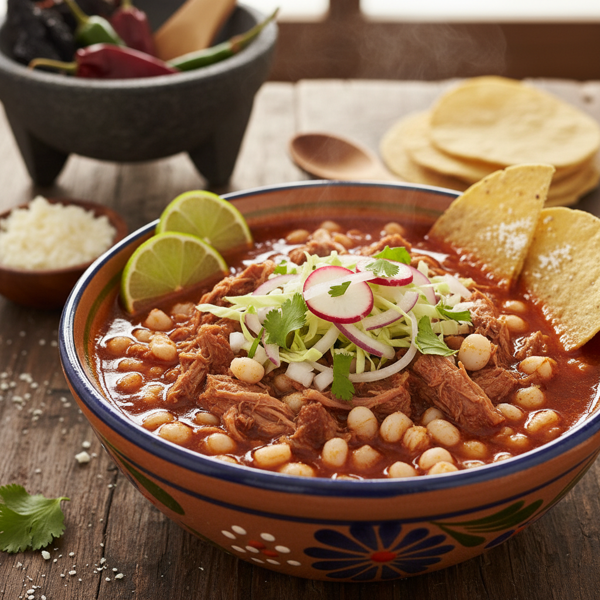
Experience the rich, hearty flavors of this traditional Pozole Rojo, a beloved Mexican dish that is perfect for family gatherings or festive celebrations. This recipe combines tender pork, aromatic spices, and a blend of vibrant dried chilies for a memorable bowl of comforting goodness. With a bit of effort, you will create a fragrant broth that envelops your taste buds in warmth, and the toppings will provide a satisfying crunch and freshness that truly elevates this dish. Gather your loved ones, share a bowl, and enjoy the delightful flavors of this handcrafted Pozole Rojo.
N/A
Servings
N/A
Calories
20
Ingredients
Ingredients
Pork shoulder or country-style pork ribs
4-5 lbs (trimmed of excess fat)
Smoked pork shanks
3 large
Celery ribs
3-4 (chopped)
Large onions
3 (2 quartered (skins on), 1 chopped)
Dried guajillo chilies
6-8 (stemmed and seeded)
Dried New Mexico chiles
8-10 (stemmed and seeded)
Mint
1 bunch (chopped)
Cilantro
1 bunch (chopped)
Garlic cloves
30 cloves (20 whole, 10 minced)
Dried oregano
1 tablespoon
Hominy
3 (30-ounce) cans (drained)
Chicken broth
2 (49.5-ounce) cans
Cumin
1 tablespoon
Salt and pepper
to taste
Vegetable oil
2 tablespoons
Green onions
1 bunch (sliced for serving)
Shredded cabbage
to taste (for serving)
Tortilla chips
to taste (for serving)
Radish
to taste (sliced for serving)
Dried oregano
to taste (for serving)
Instructions
1
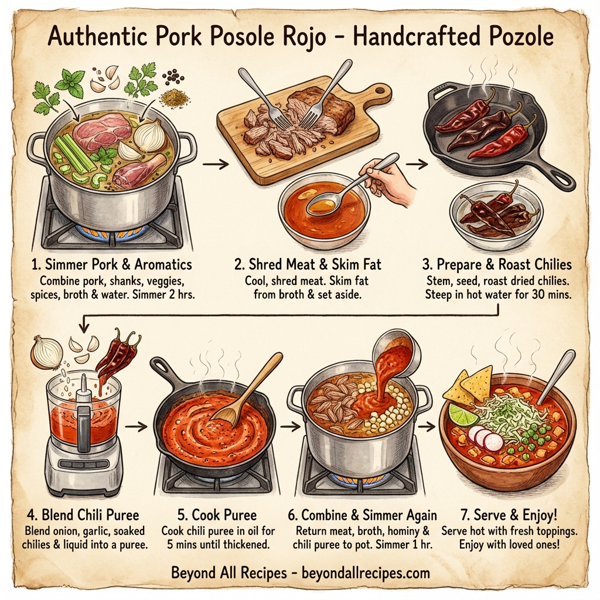
Begin by trimming excess fat from the pork shoulder or ribs. In a large pot, combine the pork with the smoked shanks, chopped celery, two quartered onions (skins on and all), mint, cilantro, 20 whole garlic cloves, peppercorns, oregano, both cans of chicken broth, and cumin. Add enough water to completely cover the ingredients.
2
Bring the mixture to a boil, then reduce the heat to a simmer and cover the pot. Allow it to simmer for about 2 hours until the meat is tender. After cooking, carefully remove the meat and let it cool sufficiently before shredding it off the bones. Skim off any fat from the broth and set aside for later.
3
While the meat is cooling, prepare the chiles. Start by stemming and seeding the dried guajillo and New Mexico chiles. In a dry cast iron skillet, roast the chiles for about 2 minutes to enhance their flavor. Transfer the roasted chiles to a bowl, cover them with hot water, and let them steep for about 30 minutes.
4
In a food processor, combine the remaining chopped onion and the 10 whole garlic cloves. Process until they are minced. Once the chiles have steeped, add them and 1.5 cups of the soaking liquid to the food processor. Season with salt and pepper, then blend until smooth.
5
In the heated cast iron skillet, add 2 tablespoons of vegetable oil. Pour the chile puree into the skillet and cook for about 5 minutes, stirring frequently until it thickens slightly, then remove it from heat.
6
Return to the cooled meat: shred the pork and smoked shanks, and add them back into the pot with the strained broth, hominy, and the thickened chile puree. Bring the pot back to a gentle boil and then reduce the heat to allow it to simmer for an additional hour.
7
Finally, serve the Posole Rojo hot, accompanied by your choice of toppings such as sliced green onions, shredded cabbage, sliced radishes, dried oregano, and crispy tortilla chips. Enjoy this delightful, comforting dish with family and friends!
Nutrition Information
Frequently Asked Questions
Frequently Asked Questions
What is Authentic Pork Posole Rojo?
Authentic Pork Posole Rojo is a traditional Mexican soup or stew made with tender pork, hominy, and a rich broth seasoned with a blend of dried red chilies and aromatic spices.
What cut of meat is best for this recipe?
The recipe recommends using 4-5 lbs of pork shoulder or country-style pork ribs, trimmed of excess fat, combined with smoked pork shanks for added flavor.
Which dried chilies are used in the red sauce?
This recipe uses 6-8 dried guajillo chilies and 8-10 dried New Mexico chiles to create its signature red color and depth of flavor.
How long does it take to cook the pork?
The pork is first simmered for approximately 2 hours until tender, and then simmered for an additional hour after the hominy and chile puree are added.
What is hominy and how is it prepared for this dish?
Hominy is corn that has been treated with an alkali. For this recipe, use three 30-ounce cans that have been drained before adding them to the pot.
How much garlic is needed for this recipe?
This recipe is very aromatic, calling for a total of 30 garlic cloves: 20 whole cloves for the broth and 10 minced cloves for the chile puree.
Why are the dried chilies roasted before soaking?
Roasting the chilies in a dry skillet for about 2 minutes enhances their natural flavor profile before they are rehydrated in hot water.
What are the recommended toppings for Posole Rojo?
Traditional toppings include sliced green onions, shredded cabbage, sliced radishes, dried oregano, and crispy tortilla chips.
How do you prepare the onions for the broth?
Two of the large onions should be quartered with the skins left on to add color and flavor to the simmering broth, while the third onion is chopped for the puree.
Do I need to use oil in this recipe?
Yes, 2 tablespoons of vegetable oil are used to sauté the chile puree for about 5 minutes to thicken it before it is added to the main pot.
What herbs provide the aromatic base for the broth?
The broth is flavored with a bunch of fresh mint, a bunch of fresh cilantro, dried oregano, and cumin.
What should I do with the pork after the initial 2-hour simmer?
Remove the meat from the pot, let it cool, and then shred it off the bones before returning it to the strained broth.
How much liquid is needed for the chile puree?
After the chiles have steeped for 30 minutes, blend them with 1.5 cups of their soaking liquid, along with garlic and onion.
Can I use chicken broth instead of water?
The recipe actually calls for two 49.5-ounce cans of chicken broth in addition to enough water to cover the ingredients.
What gives the soup its red color?
The vibrant red color comes from the puree of guajillo and New Mexico chiles that is cooked and then stirred into the broth.
Should the fat be removed from the broth?
Yes, once the meat is removed after the first simmer, you should skim off any excess fat from the broth for a cleaner finish.
Is celery a traditional ingredient in posole?
While recipes vary, this version uses 3-4 chopped celery ribs to add an extra layer of aromatic flavor to the initial pork broth.
How long do the dried chiles need to soak?
After being roasted, the dried chiles should steep in hot water for approximately 30 minutes until they are soft.
What type of pan is best for roasting the chiles?
A dry cast iron skillet is recommended for roasting the dried chiles and for cooking the chile puree.
Can the pork shanks be substituted?
The smoked pork shanks add a specific smoky depth; if unavailable, you can use more pork shoulder, though the flavor profile will be less complex.
How do I process the chile sauce?
Use a food processor to combine the minced garlic, chopped onion, soaked chiles, and soaking liquid, blending until the mixture is smooth.
Is this dish spicy?
The combination of guajillo and New Mexico chiles provides a warm, rich flavor that is characteristic of Mexican cuisine, but it is generally considered medium-mild rather than extremely hot.
How should the final soup be served?
It should be served hot in large bowls, allowing guests to customize their portion with the various fresh vegetable toppings and crunchy chips.
Can I use fresh corn instead of hominy?
No, hominy has a unique chewy texture and flavor that is essential to an authentic posole; fresh corn would result in a very different dish.
Do I need to season the chile puree?
Yes, when blending the chiles in the food processor, you should add salt and pepper to taste.
Is it necessary to strain the broth?
The recipe implies straining as you remove the solids (onions with skins, whole garlic, herbs) to ensure the final soup contains only the meat, hominy, and red sauce.
Can this be made in large batches?
Yes, this recipe is perfect for gatherings and celebrations as it uses a significant amount of meat and large cans of hominy.
Why is cumin used in the recipe?
One tablespoon of cumin is added to the broth to provide an earthy, warm spice note that complements the pork and chiles.
How do you know when the chile puree is done cooking?
Sauté the puree in the skillet for about 5 minutes, stirring frequently, until the color deepens and the texture thickens slightly.
What role does the cilantro and mint play?
A full bunch of each is used during the initial simmer to infuse the pork and the cooking liquid with fresh, herbal brightness.