Authentic Polish Pierogi with Creamy Cheese Filling
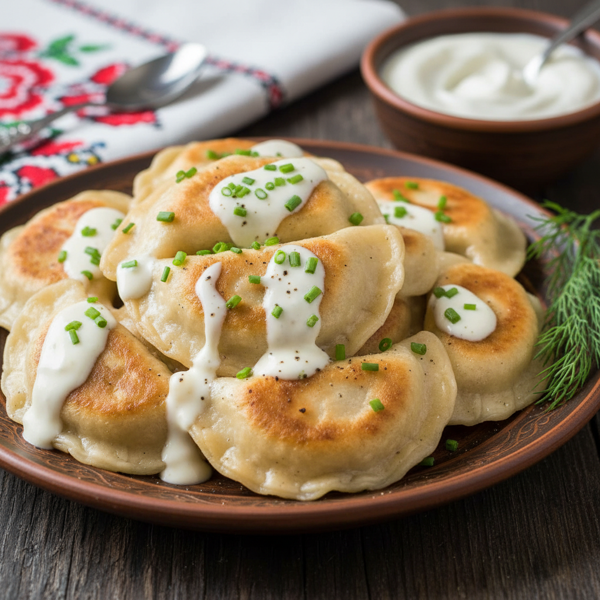
Experience the rich flavors of Eastern Europe with these Authentic Polish Pierogi filled with a delightful creamy cheese mixture. These handmade dumplings are easy to assemble, featuring a luscious filling of ricotta or cream cheese, finely sautéed onions, and a hint of lemon juice that brightens the flavor. Perfect for family gatherings or as a comforting weeknight meal, these pierogi can be served fresh or frozen for later enjoyment. Whether boiled and served with a drizzle of butter or fried for a crispy finish, this recipe will become a cherished favorite at any table.
8
Servings
N/A
Calories
12
Ingredients
Ingredients
Ricotta cheese or cream cheese
8 ounces (softened)
Egg
1 (beaten)
Lemon juice
1 tablespoon (freshly squeezed)
Onion
1 (finely chopped and fried in butter)
Salt
to taste
Pepper
to taste
Sugar
1 teaspoon
Flour
4 cups
Eggs
2 (beaten)
Salt
1 teaspoon
Warm chicken stock or chicken bouillon
3/4-1 cup
Salt water
12 cups (for boiling)
Instructions
1
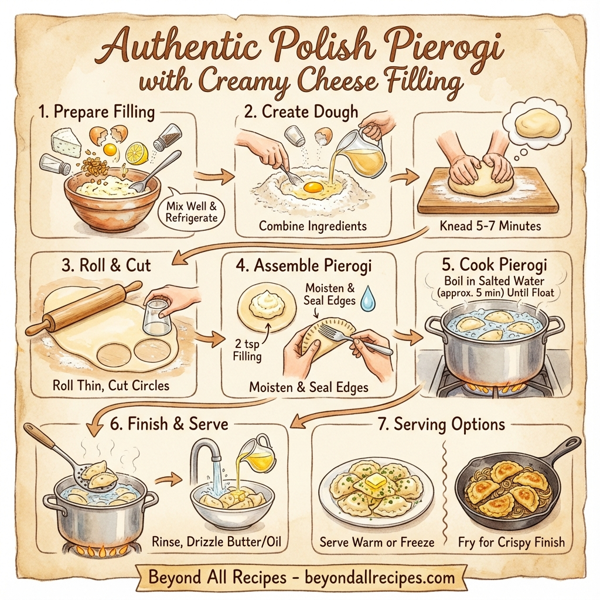
In a mixing bowl, combine the ricotta or cream cheese with the beaten egg, lemon juice, fried onions, salt, pepper, and sugar. Mix well and refrigerate the filling until ready to assemble the pierogi.
2
In a separate bowl, combine the flour and 1 teaspoon of salt. Make a well in the center and add the beaten eggs and warm chicken stock gradually, mixing until a dough forms. Knead the dough on a floured surface until it's smooth and slightly dry, about 5-7 minutes. If necessary, knead in more flour until the texture is similar to play-doh.
3
Take a portion of the dough and roll it out on a floured surface as thin as possible. Use a glass or round cutter to cut out circles of dough.
4
Place approximately 2 teaspoons of the cheese filling in the center of each circle. Moisten the edges with water and fold the dough over the filling, pressing to seal. You can use the back of a fork to crimp the edges for an extra seal.
5
Bring a large pot of salted water to a gentle boil. Carefully drop in 12 pierogi at a time, stirring occasionally to prevent sticking. Boil until they float to the surface, about 5 minutes.
6
Once cooked, remove pierogi with a slotted spoon and place them in a bowl. Rinse with cold water to stop the cooking process, then drizzle with melted butter or vegetable oil to prevent sticking.
7
Repeat the cooking process with the remaining pierogi. You can serve them warm or freeze them for later use. For additional flair, consider deep frying until golden brown or pan frying in butter with onions until lightly browned before serving.
Nutrition Information
Frequently Asked Questions
Frequently Asked Questions
What are Authentic Polish Pierogi?
Authentic Polish Pierogi are handmade dumplings consisting of a thin dough wrapped around various fillings, in this case, a creamy cheese mixture.
What type of cheese is used for the filling?
This recipe uses 8 ounces of either ricotta cheese or cream cheese, which should be softened before mixing.
How is the onion prepared for the filling?
The onion should be finely chopped and fried in butter before being mixed into the cheese filling.
What ingredients are in the pierogi filling?
The filling contains ricotta or cream cheese, a beaten egg, lemon juice, fried onions, salt, pepper, and a teaspoon of sugar.
Why is lemon juice added to the cheese filling?
A tablespoon of freshly squeezed lemon juice is used to brighten the flavor of the creamy cheese mixture.
What is the base of the pierogi dough?
The dough is made from 4 cups of flour, 2 beaten eggs, salt, and warm chicken stock or bouillon.
How much liquid is needed for the dough?
You should use between 3/4 to 1 cup of warm chicken stock or chicken bouillon.
How do I mix the dough correctly?
Make a well in the center of the flour and salt mixture, then gradually add the beaten eggs and warm stock, mixing until a dough forms.
How long should I knead the pierogi dough?
Knead the dough on a floured surface for about 5 to 7 minutes until it is smooth and slightly dry.
What should the dough texture feel like?
The dough should have a texture similar to play-doh once it is properly kneaded.
How thin should I roll the pierogi dough?
You should roll the dough out on a floured surface as thin as possible before cutting out circles.
How do I cut the shapes for the pierogi?
Use a glass or a round cutter to cut circles out of the rolled dough.
How much filling goes into each pierogi?
Place approximately 2 teaspoons of the cheese filling in the center of each dough circle.
How do I ensure the pierogi are sealed properly?
Moisten the edges of the dough circle with water, fold it over the filling, and press the edges together to seal.
Can I use a tool to seal the edges?
Yes, you can use the back of a fork to crimp the edges for a decorative look and an extra-secure seal.
How do I cook the pierogi?
Bring a large pot of salted water to a gentle boil and carefully drop in about 12 pierogi at a time.
How long do pierogi take to boil?
Boil them for about 5 minutes or until they float to the surface of the water.
How do I prevent the pierogi from sticking in the pot?
Stir the water occasionally while they are boiling to prevent them from sticking to the bottom or each other.
What is the first step after removing them from the boiling water?
Remove them with a slotted spoon and rinse them with cold water to stop the cooking process.
How do I prevent cooked pierogi from sticking together in a bowl?
Drizzle the cooked pierogi with melted butter or vegetable oil to prevent them from sticking.
Can I freeze these pierogi?
Yes, these pierogi are freezer-friendly and can be frozen for later use.
What are the different ways to serve pierogi?
They can be served warm immediately after boiling, pan-fried in butter with onions, or deep-fried until golden brown.
How do I pan-fry pierogi for a crispy finish?
Pan-fry them in butter with onions until they are lightly browned before serving.
Is this recipe suitable for vegetarians?
This recipe is vegetarian-friendly, though you may want to swap the chicken stock for vegetable stock to make it strictly vegetarian.
What meal category does this fall under?
This recipe is categorized as a One Dish Meal.
How many servings does this recipe yield?
This recipe provides approximately 8 servings.
Should the filling be chilled before assembly?
Yes, it is recommended to refrigerate the cheese filling until you are ready to assemble the pierogi.
How much salt is needed for the boiling water?
The recipe calls for 12 cups of salted water for the boiling process.
Can I use chicken bouillon instead of stock for the dough?
Yes, warm chicken bouillon is an acceptable substitute for chicken stock in the dough mixture.
What makes the dough easier to work with?
Ensuring the dough is kneaded until it is smooth and has a play-doh-like consistency makes it easier to roll and shape.