Authentic Penang Char Kway Teow
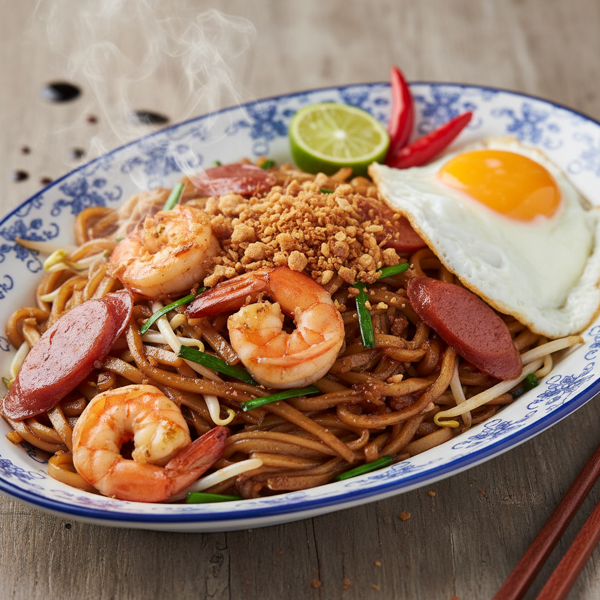
Experience the vibrant flavors of Malaysia with this Authentic Penang Char Kway Teow, a beloved street food dish that captures the essence of Penang's culinary heritage. This quick-cooking recipe features wide flat rice noodles stirred up with savory ingredients like Chinese sausage, fresh mung bean sprouts, and succulent Dungeness crab. The dish boasts a delightful umami flavor, enhanced with sambal chili paste that delivers a perfect spicy kick, making it a satisfying option for lunch or a delicious snack. Perfect for busy weeknights, this hearty dish brings home the lively street food experience of Penang, Malaysia.
4
Servings
205
Calories
11
Ingredients
Ingredients
Wide flat dried rice noodles
7 ounces (Soaked in boiling water until tender)
Vegetable oil
3 tablespoons (For cooking)
Garlic cloves
2 (Finely chopped)
Sambal chili paste
2 tablespoons (Start with 1 tbsp and adjust for spiciness)
Chinese sausage (lop chong)
2 (Cut into 1/4 inch slices)
Green onions
6 (Trimmed and cut into 2 inch lengths)
Soy sauce
2 tablespoons (For seasoning)
Large eggs
4 (Cracked into the wok)
White pepper
1/2 teaspoon (For seasoning)
Mung bean sprouts
6 ounces (Fresh)
Dungeness crab
1/2 lb (Shelled and cooked)
Instructions
1
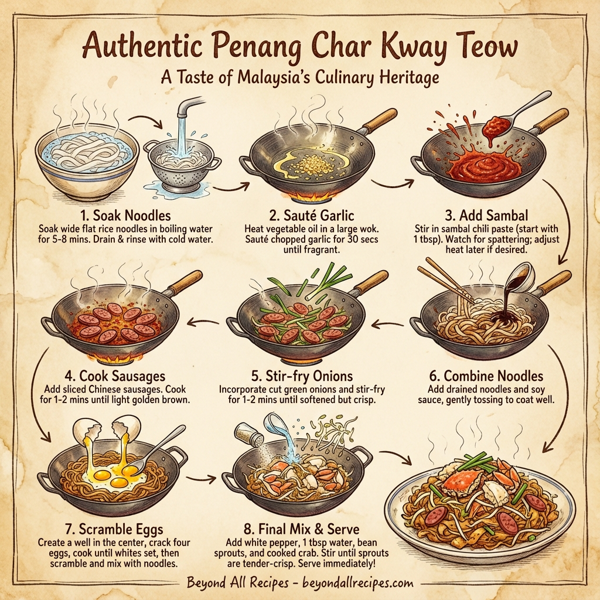
1. Begin by soaking the wide flat dried rice noodles in a large bowl filled with boiling water. Let them sit for 5 to 8 minutes or until tender. Once cooked, drain the noodles and rinse them under cold water to stop the cooking process.
2
2. Heat a large wok over medium heat and add the vegetable oil, swirling it to coat the surface evenly. Add the finely chopped garlic and sauté for about 30 seconds until fragrant.
3
3. Stir in the sambal chili paste (starting with 1 tablespoon). Be cautious as the mixture may spatter; stand back while adding it. Adjust the amount of sambal later if you desire more heat.
4
4. Increase the heat to medium-high and add the sliced Chinese sausages. Cook for 1 to 2 minutes, stirring occasionally until the sausages turn light golden brown.
5
5. Add the cut green onions to the wok and stir-fry them for an additional 1 to 2 minutes until they begin to soften but remain crisp.
6
6. Incorporate the drained noodles along with the soy sauce into the wok, gently tossing to ensure the noodles are well coated with the sauce.
7
7. Create a well in the center of the pan and crack the four eggs into the well, pushing aside the noodles if they fall in. Let the eggs cook for about 3 minutes until the whites begin to set, then break the yolks with a spoon. Scramble the eggs and mix them thoroughly with the noodles.
8
8. Finally, add the white pepper, 1 tablespoon of water, mung bean sprouts, and the shelled, cooked Dungeness crab. Cook everything together, stirring until the bean sprouts are tender-crisp, about 2 minutes. Ensure all ingredients are well combined before serving.
Nutrition Information
8.75g
Fat
22g
Carbs
11.25g
Protein
1.25g
Fiber
1g
Sugar
255mg
Sodium
Frequently Asked Questions
Frequently Asked Questions
What is Authentic Penang Char Kway Teow?
It is a popular Malaysian street food dish featuring stir-fried flat rice noodles, savory proteins, and a spicy umami flavor profile.
What type of noodles are required for this recipe?
The recipe calls for 7 ounces of wide flat dried rice noodles.
How should the rice noodles be prepared before cooking?
Soak the noodles in boiling water for 5 to 8 minutes until tender, then drain and rinse with cold water.
What is the calorie count for this dish?
Each serving contains approximately 205 calories.
How many servings does this recipe yield?
This recipe is designed to make 4 servings.
What proteins are included in this version of Char Kway Teow?
The dish includes Chinese sausage (lop chong), large eggs, and cooked Dungeness crab.
How much fat is in one serving?
There are 8.75g of fat per serving.
What provides the spicy kick in this recipe?
The spice comes from 2 tablespoons of sambal chili paste.
Can the spiciness be adjusted?
Yes, it is recommended to start with 1 tablespoon of sambal and adjust according to your heat preference.
How much protein is in each serving?
Each serving provides 11.25g of protein.
What is the carbohydrate content?
There are 22g of carbohydrates per serving.
How long should the garlic be sautéed?
The finely chopped garlic should be sautéed for about 30 seconds until fragrant.
What is 'lop chong'?
Lop chong is a type of Chinese sausage that is sliced and fried until golden brown in this recipe.
How should the green onions be prepared?
They should be trimmed and cut into 2-inch lengths.
When do you add the eggs to the wok?
Add the eggs after the noodles and soy sauce have been tossed together, by creating a well in the center of the pan.
How long should the eggs cook?
Let the eggs sit for about 3 minutes until the whites begin to set before scrambling them into the noodles.
What type of crab is recommended?
The recipe specifies using 1/2 lb of shelled and cooked Dungeness crab.
Are there fresh vegetables in this dish?
Yes, the recipe uses 6 ounces of fresh mung bean sprouts and green onions.
How long do the bean sprouts need to cook?
They should be stirred for about 2 minutes until they reach a tender-crisp consistency.
What seasoning is used besides soy sauce?
The dish is seasoned with 1/2 teaspoon of white pepper.
How much sodium is in a serving?
There is 255mg of sodium per serving.
What type of oil is best for this stir-fry?
The recipe calls for 3 tablespoons of vegetable oil.
Is there any sugar in this recipe?
Yes, there is a small amount of sugar, approximately 1g per serving.
What is the dietary fiber content?
Each serving contains 1.25g of fiber.
What equipment is best for cooking this dish?
A large wok is recommended to properly coat the ingredients and handle the high-heat stir-frying.
Is this recipe suitable for a quick weeknight dinner?
Yes, it is described as a quick-cooking, hearty dish perfect for busy weeknights.
Why should the noodles be rinsed in cold water?
Rinsing under cold water stops the cooking process and prevents the noodles from becoming too mushy.
How thick should the Chinese sausage be sliced?
The sausage should be cut into 1/4 inch slices.
Is any water added during the stir-fry process?
Yes, 1 tablespoon of water is added in the final step along with the sprouts and crab.
What is the origin of this dish?
This dish captures the essence of the street food heritage from Penang, Malaysia.