Authentic Okinawa Pork Soba Soup
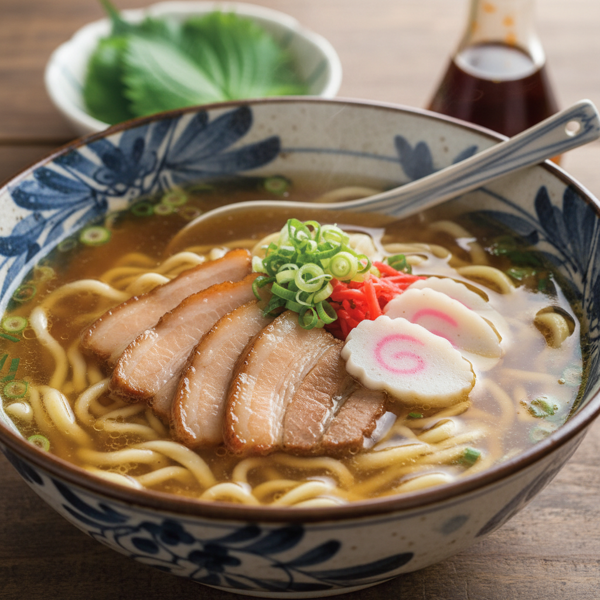
Experience the rich, savory flavors of Okinawa with this authentic soba noodle soup recipe featuring tender braised pork loin, fish cakes, and traditional Japanese seasonings. The heart and soul of Okinawan cuisine, this comforting dish is perfect for a cozy dinner or a special occasion. With its roots deeply embedded in the cultural heritage of the Okinawan islands, this soup combines simplicity with tradition, making it a delightful culinary experience that is both nostalgic and refreshing.
2
Servings
600
Calories
11
Ingredients
Ingredients
Okinawa soba noodles (wheat noodles)
200g
Pork loin
400g (Left at room temperature)
Awamori
1/3 cup
Brown sugar
3 tablespoons
Soy sauce
4 tablespoons
Salt
1 teaspoon (For seasoning)
Fish cakes
2 pieces (Sliced)
Red pickled ginger (benishoga)
5g (For garnish)
Chopped green onions
5g (For garnish)
Water
5 cups (For boiling)
Dashi stock
2 cups
Instructions
1
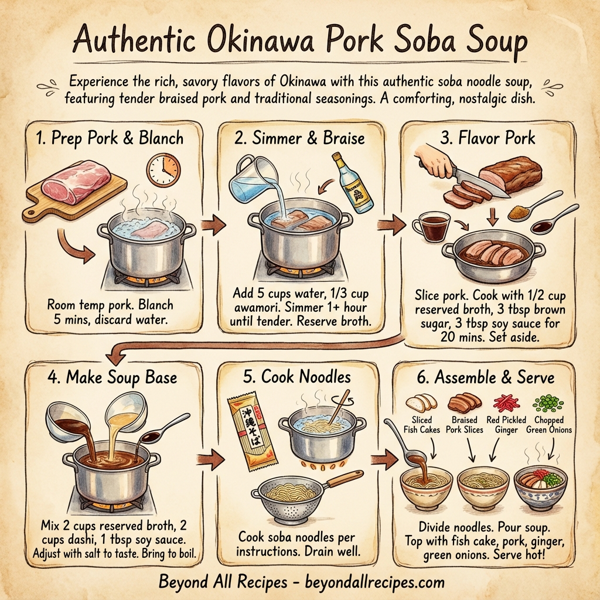
Allow the pork to come to room temperature by leaving it out for about 20 minutes.
2
Place the pork in a large pot and cover it with water. Bring it to a boil over high heat, and continue boiling for 5 minutes. Drain and discard the water to remove impurities.
3
Add 5 cups of fresh water and 1/3 cup of awamori to the pot with the pork. Bring to a boil, then reduce the heat to low and simmer for at least an hour, or until the pork is tender.
4
Remove the pork from the broth. Reserve the broth for later use. Slice the pork into large pieces.
5
In a separate pot, combine the sliced pork with 1/2 cup of the reserved broth, 3 tablespoons of brown sugar, and 3 tablespoons of soy sauce. Cook over medium-low heat for 20 minutes to allow flavors to meld. Set aside.
6
In another pot, mix 2 cups of the reserved broth with 2 cups of dashi stock. Bring to a boil, then add 1 tablespoon of soy sauce. Adjust seasoning with salt to taste. This will be the soup base.
7
Cook the Okinawa soba noodles according to package instructions, then drain.
8
Divide the soba noodles evenly into serving bowls. Pour the soup base over the noodles, ensuring an even distribution.
9
Top each bowl with fish cake slices, braised pork slices, red pickled ginger, and chopped green onions. Serve immediately while hot.
Nutrition Information
17.5g
Fat
75g
Carbs
40g
Protein
2250mg
Sodium
Frequently Asked Questions
Frequently Asked Questions
What is Authentic Okinawa Pork Soba Soup?
It is a traditional noodle soup from the Okinawa islands featuring wheat-based soba noodles, tender braised pork loin, and a savory broth made from pork and dashi.
How many servings does this recipe yield?
This recipe is designed to make 2 servings.
What are the primary nutritional values per serving?
Each serving contains 600 calories, 40g of protein, 17.5g of fat, and 75g of carbohydrates.
What type of meat is required for this soba soup?
The recipe calls for 400g of pork loin.
What kind of noodles are used in this Okinawan dish?
Okinawa soba noodles, which are made from wheat rather than buckwheat, are used.
What is Awamori and how much is needed?
Awamori is a distilled alcoholic beverage unique to Okinawa; 1/3 cup is used in the simmering process.
How long should the pork simmer to become tender?
The pork should be simmered in water and Awamori for at least one hour.
What is the purpose of the initial 5-minute boil?
The initial boil is used to remove impurities from the pork; the water is then drained and discarded.
How is the soup base prepared?
The base is created by mixing 2 cups of the reserved pork broth with 2 cups of dashi stock.
What ingredients are used to braise the pork slices?
The sliced pork is cooked for 20 minutes with 1/2 cup of reserved broth, 3 tablespoons of brown sugar, and 3 tablespoons of soy sauce.
What garnishes are used for the final presentation?
The soup is topped with sliced fish cakes, red pickled ginger (benishoga), and chopped green onions.
How much sodium is in one serving of this soup?
One serving contains approximately 2250mg of sodium.
Should the pork be cold when you start cooking?
No, it is recommended to let the pork come to room temperature for about 20 minutes before starting.
How much dashi stock is needed for the recipe?
You will need 2 cups of dashi stock.
Is brown sugar used in this recipe?
Yes, 3 tablespoons of brown sugar are used to provide a rich sweetness to the braised pork.
How much soy sauce is used in total?
A total of 4 tablespoons of soy sauce are used (3 for the pork and 1 for the soup base).
What is the weight of the noodles required?
The recipe requires 200g of Okinawa soba noodles.
How much water is needed for the main simmering step?
5 cups of fresh water are added to the pot with the pork and Awamori.
What is benishoga?
Benishoga is red pickled ginger, used here as a garnish to provide a tart contrast to the savory broth.
Can I use salt to adjust the taste of the soup?
Yes, the recipe suggests adding 1 teaspoon of salt or adjusting to your personal taste.
How are the fish cakes prepared?
The 2 pieces of fish cake should be sliced before being added as a topping.
How many total ingredients are listed in this recipe?
There are 11 distinct ingredients required for this dish.
What are the common tags for this recipe?
Common tags include Japanese cuisine, pork noodle soup, braised pork, and comfort food.
How are the noodles cooked?
The soba noodles should be cooked according to the specific instructions provided on their packaging.
How long do you braise the pork after slicing?
The pork slices are braised over medium-low heat for 20 minutes.
What is the description of the final soup base?
The soup base is a mixture of pork-infused broth and dashi, seasoned with soy sauce and salt.
Is there any fiber or cholesterol data available?
No, the values for fiber and cholesterol are not specified for this recipe.
When should the soup be served?
It should be served immediately while hot for the best culinary experience.
Is the recipe suitable for a special occasion?
Yes, its rich flavors and traditional roots make it perfect for both cozy dinners and special occasions.
What cultural heritage does this dish represent?
This dish represents the cultural heritage of the Okinawan islands in Japan.