Authentic North African Harissa Paste
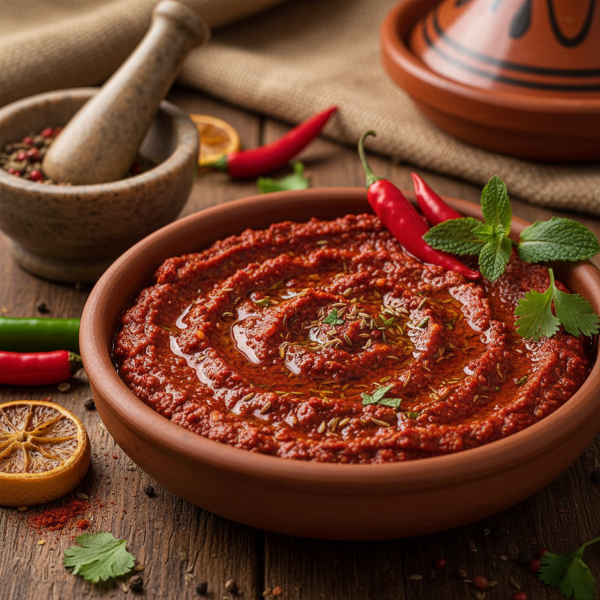
Harissa Paste is a versatile and flavorful condiment originating from North Africa, known for its rich combination of spices and peppers. This zesty paste is not only integral to traditional Moroccan cooking but also serves as a delightful addition to contemporary dishes. This recipe offers a perfect balance of heat and depth, making it an essential ingredient for marinades, stews, and even dips. With its aromatic blend of roasted chilies, garlic, and spices, you can transform your meals with just a spoonful of this fragrant paste. Store it properly, and let its bold flavors elevate your culinary creations!
N/A
Servings
N/A
Calories
9
Ingredients
Ingredients
Mildly hot dried chilies (e.g., Guajillo)
2 ounces (Soaked and stems/seeds removed)
Mild dried chilies (e.g., Anaheim)
2 ounces (Soaked and stems/seeds removed)
Garlic cloves
5 cloves (Peeled)
Water
2 tablespoons (Used for blending)
Extra virgin olive oil
2 tablespoons (Used for blending)
Freshly ground caraway seed
1/2 teaspoon (Ground)
Freshly ground coriander seed
1/4 teaspoon (Ground)
Salt
1 1/2 teaspoons (Regular)
Extra virgin olive oil
As needed (For topping off)
Instructions
1
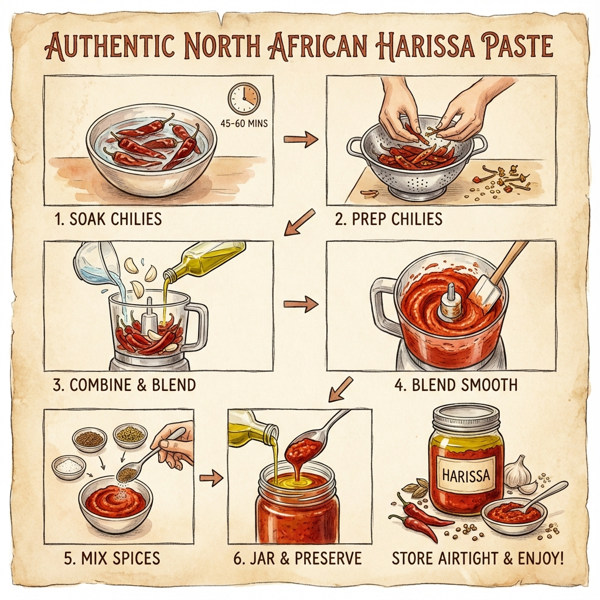
Begin by soaking the dried chilies in tepid water for 45 minutes to 1 hour, ensuring they are fully submerged and softened.
2
After soaking, drain the chilies and carefully remove the stems and seeds to reduce bitterness.
3
In a blender or food processor, combine the softened chilies, peeled garlic cloves, water, and extra virgin olive oil.
4
Blend the mixture until smooth, occasionally stopping to scrape down the sides to ensure a homogeneous paste.
5
Once blended, transfer the harissa paste to a small bowl and mix in the freshly ground caraway seeds, coriander, and salt until evenly combined.
6
Spoon the harissa into a clean jar, ensuring to leave some space at the top. Drizzle a thin layer of extra virgin olive oil over the surface to preserve freshness.
7
Always top off with olive oil after each use to keep the paste airtight and prevent spoilage.
Nutrition Information
Frequently Asked Questions
Frequently Asked Questions
What is Harissa Paste?
Harissa Paste is a versatile and flavorful condiment originating from North Africa, known for its rich combination of spices and peppers.
Where does Harissa originate from?
Harissa originates from North Africa and is particularly integral to traditional Moroccan cooking.
What are the main ingredients in authentic harissa?
The main ingredients include dried chilies, garlic, extra virgin olive oil, caraway seeds, coriander, and salt.
What kind of chilies should I use?
This recipe calls for a mix of mildly hot dried chilies like Guajillo and mild dried chilies like Anaheim.
How long should I soak the dried chilies?
You should soak the dried chilies in tepid water for 45 minutes to 1 hour until they are fully submerged and softened.
Is harissa paste spicy?
Yes, it offers a perfect balance of heat and depth, though the intensity depends on the specific chilies used.
Why do I need to soak the chilies?
Soaking ensures the chilies are softened enough to be blended into a smooth, homogeneous paste.
How do I remove the seeds from the chilies?
After soaking, drain the chilies and carefully remove the stems and seeds manually.
Why should I remove the stems and seeds?
Removing the stems and seeds helps to reduce bitterness in the final paste.
How long does homemade harissa last?
When stored properly with a layer of olive oil on top, it can stay fresh for several weeks in the refrigerator.
How should I store harissa paste?
Spoon the harissa into a clean jar and store it in the refrigerator.
Why do I need to add olive oil to the top of the jar?
Drizzling a thin layer of extra virgin olive oil over the surface helps keep the paste airtight and prevents spoilage.
Can I use a food processor to make this?
Yes, a blender or food processor is necessary to combine the chilies, garlic, water, and oil into a smooth paste.
What are some common uses for harissa?
It is an essential ingredient for marinades, stews, dips, and even contemporary dishes.
Is this recipe vegan?
Yes, this authentic harissa paste recipe is entirely vegan.
Is this harissa recipe gluten-free?
Yes, the recipe consists only of peppers, garlic, oil, and spices, making it gluten-free.
Can I adjust the heat level?
Yes, you can adjust the heat by changing the ratio of hot to mild dried chilies.
What spices are essential for this recipe?
Freshly ground caraway seed and coriander seed are essential for providing the authentic North African flavor profile.
How many garlic cloves are required?
This recipe requires 5 peeled garlic cloves.
Can I use pre-ground spices?
While you can use pre-ground, freshly ground caraway and coriander provide the best aromatic depth.
What is the role of salt in this recipe?
The recipe uses 1.5 teaspoons of salt to enhance the flavors of the chilies and spices.
What is the purpose of adding water during blending?
A small amount of water (2 tablespoons) helps the blender process the softened chilies into a smooth consistency.
Can I use regular olive oil instead of extra virgin?
Extra virgin olive oil is recommended for its superior flavor and preservative qualities.
What does caraway seed add to the flavor?
Caraway seed provides a distinct, aromatic, and slightly earthy flavor characteristic of traditional harissa.
How do I know when the paste is blended enough?
The mixture should be blended until it is completely smooth and homogeneous.
Can I use this as a dip?
Absolutely, it serves as a delightful and zesty addition to various dips.
Is this recipe suitable for Moroccan cooking?
Yes, this paste is a staple in traditional Moroccan culinary preparations.
Should the soaking water be hot or cold?
Tepid (lukewarm) water is best for soaking the dried chilies.
What is the texture of authentic harissa paste?
It should be a fragrant, smooth, and thick paste.
Can I double this recipe for a larger batch?
Yes, you can easily double the ingredients to make a larger quantity for future use.