Authentic Mexican Corn Husk Tamales with Savory Filling

Experience the rich culinary tradition of Mexico with these authentic corn husk tamales, filled with a mouthwatering mixture of tender shredded meat and vibrant homemade chili paste. Perfect for gatherings and festive occasions, these tamales encapsulate the essence of Mexican culture. The process requires some time and love, as you will create the chili paste from scratch and slow-cook the meat to achieve unbeatable flavors. Serve them hot with your favorite salsa and enjoy a true taste of Mexico.
N/A
Servings
700
Calories
11
Ingredients
Ingredients
rump roast
6 lbs (cut into large chunks)
pork roast
6 lbs (cut into large chunks)
masa harina flour
12 lbs (room temperature)
whole red chile
1 lb (dried; mild or hot)
lard or Crisco
2/3 cup (melted)
garlic cloves
6-12 (peeled and crushed)
cumin
1 tablespoon (ground)
flour
2/3 cup (for thickening meat sauce)
salt and pepper
2-3 tablespoons (to taste)
baking powder
2 tablespoons (for masa)
dried corn husk
1 lb (soaked in hot water)
Instructions
1
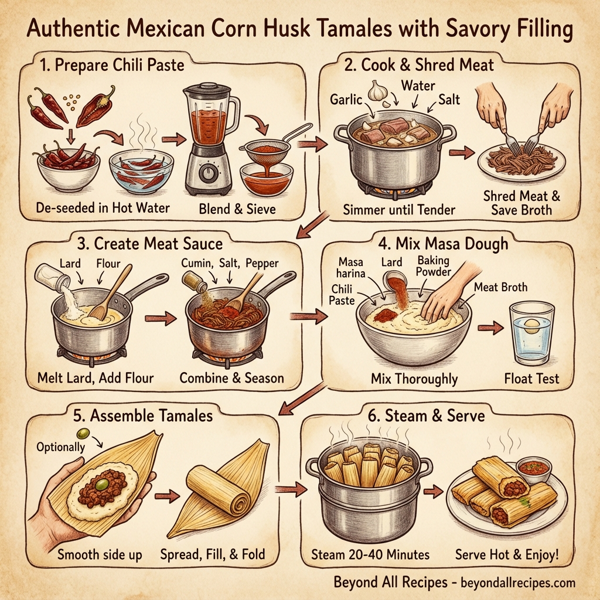
Prepare the chili paste by removing the caps from the dried red chiles and shaking out the seeds. Soak the chiles in hot water until they become soft. Blend the softened chiles with a small amount of the soaking water until smooth. Pass the blended mixture through a sieve to remove any remaining skins and set aside.
2
For the meat, choose economical cuts such as a rump roast or pork shoulder. Cook the meat a day in advance for optimal flavor. Cut the meat into large chunks and place it in a large pot with enough water to cover it. Add 6 to 12 cloves of garlic and a generous amount of salt. Cover and simmer for 3 hours or until the meat is tender and shreds easily. Once done, save the cooking liquid and shred the meat.
3
To make the meat sauce, melt the lard or Crisco in a saucepan. Stir in the flour and cook for 2 minutes. Combine the sauce with the shredded meat, then add the chili paste incrementally, tasting as you go. Season with cumin, salt, and pepper to enhance the flavor.
4
For the masa dough, in a large mixing bowl, combine the masa harina with 1 1/4 cups of lard or Crisco, salt, baking powder, 1 cup of chili paste, and 2 cups of the reserved meat broth. Mix thoroughly by hand until well incorporated, then gradually add more broth if necessary. The masa is ready when a small piece floats in water.
5
Soak the corn husks in hot water until pliable. Using the larger husks, place each one with the smooth side facing up. Spread a layer of masa onto the husk, leaving space at the edges. Add a portion of the seasoned meat mixture in the center, and optionally, place a green olive on top. Carefully fold the husk, rolling it tightly and tucking the tapered end up.
6
Prepare a large steamer by placing a wire rack or a vegetable steamer in the bottom of a large pot filled with water up to the bottom of the rack. Arrange the tamales upright in the pot, packing them tightly but leaving room for expansion. Cover the pot and steam the tamales for 20 to 40 minutes or until the masa separates easily from the husks. Serve hot and enjoy deliciously!
Nutrition Information
35g
Fat
75g
Carbs
27g
Protein
Frequently Asked Questions
Frequently Asked Questions
What are Authentic Mexican Corn Husk Tamales?
They are a traditional Mexican dish consisting of masa dough and a savory meat filling wrapped in corn husks and steamed until tender.
What meat is best for this tamale recipe?
Economical cuts such as rump roast or pork shoulder are ideal as they become tender and easy to shred after slow cooking.
How do I prepare the homemade chili paste?
Remove caps and seeds from dried red chiles, soak in hot water until soft, blend with a little soaking water, and strain through a sieve.
Can the meat be prepared in advance?
Yes, cooking the meat a day in advance is recommended for optimal flavor and easier assembly.
How long should the meat simmer?
The meat should simmer for approximately 3 hours or until it is tender enough to shred easily.
What ingredients are needed for the meat sauce?
The sauce is made using lard or Crisco, flour, the prepared chili paste, cumin, salt, and pepper.
How do I make the masa dough?
Combine masa harina with lard or Crisco, salt, baking powder, chili paste, and reserved meat broth until well incorporated.
How can I tell if the masa dough is ready?
The masa is ready when a small piece of the dough floats when placed in a cup of water.
How do I prepare the corn husks for assembly?
Soak the dried corn husks in hot water until they become soft and pliable.
Which side of the corn husk should I use?
You should spread the masa on the smooth side of the corn husk.
How do I assemble the tamales?
Spread masa on the husk, add a portion of seasoned meat in the center, fold the husk by rolling tightly, and tuck the tapered end up.
Can I add extra ingredients to the filling?
Yes, placing a green olive on top of the meat mixture before folding is a traditional optional addition.
How should tamales be placed in the steamer?
Arrange the tamales upright in the steamer pot, packing them tightly but leaving a little room for them to expand.
How long do the tamales need to steam?
Steam the tamales for 20 to 40 minutes depending on the batch size and heat level.
How do I know when the tamales are done?
They are ready when the masa separates easily and cleanly from the corn husk.
What are the nutritional facts for one serving?
Each serving contains approximately 700 calories, 35g of fat, 75g of carbohydrates, and 27g of protein.
How many ingredients are required for this recipe?
There are 11 primary ingredients including meat, masa, chiles, fats, and seasonings.
What type of chiles should I use?
The recipe calls for one pound of dried whole red chiles, which can be mild or hot depending on your preference.
What is the purpose of the baking powder in the masa?
Baking powder helps the masa dough achieve a lighter, fluffier texture during the steaming process.
Why is the meat broth reserved?
The broth is used to flavor and hydrate the masa dough, ensuring the tamales are savory throughout.
Can I use Crisco instead of lard?
Yes, the recipe allows for the use of either lard or Crisco for both the meat sauce and the masa dough.
What should I serve with tamales?
Tamales are best served hot with your favorite salsa or traditional Mexican sides.
Why do I need to strain the chili paste?
Straining removes the tough skins and any remaining seeds, resulting in a smooth, professional-quality sauce.
How much masa harina is needed for this large batch?
This recipe uses 12 lbs of masa harina flour, making it suitable for large gatherings.
What spices are used for seasoning the meat?
The meat is seasoned with garlic, ground cumin, salt, and pepper.
What is the best way to cook the meat?
Slow-cooking the meat in a large pot of water with garlic and salt produces the best flavor and texture.
How do I prevent the tamales from being dry?
Ensure you add enough reserved meat broth to the masa and use sufficient lard or Crisco for moisture.
Is this recipe considered authentic?
Yes, it follows traditional methods including hand-making chili paste and using corn husks for steaming.
How much fat is in these tamales?
There is approximately 35g of fat per serving in this recipe.
What is the primary category for this dish?
This dish falls under traditional Mexican cuisine, often served at festive occasions and gatherings.