Authentic Malaysian Roti Canai
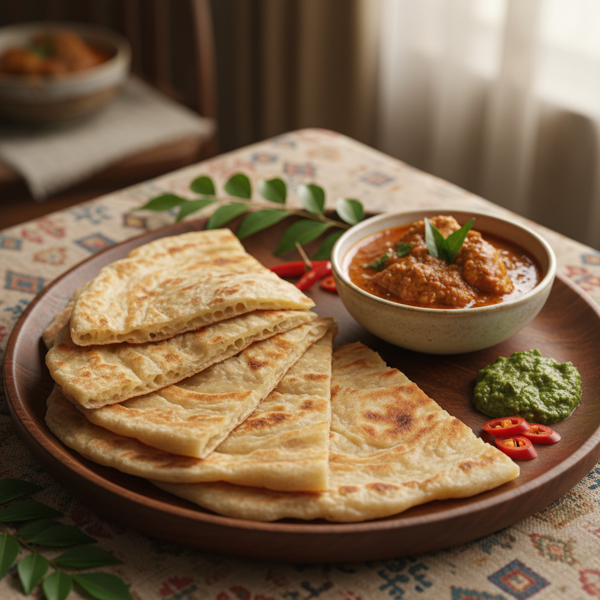
Roti Canai is a traditional flatbread originating from Malaysia, beloved for its flaky texture and delightful buttery flavor. This authentic recipe, commonly used by Mamak stalls, omits unnecessary ingredients like margarine, eggs, and milk. Instead, it relies on a simple combination of flour, water, salt, and oil, making it incredibly easy to replicate at home. Serve it warm with your favorite curry or dhal for a satisfying and comforting meal that showcases the best of Malaysian street food culture. Perfect for breakfast, lunch, or a snack!
4
Servings
N/A
Calories
4
Ingredients
Ingredients
All-purpose flour
2 cups (Sifted)
Salt
1 tablespoon (Dissolved in water)
Water
1 cup (Room temperature)
Cooking oil
1 cup (For dough and frying)
Instructions
1
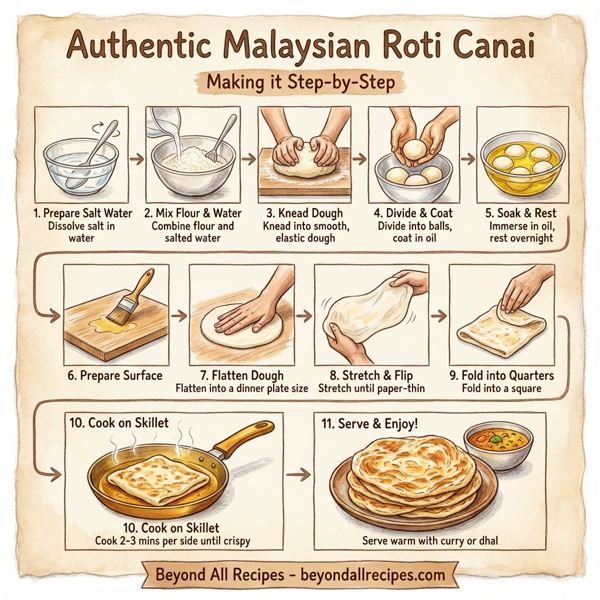
Start by dissolving the salt in the water and set it aside.
2
In a large mixing bowl, place the sifted flour. Gradually add the salted water, mixing with a spoon or your hands until combined.
3
Knead the mixture into a smooth and elastic dough. If the dough is too sticky, consider adding a small amount of flour as needed until you achieve the right consistency.
4
Lightly coat your hands with cooking oil and divide the dough into palm-sized balls. You should aim for about 8 balls.
5
In another bowl, pour a little cooking oil. Place the dough balls in the bowl, making sure to coat them in oil as you pile them on top of each other. Once all dough balls are stacked, completely immerse them in oil and cover the bowl. Allow the dough to rest overnight at room temperature.
6
When you're ready to cook, prepare your working area by oiling the surface.
7
Take one dough ball and flatten it with your palms until it resembles the size of a dinner plate.
8
Gently stretch and flip the dough, using your hands to expand it into a thin layer, similar to tossing a pizza. Aim for it to be as paper-thin as possible.
9
Carefully fold the stretched dough into quarters, bringing one edge to the center, then folding the other edges over to create a square shape.
10
Heat a flat pan or skillet over medium heat, adding a little oil to coat the surface. Place the folded dough on the skillet and cook for 2-3 minutes on each side or until golden brown and crispy.
11
Serve the Roti Canai warm, accompanied by your favorite curry or dipping sauce, and enjoy!
Nutrition Information
Frequently Asked Questions
Frequently Asked Questions
What is Roti Canai?
Roti Canai is a traditional Malaysian flatbread known for its flaky texture and buttery flavor, often found in Mamak stalls.
What makes this specific Roti Canai recipe authentic?
This recipe is authentic because it follows the traditional Mamak style, omitting eggs, milk, and margarine, using only four basic ingredients.
Is this Roti Canai recipe vegan?
Yes, since this recipe uses cooking oil instead of ghee, eggs, or milk, it is entirely vegan-friendly.
What ingredients are required for this recipe?
The recipe requires all-purpose flour, salt, water, and cooking oil.
How much flour do I need?
You will need 2 cups of all-purpose flour, which should be sifted before use.
How should the salt be prepared?
The salt should be dissolved in the water before being added to the flour.
What is the recommended water temperature?
The recipe calls for 1 cup of room temperature water.
How many dough balls does this recipe produce?
This recipe aims to produce approximately 8 palm-sized dough balls.
How long does the dough need to rest?
The dough balls should be completely immersed in oil and allowed to rest overnight at room temperature.
Why must the dough rest overnight?
Resting the dough overnight allows the gluten to relax, making it elastic enough to be stretched paper-thin.
What should I do if the dough is too sticky during kneading?
If the dough is too sticky, you can add a small amount of flour as needed until you achieve a smooth and elastic consistency.
How do I prepare the dough balls for resting?
Coat your hands in oil, divide the dough into balls, and stack them in a bowl filled with oil so they are completely immersed.
How do I prepare the work surface for stretching the dough?
The working area should be lightly oiled to prevent the dough from sticking while you flatten and stretch it.
How large should I flatten the dough ball initially?
Initially, flatten the dough ball with your palms until it is roughly the size of a dinner plate.
What technique is used to make the dough thin?
Gently stretch and flip the dough using your hands, similar to tossing a pizza, until it is paper-thin.
How is the stretched dough shaped before cooking?
The thin dough is folded into quarters to create a square shape.
What type of pan is best for cooking Roti Canai?
A flat pan or skillet is ideal for cooking the Roti Canai.
What heat setting should I use for frying?
Use medium heat to ensure the bread cooks through and becomes crispy without burning.
How long does it take to cook each piece?
It takes about 2 to 3 minutes per side until the bread is golden brown and crispy.
What is the serving size for this recipe?
This recipe is designed to provide 4 servings.
What are common side dishes for Roti Canai?
It is traditionally served warm with curry or dhal dipping sauces.
Does this recipe use margarine or butter?
No, this authentic version omits margarine and butter, relying on cooking oil for its texture.
Can I use this recipe for breakfast?
Yes, Roti Canai is a popular Malaysian breakfast, but it can also be enjoyed for lunch or as a snack.
What is the texture of the finished bread?
The finished bread is flaky on the inside and crispy on the outside.
How much oil is used in total?
The recipe requires 1 cup of cooking oil, used for both soaking the dough balls and frying.
Is this recipe suitable for beginners?
Yes, the recipe is described as incredibly easy to replicate at home due to its simple ingredient list.
What category of food does this fall under?
It is categorized under Breads.
Do I need to sift the flour?
Yes, the instructions specify using sifted all-purpose flour for the best results.
What happens if I don't let the dough rest?
Without proper resting, the dough will be difficult to stretch thin and may result in a tough rather than flaky bread.
What culture does this recipe represent?
This recipe showcases Malaysian street food culture, specifically the traditions of Mamak stalls.