Authentic Korean Kimchi with Rice Water
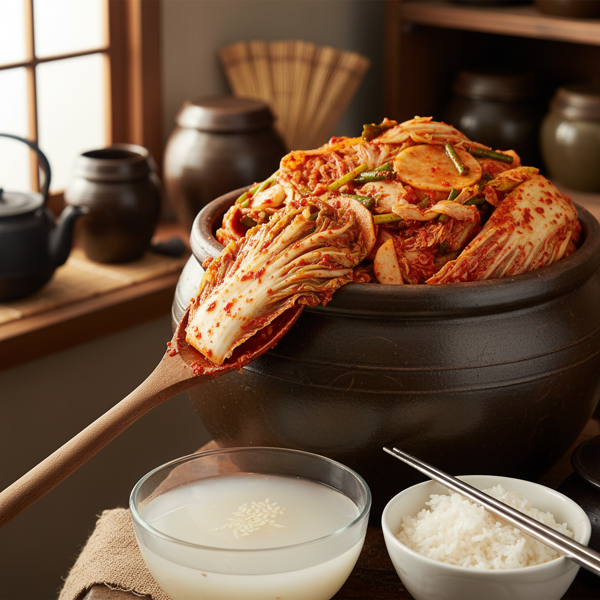
This traditional Korean kimchi recipe incorporates a key ingredient beloved by generations of Korean women: 'pul' or rice water. Crafted in the kitchens of talented Korean cooks from across South Korea, this kimchi is a delightful blend of flavors and textures that will elevate any meal. The process is more of an art than a science, allowing for personal touches and adjustments based on your family's preferences. Whether you're a novice or an experienced home cook, this recipe invites you to taste and experiment, ensuring a batch of kimchi that is uniquely yours. With just the right amount of spice and umami, enjoy this staple that can be used in a variety of dishes or simply savored on its own.
N/A
Servings
30
Calories
11
Ingredients

Ingredients
napa cabbage
4 heads (cut into four sections)
korean radishes or daikon radishes
2-3 (cut into large chunks or julienne strips)
salt
3 cups (for seasoning)
rice flour
1/3 cup (for pul)
water
2/3 cup (for pul)
red pepper flakes
1-3 cups (adjust according to heat preference)
fish sauce
1 cup (thin sauce for flavor)
salted shrimp sauce
2 tablespoons (for umami flavor)
green onions
2 cups (cut into inch-long pieces)
garlic
1 head (peeled and crushed)
sugar
1/4 cup (for balancing flavors)
Instructions
1
Begin by removing the outer leaves of the napa cabbage and cutting each head into four sections from the core.
2
Diagonally slice the cabbage leaves into large square pieces for optimal fermentation.
3
Prepare the radishes by cutting them into large chunks or julienne strips, based on your preference.
4
Layer the chopped cabbage and radish in a large sink or bowl, applying about 1/2 cup of salt for every two inches of cabbage. Top with a final layer of salt.
5
Add water to the sink until it nearly covers the salt and vegetables. Allow the mixture to sit for about 1.5 hours.
6
Check the cabbage by rubbing it between your fingers; if it feels slippery and pleasantly salty, rinse it off with fresh water without letting it soak too long to avoid oversalting.
7
Rest the cabbage in a colander or drain it in your sink to remove excess moisture.
8
For the 'pul', combine rice flour and water in a saucepan, bringing it to a boil while stirring. Once thickened, allow it to cool. Alternatively, mix cooked rice with water, boil, and strain to obtain 1 cup of cloudy rice water.
9
In a large mixing bowl, combine the 'pul' with all remaining ingredients: red pepper flakes, fish sauce, salted shrimp sauce, green onions, crushed garlic, and sugar. Adjust the level of heat according to your preference by varying the amount of red pepper flakes and fish sauce.
10
Don gloves and gently mix the cabbage into the sauce, working in batches to ensure even coating. Push the coated cabbage to the side of the bowl as you mix.
11
Transfer the finished kimchi into airtight containers to minimize odors in the fridge.
12
While you can enjoy the kimchi immediately, it is best left at room temperature for one day before transferring to the fridge, enhancing the flavors over a week of storage before consumption.
Nutrition Information
0.2
Fat
6
Carbs
1
Protein
0.4
Fiber
Frequently Asked Questions
Frequently Asked Questions
What is the unique feature of this authentic Korean kimchi?
This recipe incorporates 'pul' or rice water, a traditional technique used by generations of Korean cooks to enhance the fermentation process and texture.
How many heads of napa cabbage are required?
You will need 4 heads of napa cabbage for this recipe.
How should the napa cabbage be prepared for fermentation?
Remove the outer leaves, cut each head into four sections from the core, and then diagonally slice the leaves into large square pieces.
What type of radishes can be used?
You can use 2 to 3 Korean radishes or daikon radishes.
How should I cut the radishes?
Radishes should be cut into large chunks or julienne strips according to your personal preference.
What is the salt-to-cabbage ratio for the initial soak?
Use about 1/2 cup of salt for every two inches of layered cabbage and radish.
How long should the vegetables soak in salt and water?
The mixture should sit for approximately 1.5 hours.
How do I test if the cabbage is ready after salting?
Rub the cabbage between your fingers; if it feels slippery and pleasantly salty, it is ready to be rinsed.
What is the process for rinsing the cabbage?
Rinse the cabbage with fresh water without letting it soak too long to prevent it from becoming over-salted.
How do I make 'pul' using rice flour?
Combine 1/3 cup rice flour and 2/3 cup water in a saucepan, bring to a boil while stirring, and let it cool once thickened.
Is there an alternative way to make rice water if I don't have rice flour?
Yes, you can mix cooked rice with water, boil it, and then strain it to obtain 1 cup of cloudy rice water.
What ingredients are used for the kimchi seasoning paste?
The paste includes the 'pul', red pepper flakes, fish sauce, salted shrimp sauce, green onions, crushed garlic, and sugar.
How much red pepper flakes should I add?
You can use between 1 to 3 cups of red pepper flakes depending on your heat preference.
What is the purpose of salted shrimp sauce in this recipe?
Salted shrimp sauce is added to provide a deep umami flavor.
How should the green onions be prepared?
Cut 2 cups of green onions into inch-long pieces.
How much garlic is needed?
One full head of garlic, peeled and crushed, is used for this recipe.
Why is sugar added to the kimchi?
Sugar is used to balance the flavors of the spicy and salty ingredients.
Why should I wear gloves when mixing the kimchi?
Gloves protect your hands from the strong scent and the spice of the red pepper flakes while ensuring even coating.
What is the best way to store the finished kimchi?
Transfer the kimchi into airtight containers to minimize odors and store them in the refrigerator.
Can I eat the kimchi right away?
Yes, you can enjoy it immediately, but the flavor improves with fermentation.
How long should the kimchi sit at room temperature?
It is recommended to leave it at room temperature for one day before moving it to the fridge.
When does the kimchi reach its peak flavor?
The flavors enhance significantly after a week of storage in the refrigerator.
How many calories are in a serving of this kimchi?
There are approximately 30 calories per serving.
What is the fat content of this recipe?
This kimchi is very low in fat, containing only 0.2 grams per serving.
How many carbohydrates are in a serving?
There are 6 grams of carbohydrates per serving.
How much protein does a serving provide?
Each serving provides about 1 gram of protein.
Does this kimchi contain fiber?
Yes, it contains approximately 0.4 grams of fiber per serving.
How many total ingredients are used in this recipe?
There are 11 primary ingredients used in this kimchi recipe.
What are the primary tags associated with this recipe?
Tags include kimchi, Korean cuisine, fermented vegetables, spicy pickle, and healthy.
Can I adjust the amount of fish sauce?
Yes, you can vary the amount of fish sauce to adjust the level of saltiness and umami to your preference.