Authentic Japanese Tempura Dipping Sauce (Ten Tsuyu)

Discover the harmonious flavors of Japanese cuisine with this Authentic Tempura Dipping Sauce, also known as Ten Tsuyu. This versatile sauce serves as the perfect complement to crispy tempura vegetables and seafood. Rooted in the tradition of soba tsuyu, this recipe incorporates a delicate balance of dashi stock, sweet mirin, and light soy sauce (usukuchi) to create a sauce that is light in color yet rich in flavor. Enhance your dining experience with the option to mix in freshly grated daikon, momiji oroshi for a spicy kick, or ginger to elevate the taste even further. Perfect for dipping or drizzling on any tempura dish, this sauce will give your meals a true taste of Japan. Enjoy it warm or chilled, making it a fantastic addition to any Japanese-inspired feast.
N/A
Servings
N/A
Calories
6
Ingredients
Ingredients
Dashi (Cooking Stock)
1 cup (Prepared or instant)
Mirin (Japanese Sweet Cooking Wine)
1/4 cup (N/A)
Salt
1/8 teaspoon (N/A)
Light Soy Sauce (Japanese Usukuchi)
1/4 cup (N/A)
Dried Fish Flakes (Japanese Katsuobushi Flakes)
1/4 cup (N/A)
Tangerine Zest or Orange Zest
1 tablespoon (Finely grated)
Instructions
1
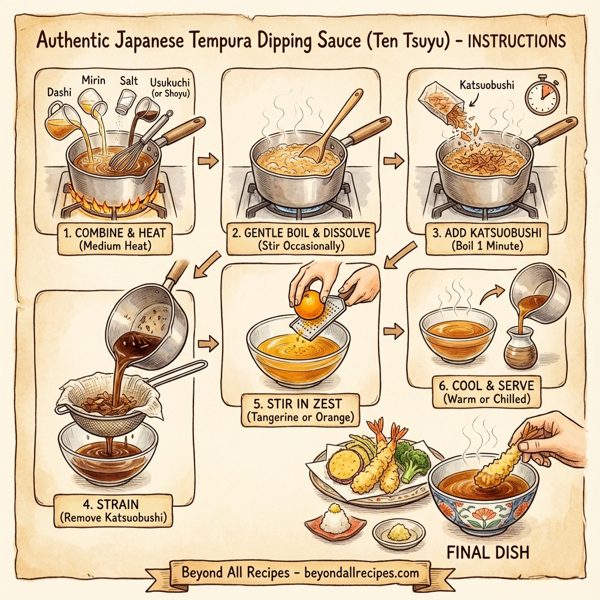
In a medium saucepan, combine the dashi, mirin, salt, and usukuchi (or shoyu) over medium heat.
2
Bring the mixture to a gentle boil, stirring occasionally to ensure the salt dissolves completely.
3
Once boiling, add the dried fish flakes (katsuobushi) and let the mixture boil for an additional 1 minute to extract the flavors.
4
Remove the saucepan from heat and strain the mixture through a cheesecloth or a coffee filter into a clean bowl to remove the katsuobushi.
5
Stir in the finely grated tangerine or orange zest, ensuring it's evenly distributed throughout the sauce.
6
Allow the sauce to cool to room temperature before transferring it to a serving vessel.
Nutrition Information
Frequently Asked Questions
Frequently Asked Questions
What is Ten Tsuyu?
Ten Tsuyu is an authentic Japanese dipping sauce specifically crafted to accompany tempura dishes.
What are the primary ingredients in this tempura sauce?
The sauce is made from dashi stock, mirin, salt, light soy sauce (usukuchi), and dried fish flakes (katsuobushi).
What is the purpose of using Usukuchi soy sauce?
Usukuchi is a light soy sauce that provides a rich flavor while keeping the sauce's color light and delicate.
Can I use regular soy sauce if I do not have Usukuchi?
Yes, regular soy sauce (shoyu) can be used as a substitute, though the sauce may appear darker.
What type of dashi is recommended?
The recipe allows for either prepared dashi or instant dashi cooking stock.
How do I add citrus notes to the sauce?
Finely grated tangerine or orange zest is stirred in after the sauce is strained to add a bright aroma.
How long should I boil the katsuobushi flakes?
The dried fish flakes should be boiled in the mixture for 1 minute to extract their umami flavor.
What is the best way to strain the sauce?
The mixture should be strained through a cheesecloth or a coffee filter into a clean bowl to remove the katsuobushi.
Should Ten Tsuyu be served hot or cold?
This versatile sauce can be enjoyed either warm or chilled depending on your preference.
What can I add to the sauce for extra spice?
You can mix in momiji oroshi, which is a spicy grated radish mixture, for an extra kick.
Is ginger a good addition to this sauce?
Yes, freshly grated ginger is a common addition that helps elevate the overall taste of the sauce.
What is the significance of mirin in the recipe?
Mirin is a sweet Japanese cooking wine that balances the saltiness of the soy sauce and dashi.
Is this sauce suitable for vegetarians?
As written with dashi and fish flakes, it is not vegetarian, but it can be modified using kombu dashi.
Can I use this sauce for vegetable tempura?
Absolutely, it is the perfect complement to both crispy vegetables and seafood tempura.
How does Ten Tsuyu differ from soba tsuyu?
While rooted in the same tradition, Ten Tsuyu is specifically balanced in color and intensity for dipping fried foods.
Do I need to dissolve the salt before adding fish flakes?
Yes, you should stir the mixture while bringing it to a boil to ensure the salt dissolves completely first.
How much mirin is used in this recipe?
The recipe calls for 1/4 cup of mirin.
Can I store the leftovers?
The sauce should be allowed to cool to room temperature before being transferred to a vessel for storage.
What is the function of dashi in this sauce?
Dashi serves as the savory soup stock base that provides the essential umami flavor.
What is katsuobushi?
Katsuobushi refers to dried, fermented, and smoked skipjack tuna flakes used to flavor Japanese stocks.
Should I add daikon to the sauce?
Freshly grated daikon radish is a highly recommended optional addition for authentic serving.
Is this recipe easy for beginners?
Yes, with only 6 ingredients and a simple boiling and straining process, it is very approachable.
How much citrus zest is required?
The recipe suggests using 1 tablespoon of finely grated tangerine or orange zest.
Can I use this as a drizzle instead of a dip?
Yes, it works beautifully either as a dipping sauce or drizzled directly over a tempura dish.
What is the total ingredient count?
There are 6 primary ingredients used to make this authentic sauce.
Does the sauce require high heat?
The sauce should be prepared over medium heat to bring it to a gentle boil.
What is the flavor profile of this sauce?
It features a harmonious balance of salty, sweet, and umami flavors with a hint of citrus.
Is there any oil in this sauce?
No, this is a water-based dipping sauce containing no oil.
How much dashi is needed?
The recipe requires 1 cup of dashi cooking stock.
Can I use a coffee filter to strain the sauce?
Yes, a coffee filter is an excellent tool for removing fine particles of katsuobushi for a clear sauce.