Authentic Japanese Sticky Sushi Rice
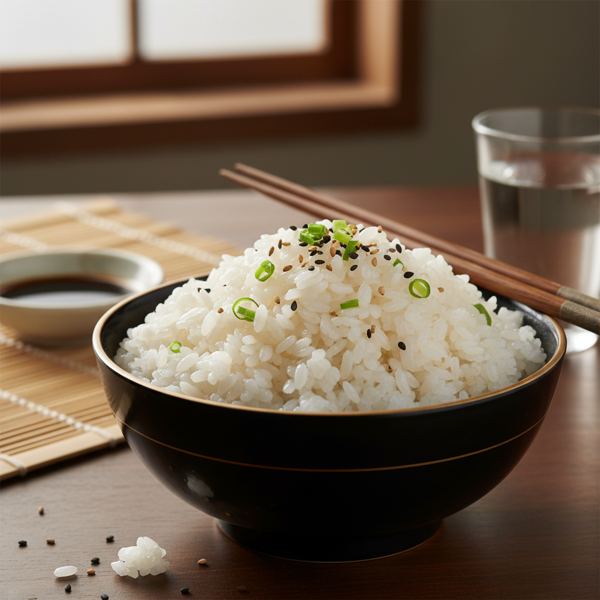
Elevate your sushi-making game with this Authentic Japanese Sticky Sushi Rice recipe! This staple is essential for any homemade sushi, providing the perfect balance of sweetness and tanginess. With a delightful chewy texture, this sticky rice is not only perfect for sushi rolls but also great for accompanying various Japanese dishes. Impress your friends and family with your culinary skills by preparing this easy yet delicious recipe that yields beautifully glossy and flavorful rice.
N/A
Servings
N/A
Calories
5
Ingredients
Ingredients
Japanese-style rice
3 cups (Rinsed and drained)
Water
3 1/4 cups (For cooking rice)
Rice wine vinegar
1/3 cup (Used for seasoning)
Sugar
3 tablespoons (Used in seasoning mixture)
Salt
1 teaspoon (Used in seasoning mixture)
Instructions
1
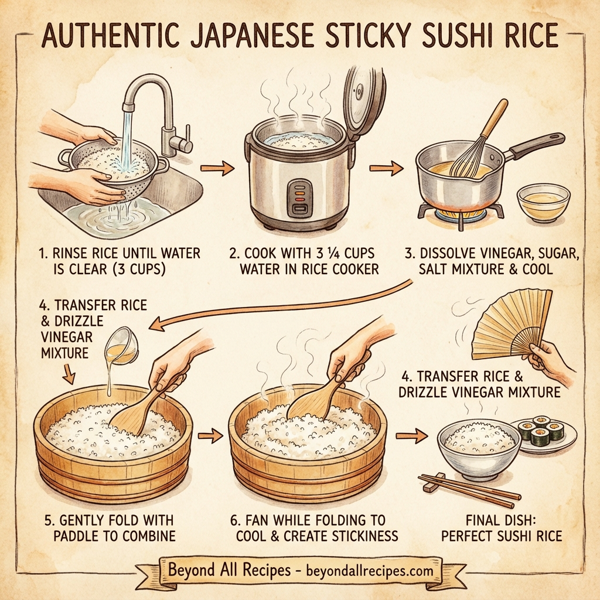
Begin by measuring 3 cups of Japanese-style rice and rinsing it thoroughly under cold water until the water runs clear to remove excess starch.
2
Transfer the rinsed rice to a rice cooker and add 3 1/4 cups of water. Cook according to the rice cooker's instructions until tender.
3
Meanwhile, prepare the vinegar mixture by combining 1/3 cup of rice wine vinegar, 3 tablespoons of sugar, and 1 teaspoon of salt in a small saucepan. Heat over low, stirring until the sugar and salt dissolve. Remove from heat and let it cool.
4
Once the rice is cooked, transfer it to a large wooden or glass bowl for better cooling and flavor absorption. Gently drizzle the cooled vinegar mixture over the rice.
5
Using a rice paddle or a wooden spoon, fold the rice gently to combine, being careful not to mash the grains. This technique maintains the rice's delicate texture.
6
To cool the rice further and evaporate excess moisture, gently fan the rice while continuously folding it, ensuring it reaches the perfect sticky consistency.
Nutrition Information
Frequently Asked Questions
Frequently Asked Questions
What is the best type of rice for this sushi recipe?
You should use Japanese-style rice, which is a short-grain variety that provides the necessary sticky texture.
How much rice is required for this recipe?
This recipe calls for 3 cups of Japanese-style rice.
What is the specific ratio of water to rice?
For 3 cups of rice, you should use 3 1/4 cups of water.
Why must the rice be rinsed before cooking?
Rinsing the rice thoroughly under cold water removes excess starch, preventing the rice from becoming overly gummy.
How do I know when the rice is sufficiently rinsed?
You should continue rinsing until the water runs clear.
Can I cook this sushi rice in a rice cooker?
Yes, the instructions specifically recommend using a rice cooker for tender and consistent results.
What ingredients are needed for the sushi vinegar seasoning?
The seasoning mixture consists of rice wine vinegar, sugar, and salt.
How much rice wine vinegar should I use?
The recipe requires 1/3 cup of rice wine vinegar.
What is the correct amount of sugar for the vinegar mix?
You will need 3 tablespoons of sugar.
How much salt is included in the seasoning?
The recipe uses 1 teaspoon of salt.
How should I prepare the vinegar mixture?
Combine the vinegar, sugar, and salt in a small saucepan and heat over low until dissolved.
Should the vinegar mixture be hot when added to the rice?
No, you should remove it from the heat and let it cool before drizzling it over the rice.
What type of bowl is best for mixing the cooked rice?
A large wooden or glass bowl is ideal for better cooling and flavor absorption.
How do I add the vinegar mixture to the rice?
Gently drizzle the cooled vinegar mixture over the rice once it has been transferred to the mixing bowl.
What is the best way to combine the rice and seasoning?
Use a rice paddle or wooden spoon to fold the rice gently to ensure the grains are coated without being mashed.
Why is it important not to mash the rice grains?
Mashing the grains ruins the delicate texture; folding preserves the individual integrity of the rice.
Why do I need to fan the rice?
Fanning helps cool the rice quickly and evaporates excess moisture to create a perfect sticky consistency.
When should I fan the rice?
Fan the rice continuously while you are folding in the vinegar mixture.
What is the final texture of authentic sushi rice?
The rice should be chewy, sticky, and have a beautifully glossy appearance.
Can this rice be used for things other than sushi rolls?
Yes, it is excellent for sushi rolls but also works well as a side for various Japanese dishes.
Is this recipe suitable for beginners?
Absolutely, it is described as an easy yet delicious recipe for home cooks.
How many ingredients are in this recipe?
There are 5 total ingredients: rice, water, vinegar, sugar, and salt.
Does this recipe include any fats or oils?
No, this is a fat-free recipe focusing on rice and vinegar seasoning.
What flavor profile does this rice have?
It provides a perfect balance of sweetness and tanginess.
Is rice wine vinegar essential?
Yes, rice wine vinegar provides the authentic Japanese flavor profile necessary for sushi.
How many servings does this recipe make?
The recipe uses 3 cups of dry rice, which typically yields enough for several sushi rolls or servings.
What kind of paddle should I use?
A traditional rice paddle or a wooden spoon is recommended.
Can I use long-grain rice instead?
It is not recommended, as long-grain rice lacks the starch content needed to achieve the required stickiness.
Is the sugar and salt ratio adjustable?
While 3 tbsp sugar and 1 tsp salt is standard for this volume, you can adjust slightly to your taste preferences.
Is this recipe authentic?
Yes, this is an Authentic Japanese Sticky Sushi Rice recipe following traditional preparation methods.