Authentic Japanese Miso Soup with Dashi
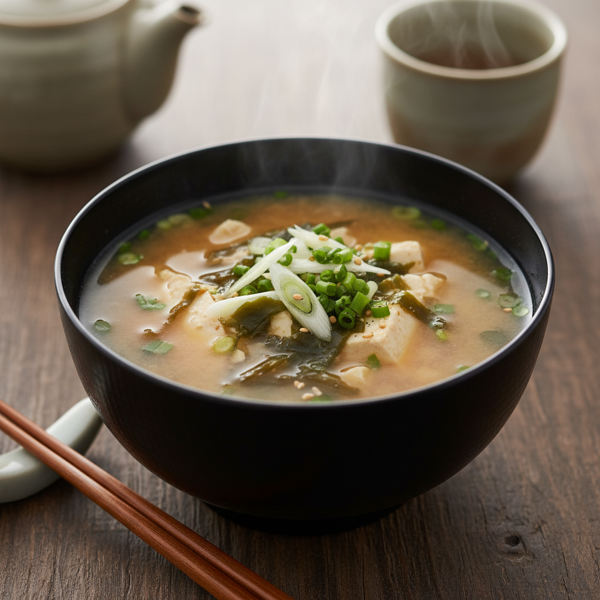
Experience the comforting flavors of traditional Japanese cuisine with this authentic miso soup recipe. Starting with a rich and savory ichiban dashi made from kombu (dried kelp) and bonito flakes (katsuobushi), this soup serves as a warm and nourishing appetizer commonly found in Japanese restaurants. The sweet white miso adds a unique depth of flavor, perfectly balancing the umami notes of the dashi. With the addition of tofu and seaweed, this soup is not only delicious but also packed with nutrition. Whether enjoyed as a starter or a light meal, this Japanese Miso Soup is sure to transport you to Japan with every comforting spoonful.
N/A
Servings
N/A
Calories
6
Ingredients
Ingredients
Kombu (dried kelp)
4 squares (6 inches each) (Wipe with a damp kitchen towel.)
Bonito flakes (katsuobushi)
1 cup (None needed.)
Instant wakame seaweed
2 tablespoons (Soak in cold water for 5 minutes, then drain.)
Sweet white miso
5 tablespoons (None needed.)
Firm tofu
1/2 lb (Cut into 3/4-inch cubes.)
Green onion
1/4 cup (Chopped.)
Instructions
1
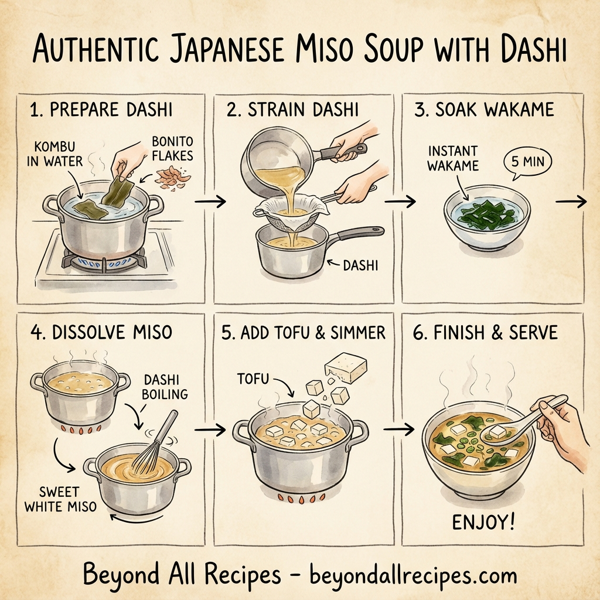
To prepare the dashi, begin by lining a fine-mesh strainer with cheesecloth and placing it over a separate saucepan.
2
Gently wipe the surface of the kombu with a damp kitchen towel to remove any dirt or sand. In a pot, combine the kombu with 6 cups of water and heat over medium-low until it reaches a simmer. Be careful not to boil the water, as this can make the kombu slimy.
3
Once the kombu floats to the surface (about 10 minutes), remove it from the pot. Quickly add the bonito flakes to the simmering water, turning off the heat after 10 seconds. Skim off any foam that forms on the surface.
4
When the bonito flakes sink to the bottom of the pot, carefully pour the dashi through the cheesecloth into the saucepan, discarding the solids in the strainer.
5
For the miso soup, soak the instant wakame seaweed in cold water for about 5 minutes, then drain and set aside.
6
Bring 4 cups of the freshly made dashi to a boil over medium-high heat. Reserve the remaining dashi for another recipe or future use.
7
Once boiling, lower the heat and whisk in the sweet white miso paste until completely dissolved. Add the cubed tofu and bring the mixture back to a gentle simmer.
8
Remove the soup from the heat and stir in the chopped green onion and rehydrated wakame. Serve the soup hot, enjoying the depth of flavor and comforting warmth.
Nutrition Information
Frequently Asked Questions
Frequently Asked Questions
What is the primary base of this authentic Japanese miso soup?
The soup starts with a rich and savory ichiban dashi made from kombu (dried kelp) and bonito flakes (katsuobushi).
How many ingredients are required for this recipe?
There are 6 main ingredients: kombu, bonito flakes, instant wakame seaweed, sweet white miso, firm tofu, and green onion.
How should the kombu be prepared before cooking?
Gently wipe the surface of the kombu with a damp kitchen towel to remove any dirt or sand.
What is the correct way to heat the kombu and water?
Combine 6 cups of water and the kombu in a pot and heat over medium-low until it reaches a simmer.
Why shouldn't you boil the water while the kombu is inside?
Boiling the water with kombu can make the seaweed slimy and negatively affect the texture of the dashi.
When should you remove the kombu from the pot?
Remove the kombu once it floats to the surface, which usually takes about 10 minutes.
How do you incorporate the bonito flakes into the dashi?
Add the bonito flakes to the simmering water and turn off the heat after only 10 seconds.
What should be done with any foam that forms on the surface of the dashi?
You should skim off any foam that forms on the surface after adding the bonito flakes.
How do you strain the dashi effectively?
Wait for the bonito flakes to sink to the bottom, then pour the liquid through a fine-mesh strainer lined with cheesecloth.
How do you prepare the instant wakame seaweed?
Soak the wakame in cold water for about 5 minutes, then drain and set it aside.
How much dashi is used for the miso soup portion of this recipe?
Use 4 cups of the freshly made dashi for the soup and reserve the rest for future use.
What type of miso is recommended for this specific recipe?
Sweet white miso is used to add a unique depth of flavor and balance the umami notes.
How do you ensure the miso paste dissolves properly?
Whisk the miso paste into the dashi until it is completely dissolved.
What kind of tofu should be used and how should it be cut?
Use 1/2 lb of firm tofu and cut it into 3/4-inch cubes.
When are the green onions and wakame added to the soup?
They are stirred in after the soup has been removed from the heat.
What is the purpose of the cheesecloth in the straining process?
The cheesecloth helps catch small particles from the bonito flakes for a clear, clean dashi.
Can the leftover dashi be saved?
Yes, you can reserve the remaining dashi for another recipe or future use.
What heat setting is used to bring the 4 cups of dashi to a boil?
The dashi should be brought to a boil over medium-high heat before adding the miso.
How much kombu is needed for the recipe?
The recipe calls for 4 squares of kombu, each about 6 inches long.
How much bonito flakes are required for the dashi?
You will need 1 cup of bonito flakes (katsuobushi).
What is the recommended amount of sweet white miso?
The recipe uses 5 tablespoons of sweet white miso.
How much green onion is used for garnish?
1/4 cup of chopped green onion is used.
How much wakame seaweed is needed?
The recipe requires 2 tablespoons of instant wakame seaweed.
What is 'Ichiban Dashi'?
It refers to the 'first brew' of dashi, which is highly aromatic and flavorful, made from fresh kombu and bonito flakes.
Should the soup be boiled after adding the tofu?
No, it should only be brought back to a gentle simmer after adding the cubed tofu.
What is the first step in the entire process?
Lining a fine-mesh strainer with cheesecloth and placing it over a saucepan to prepare for the dashi.
Is this soup considered a light meal?
Yes, it can be enjoyed as a starter or a light meal and is considered very nourishing.
What do you do with the solids left in the strainer after making dashi?
The solids, including the bonito flakes and kombu used for the dashi, are typically discarded.
How many cups of water are used total for the dashi base?
The recipe uses 6 cups of water to make the dashi base.
What is the final serving temperature for the soup?
The miso soup should be served hot to enjoy the full depth of flavor and comforting warmth.