Authentic Japanese Karaage
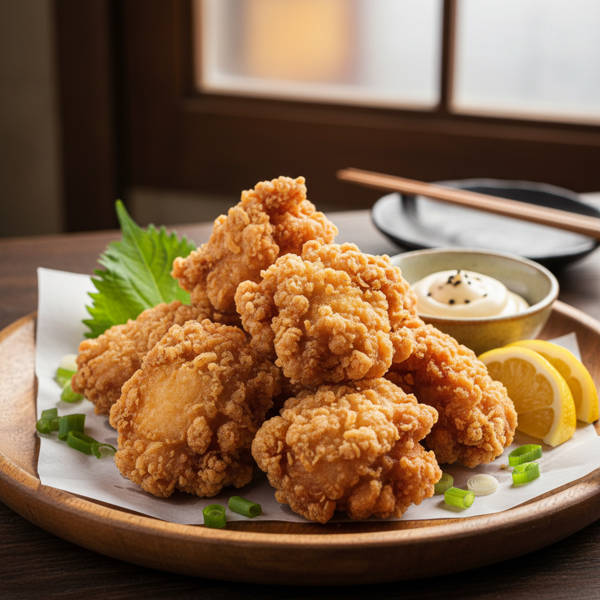
Karaage, a delectable Japanese fried chicken, is a savory and aromatic dish that's loved both as a snack and a main meal. Its crispy exterior coupled with the juicy and flavorful chicken inside will make your taste buds dance. This dish is ideal for gatherings, bento lunches, or a family meal. With simple ingredients and a bit of patience, you can recreate this restaurant-favorite in your own kitchen. The marinating process enhances the flavor and ensures the chicken stays moist and tender.
4
Servings
300
Calories
6
Ingredients
Ingredients
boneless skinless chicken thighs
600 g (cut into 5cm pieces)
soy sauce
2 tablespoons (none)
sake
2 tablespoons (none)
fresh ginger juice
2 teaspoons (grated and squeezed from fresh ginger root)
cornstarch
5 tablespoons (none)
vegetable oil
sufficient for deep frying (none)
Instructions
1
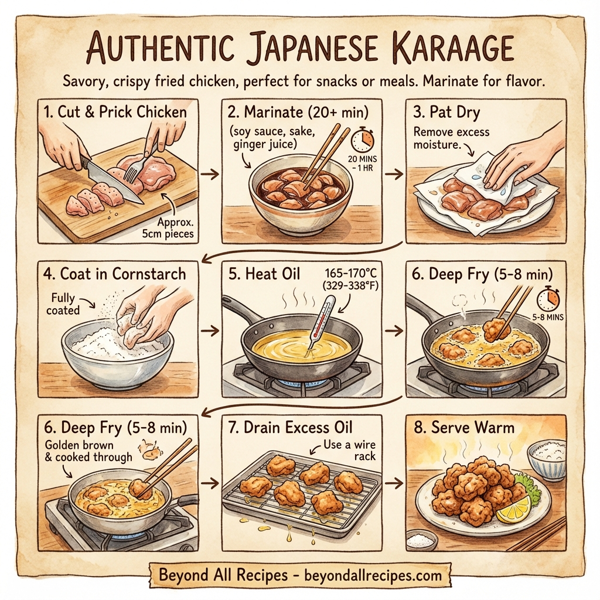
Cut the chicken thighs into bite-sized pieces, approximately 5cm each, allowing for even cooking. Using a fork, gently prick holes into each piece to help the marinade penetrate thoroughly.
2
In a mixing bowl, combine soy sauce, sake, and fresh ginger juice. Add the chicken pieces and mix well to ensure each piece is coated. Cover the bowl and allow the chicken to marinate for at least 20 minutes. Optionally, for deeper flavor, marinate for up to an hour in the refrigerator.
3
After marinating, remove chicken from the sauce and gently pat dry with paper towels. This helps the coating to adhere better and achieve a crispy texture.
4
Place the cornstarch in a large bowl. Toss chicken pieces in the cornstarch until they are fully coated. Shake off any excess.
5
In a deep frying pan or pot, heat vegetable oil to approximately 165-170°C (329-338°F). Ensure you have enough oil to cover the chicken pieces completely.
6
Carefully add the chicken to the hot oil, avoiding overcrowding. Fry chicken in batches for about 5-8 minutes or until the pieces are golden brown and cooked through.
7
Remove cooked chicken from oil and drain on a wire rack or paper-lined tray to remove excess oil.
8
Serve warm or at room temperature for authentic enjoyment. Accompany with a wedge of lemon or a sprinkle of salt if desired.
Nutrition Information
15
Fat
12.5
Carbs
22.5
Protein
Frequently Asked Questions
Frequently Asked Questions
What is Japanese Karaage?
Karaage is a delectable Japanese fried chicken dish known for its crispy exterior and juicy, flavorful interior. It is commonly enjoyed as a snack, a main meal, or in bento lunches.
What cut of chicken is best for this Karaage recipe?
The recipe specifies using 600g of boneless skinless chicken thighs for the most authentic and juicy results.
How should I cut the chicken pieces?
Chicken thighs should be cut into bite-sized pieces, approximately 5cm each, to ensure even cooking.
Why do I need to prick the chicken with a fork?
Pricking holes into the chicken pieces with a fork helps the marinade penetrate the meat more thoroughly for better flavor.
What ingredients are used in the Karaage marinade?
The marinade consists of a savory combination of soy sauce, sake, and fresh ginger juice.
How long should I marinate the chicken?
You should marinate the chicken for at least 20 minutes, though you can leave it for up to an hour in the refrigerator for deeper flavor.
Why is it important to pat the chicken dry after marinating?
Patting the chicken dry with paper towels helps the cornstarch coating adhere better, resulting in a crispier texture after frying.
What type of coating is used for the chicken?
This recipe uses 5 tablespoons of cornstarch to coat the chicken pieces before frying.
How do I apply the cornstarch coating correctly?
Toss the chicken pieces in a bowl of cornstarch until fully coated, then shake off any excess starch before frying.
What is the ideal oil temperature for frying Karaage?
The vegetable oil should be heated to approximately 165-170°C (329-338°F).
How much oil should I use for frying?
You should use a sufficient amount of vegetable oil in a deep frying pan or pot to cover the chicken pieces completely.
How long does it take to fry the chicken?
The chicken pieces should be fried for about 5 to 8 minutes or until they are golden brown and cooked through.
Should I fry all the chicken at once?
No, it is best to fry the chicken in batches to avoid overcrowding the pan, which can lower the oil temperature.
How should I drain the chicken after frying?
Remove the cooked chicken and drain it on a wire rack or a paper-lined tray to remove excess oil.
What are the traditional serving suggestions for Karaage?
Karaage is traditionally served with a wedge of lemon or a sprinkle of salt, and it can be enjoyed warm or at room temperature.
How many calories are in one serving of this Karaage?
One serving of this authentic Japanese Karaage contains approximately 300 calories.
What is the nutritional breakdown per serving?
Each serving contains 15g of fat, 12.5g of carbohydrates, and 22.5g of protein.
How many servings does this recipe provide?
This recipe is designed to serve 4 people.
How do I make the fresh ginger juice?
To make fresh ginger juice, grate fresh ginger root and squeeze the pulp to extract 2 teaspoons of juice.
What kind of oil should I use for deep frying?
Vegetable oil is recommended for deep frying this chicken because of its neutral flavor and high smoke point.
What are the main flavor profiles of this dish?
The dish is described as savory and aromatic, with the marinating process ensuring the chicken stays moist and tender.
Is Karaage suitable for meal prepping or lunch boxes?
Yes, it is ideal for bento lunches as it tastes great even when served at room temperature.
How much soy sauce and sake is needed?
The recipe requires 2 tablespoons of soy sauce and 2 tablespoons of sake for the marinade.
What makes this an 'easy recipe'?
It uses only 6 simple ingredients and straightforward techniques like marinating, coating, and frying.
Can this be served as a party food?
Yes, Karaage is categorized as an excellent party food and is perfect for social gatherings.
What tags are associated with this recipe?
The recipe is tagged with Japanese, fried chicken, savory, crispy, snack, party food, and family meal.
Is there fiber or sugar in this dish?
According to the nutritional data, there is no fiber or sugar listed for this specific recipe.
Does the recipe require salt in the marinade?
The marinade uses soy sauce for saltiness, though a sprinkle of salt can be added at the end for serving.
What is the primary protein source in this dish?
The primary protein source is boneless skinless chicken thighs, providing 22.5g of protein per serving.
Can I substitute the cornstarch?
While cornstarch is used for an authentic crispy texture, some variations use potato starch (katakuriko) for a similar effect.