Authentic Japanese Chicken Curry (Wafuu)
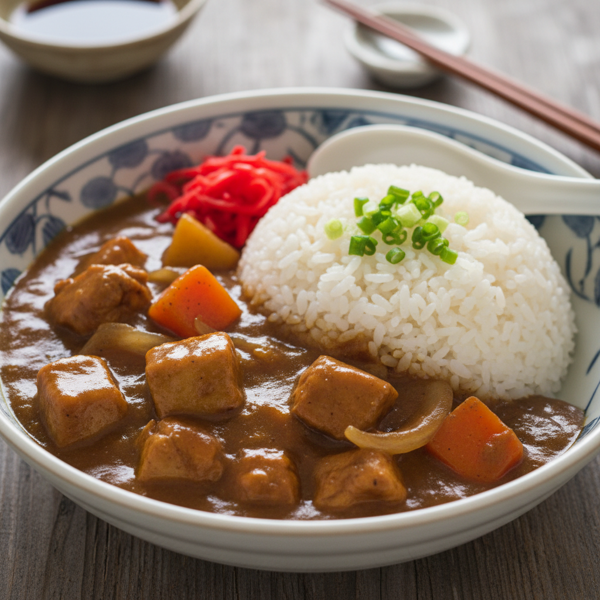
Experience the comforting and rich flavors of Japan with this Authentic Japanese Chicken Curry, inspired by traditional recipes. This curry strikes a perfect balance between sweetness and spice, making it a delightful meal for any occasion. Though it features a long list of ingredients, the cooking process is straightforward and forgiving, allowing you to make substitutions according to your pantry. Enjoy the hearty combination of tender chicken, vibrant vegetables, and a deep curry sauce that is best served over steaming white rice. Adjust the sweetness to your taste by experimenting with grated apple or applesauce. This dish is not just a meal; it’s a cozy bowl of nostalgia that will transport you straight to Japan with each bite.
4
Servings
195
Calories
18
Ingredients
Ingredients
chicken stock
3 cups (Simmering)
canola oil
1 tablespoon (For cooking)
boneless skinless chicken
1 lb (Cut into chunks)
salt and pepper
to taste (For seasoning)
butter
3 tablespoons (Melted)
fresh ginger
1 teaspoon (Finely chopped)
onion
1/2 medium (Finely chopped)
onion
1/2 medium (Cut into 1-inch chunks)
garlic
1 clove (Finely chopped)
flour
3 tablespoons (For thickening)
curry powder
2 tablespoons (For seasoning)
crushed tomatoes
2 tablespoons (For sauce)
bay leaf
1 (For flavor (optional))
carrot
1 medium (Chopped into 1/2-inch pieces)
potato
1 medium (Chopped into 1-inch pieces)
Fuji apple
1 small (Grated)
honey
1 teaspoon (For sweetness)
soy sauce
1 tablespoon (For seasoning)
Instructions
1
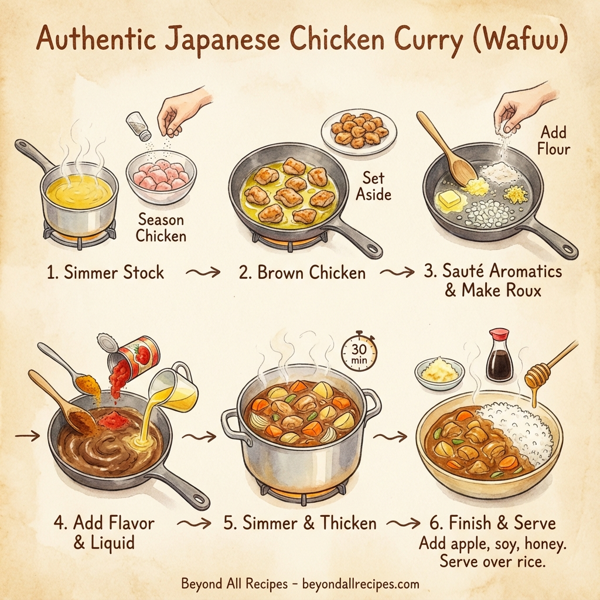
In a medium saucepan, bring the chicken stock to a gentle simmer. Meanwhile, season the chicken chunks with salt and pepper.
2
In a large skillet, heat the canola oil over medium-high heat. Add the seasoned chicken and brown for about 4 minutes. Once browned, transfer the chicken to a separate dish and set it aside.
3
In the same skillet, reduce the heat to medium and melt the butter. Add the finely chopped ginger, garlic, and onion, cooking for a few minutes until the onion becomes translucent.
4
Sprinkle the flour over the mixture and cook, stirring constantly, until the flour is lightly browned to create a roux.
5
Add the curry powder and crushed tomatoes, stirring well to combine. Gradually pour in 1/2 cup of the hot chicken stock while scraping the bottom of the skillet to incorporate any browned bits.
6
Pour the roux mixture into the simmering chicken stock. Add the browned chicken, chunked onion, potato, and carrot. Let the curry simmer for 30 minutes, allowing the flavors to meld.
7
In the final five minutes of cooking, stir in the grated apple (or applesauce), soy sauce, and honey. Adjust sweetness to your preference. Once done, remove from heat and serve the curry hot over freshly steamed rice.
Nutrition Information
6g
Fat
20g
Carbs
11g
Protein
2g
Fiber
2.5g
Sugar
Frequently Asked Questions
Frequently Asked Questions
What is Authentic Japanese Chicken Curry (Wafuu)?
It is a comforting and rich dish that balances sweetness and spice, inspired by traditional Japanese recipes.
How many calories are in a serving of this Japanese Chicken Curry?
There are 195 calories per serving.
How many servings does this recipe make?
This recipe yields 4 servings.
What is the total carbohydrate content per serving?
Each serving contains 20g of carbohydrates.
How much protein is in each serving?
There are 11g of protein per serving.
What is the fat content per serving?
Each serving contains 6g of fat.
How much fiber is in the recipe?
There are 2g of fiber per serving.
How much sugar is in each serving?
There is 2.5g of sugar per serving.
How many ingredients are required for this recipe?
The recipe calls for 18 ingredients in total.
What type of chicken is best for this curry?
The recipe recommends 1 lb of boneless skinless chicken cut into chunks.
What gives the curry its sweetness?
The sweetness comes from a combination of grated Fuji apple (or applesauce) and honey.
How do you thicken the curry sauce?
The sauce is thickened by creating a roux with butter, flour, and aromatics like ginger, garlic, and onion.
How long should the chicken be browned?
The chicken should be browned in canola oil for about 4 minutes.
What vegetables are included in the curry?
The recipe includes carrots, potatoes, and onions cut into chunks.
How long does the curry need to simmer?
The curry should simmer for 30 minutes to allow the flavors to meld.
When should the apple and honey be added?
The grated apple, soy sauce, and honey should be stirred in during the final five minutes of cooking.
What is the recommended serving suggestion?
This curry is best served hot over steaming white rice.
Can I substitute the Fuji apple?
Yes, you can substitute the grated Fuji apple with applesauce.
What aromatics are used in the roux base?
The roux base uses finely chopped fresh ginger, garlic, and 1/2 of a medium onion.
How much chicken stock is needed?
The recipe requires 3 cups of chicken stock.
Is there an optional ingredient for extra flavor?
Yes, a bay leaf can be added for optional flavor.
How much curry powder is used?
The recipe uses 2 tablespoons of curry powder.
What size should the carrots and potatoes be chopped into?
Carrots should be chopped into 1/2-inch pieces and potatoes into 1-inch pieces.
What type of oil is used for browning?
One tablespoon of canola oil is used for cooking the chicken.
Does the recipe use fresh tomatoes?
No, it uses 2 tablespoons of crushed tomatoes for the sauce.
How much butter is used in the roux?
The recipe uses 3 tablespoons of butter.
What is the first step in the instructions?
The first step is to bring the chicken stock to a gentle simmer in a medium saucepan.
Can I adjust the sweetness of the curry?
Yes, you can adjust the sweetness to your preference by experimenting with the amount of apple and honey.
Why are onions listed twice in the ingredients?
One half is finely chopped for the roux base, and the other half is cut into 1-inch chunks for the stew.
Is this recipe considered difficult?
No, the cooking process is described as straightforward and forgiving.