Authentic Italian Ragu alla Bolognese
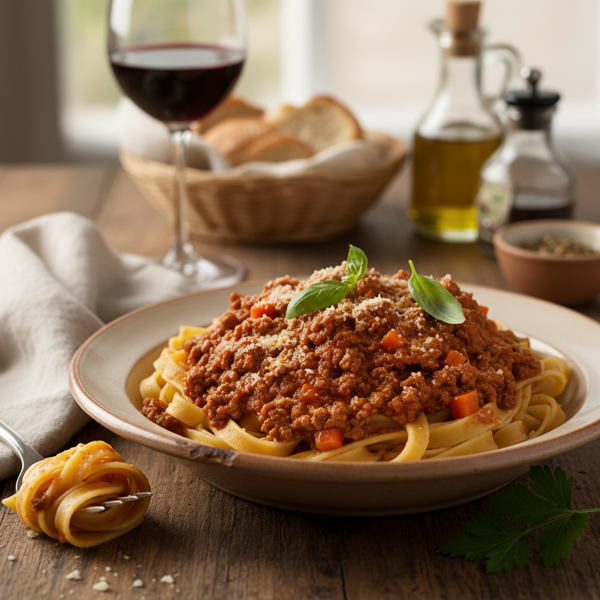
Ragu alla Bolognese is more than just a meal; it's a culinary experience that encapsulates the heart and soul of Italian cuisine. Originating from Bologna, this rich and hearty sauce blends quality meats, aromatic vegetables, and the flavors of wine and milk, creating a depth of taste that can transport you straight to Italy. Growing up in a family that hailed from Bologna, I’ve tasted the joys of authentic Italian cooking firsthand. This beloved recipe has been passed down through generations and is designed to bring warmth and satisfaction to your table. Slow-cooked to perfection, this Ragu is meant to simmer for hours, evolving in flavor and richness. Serve it over fresh pasta and finish it with a sprinkle of Parmesan for an unforgettable dining experience. Mangiare! (Eat!)
N/A
Servings
N/A
Calories
16
Ingredients
Ingredients
Butter
4 tablespoons (divided)
Olive oil
4 tablespoons (divided)
Parma ham (prosciutto) or Mortadella
3 ounces (finely chopped)
Ground meat (beef chuck, veal and pork shoulder)
2 lbs (mixed)
Onion
1 large (finely diced)
Carrots
2 medium (finely diced)
Celery
2 ribs (finely diced)
Garlic cloves
4 (peeled)
Chicken livers
4 (washed, flattened, and chopped)
Dry white wine
1/2 cup
Whole milk
2 cups (divided, warmed)
Whole tomatoes or passata
2 lbs (crushed by hand or potato masher)
Tomato paste
2 tablespoons
Chicken stock
2 cups (warmed)
Nutmeg
1 pinch
Salt and pepper
to taste (added at the end)
Instructions
1
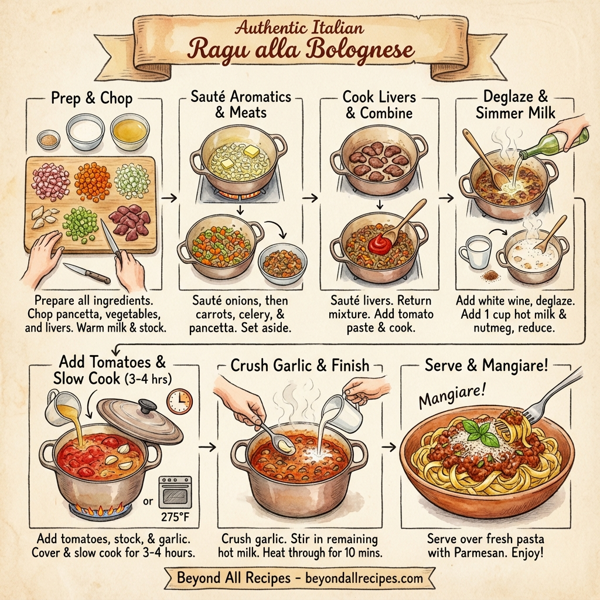
Prepare all ingredients in advance to streamline the cooking process.
2
Finely chop the pancetta or choice of ham, dice the carrots, onions, and celery.
3
Wash the chicken livers thoroughly, flatten them slightly, and chop them into small pieces.
4
Warm the milk and chicken stock in separate pots until hot but not boiling.
5
In a Dutch oven, add 2 tablespoons of oil and 2 tablespoons of butter over medium heat. Once heated, add the onions and sauté until they are soft but not browned, approximately 8 to 10 minutes.
6
Increase the heat to medium-high and add the remaining butter and olive oil, then add the diced carrots and celery. Sauté until they begin to brown, about 5 to 7 minutes.
7
Stir in the pancetta and your meat choice, cooking for an additional minute or two.
8
Remove the mixture from the pan and set aside in a bowl.
9
Add the chicken livers to the Dutch oven and sauté for 1 to 2 minutes, stirring frequently until cooked through.
10
Return the mixture of vegetables and meats to the Dutch oven and stir to combine.
11
Add tomato paste and cook for 10-15 minutes, allowing it to brown and deepen in flavor.
12
Pour in the white wine, using a wooden spoon to deglaze the bottom of the pan. Allow it to evaporate for 4-7 minutes.
13
Stir in 1 cup of hot milk and a pinch of nutmeg, bringing it to a gentle boil. Reduce the milk for 3-5 minutes.
14
Incorporate the crushed tomatoes and warmed chicken stock into the mixture. Toss in the whole garlic cloves and stir everything well.
15
Cover and let the ragu cook on very low heat for 3 to 4 hours, stirring occasionally. Alternatively, you can place it in an oven preheated to 275°F for the same duration.
16
About 10-15 minutes before serving, crush the garlic cloves against the walls of the Dutch oven and stir in the remaining cup of hot milk. Continue cooking until heated through for a final 10 minutes.
Nutrition Information
Frequently Asked Questions
Frequently Asked Questions
What is Ragu alla Bolognese?
Ragu alla Bolognese is a rich and hearty Italian meat sauce originating from Bologna, characterized by its long simmering time and use of aromatic vegetables, meat, wine, and milk.
How long does it take to cook authentic Bolognese sauce?
For the best flavor and richness, the sauce should be slow-cooked on very low heat for 3 to 4 hours.
Can I cook this recipe in the oven?
Yes, instead of the stovetop, you can place the covered Dutch oven in a preheated oven at 275°F for 3 to 4 hours.
What types of meat are used in this recipe?
This recipe uses a mix of 2 lbs of ground meat (beef chuck, veal, and pork shoulder), along with pancetta or Parma ham and chicken livers.
Why are chicken livers included in the ingredients?
Chicken livers are a traditional addition that adds a unique depth of flavor and richness to the authentic Bolognese sauce.
What is the purpose of adding milk to the sauce?
Milk is added to tenderize the meat and create a smoother, creamier texture while balancing the acidity of the tomatoes.
Should the milk and stock be cold when added?
No, both the milk and the chicken stock should be warmed until hot (but not boiling) before being incorporated into the mixture.
What kind of wine is recommended for this Ragu?
The recipe calls for 1/2 cup of dry white wine to deglaze the pan and add acidity.
How should the vegetables be prepared?
The carrots, onions, and celery should be finely diced to ensure they melt into the sauce during the long cooking process.
What is the correct way to handle the garlic?
The garlic cloves should be peeled and added whole. About 10-15 minutes before serving, they are crushed against the walls of the Dutch oven and stirred into the sauce.
How do I deglaze the pan?
After adding the white wine, use a wooden spoon to scrape the browned bits from the bottom of the pan and allow the liquid to evaporate for 4-7 minutes.
When is the tomato paste added?
The tomato paste is added after the meats and vegetables are combined and should be cooked for 10-15 minutes to allow it to brown and deepen in flavor.
What type of tomatoes should I use?
You can use 2 lbs of whole tomatoes (crushed by hand or with a potato masher) or 2 lbs of passata.
What spices are used in authentic Bolognese?
This recipe uses a pinch of nutmeg for aroma, and salt and pepper are added at the very end to taste.
Can I use Mortadella instead of Parma ham?
Yes, you can use 3 ounces of either finely chopped Parma ham (prosciutto) or Mortadella.
What is the order of sautéing the vegetables?
First, sauté the onions until soft (8-10 minutes), then add carrots and celery and sauté until they begin to brown (5-7 minutes).
How is the milk added to the recipe?
The milk is added in two stages: 1 cup is reduced early in the process, and the final cup is stirred in 10-15 minutes before serving.
What fats are used for the base of the sauce?
The recipe uses a combination of 4 tablespoons of butter and 4 tablespoons of olive oil, divided throughout the cooking steps.
How should the chicken livers be prepared?
The livers should be washed thoroughly, flattened slightly, and chopped into small pieces before being sautéed for 1 to 2 minutes.
What does 'Mangiare' mean?
'Mangiare' is the Italian verb for 'Eat!', often used as a joyful invitation to start the meal.
How should the final dish be served?
Serve the Ragu over fresh pasta and finish it with a sprinkle of Parmesan cheese.
Should the pot be covered during the long simmer?
Yes, the Dutch oven should be covered while it cooks on very low heat for 3 to 4 hours.
When should I add the salt and pepper?
Salt and pepper should be added at the very end of the cooking process to ensure the seasoning is perfectly balanced.
Can I prepare the ingredients in advance?
Yes, it is recommended to prepare all ingredients in advance to streamline the multi-step cooking process.
What is the role of the chicken stock?
The warmed chicken stock provides the necessary liquid for the long slow-cook, contributing to the savory depth of the sauce.
How do I know the onions are ready?
The onions are ready when they are soft but not yet browned, which typically takes about 8 to 10 minutes over medium heat.
What tool is best for crushing the tomatoes?
Whole tomatoes can be easily crushed by hand or using a potato masher before being added to the pot.
Can I substitute the white wine with red wine?
While this specific authentic recipe calls for white wine, some variations use red; however, white wine is traditional for the Bolognese style.
How many garlic cloves are used?
The recipe calls for 4 peeled garlic cloves.
What is the recommended cooking vessel?
A Dutch oven is recommended because it distributes heat evenly and is suitable for both stovetop and oven cooking.