Authentic Italian Marinara Pizza
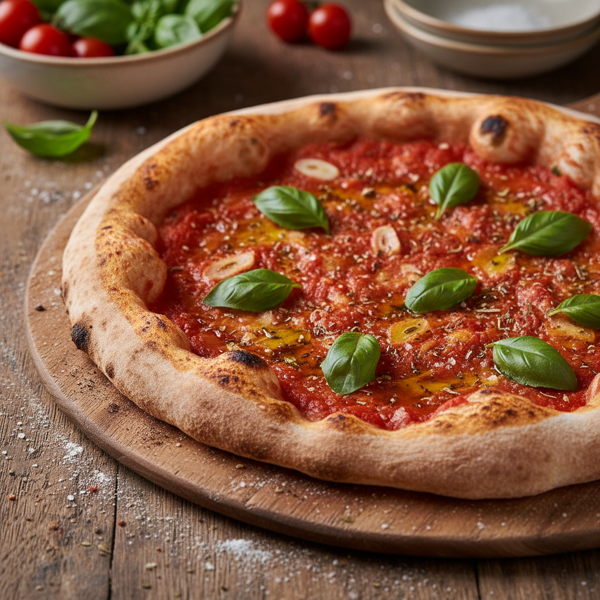
Experience the true taste of Italy with this Authentic Italian Marinara Pizza. This recipe captures the essence of traditional Neapolitan pizza, featuring a thin, crispy crust topped with fresh tomatoes or your favorite pizza sauce. Infused with fragrant oregano and gooey mozzarella cheese, this pizza allows for endless customization with optional toppings. Perfect for family gatherings or a cozy night in, this pizza embodies simplicity and flavor, inviting you to recreate a piece of Italian culinary heritage from the comfort of your home.
N/A
Servings
N/A
Calories
11
Ingredients
Ingredients
lukewarm water
1 cup
active dry yeast
2 1/4 teaspoons
sugar
1 teaspoon
salt
1 teaspoon
extra virgin olive oil
1 tablespoon
unbleached flour or bread flour
2-3 cups (as needed to form dough)
cornmeal
1 teaspoon (for dusting the pizza pan)
fresh tomatoes or pizza sauce
to taste (freshly sliced or spread)
oregano
to taste (dried or fresh)
shredded mozzarella cheese
to taste
pizza toppings
optional (as desired)
Instructions
1
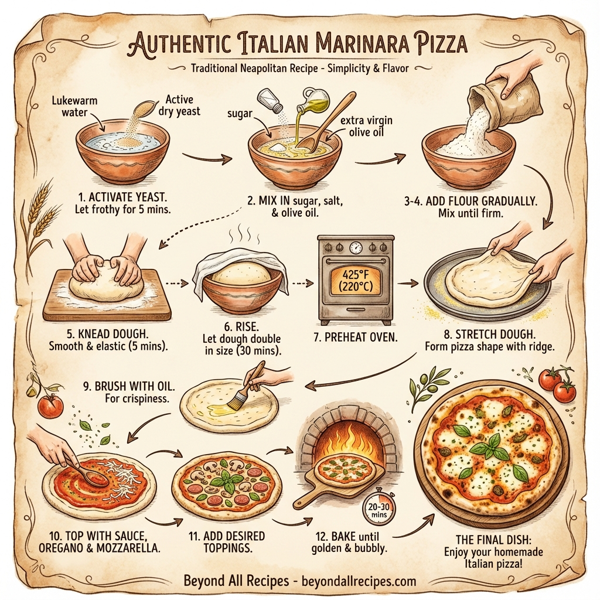
In a mixing bowl, pour in lukewarm water and sprinkle the active dry yeast over it. Allow it to sit for about five minutes until it becomes frothy.
2
Stir the mixture gently, then add the sugar, salt, and extra virgin olive oil. Mix well to combine.
3
Gradually stir in half of the unbleached or bread flour, beating the mixture until it becomes smooth.
4
Continue adding flour in increments until the dough is firm enough to handle without sticking.
5
Knead the dough on a floured surface for about five minutes until it is smooth and elastic.
6
Form the dough into a ball and flatten it slightly. Place it in a lightly oiled bowl, cover with a cloth, and let it rise in a warm area for about 30 minutes, or until it has doubled in size.
7
Once risen, preheat your oven to 425°F (220°C).
8
Sprinkle cornmeal over your pizza pan or baking sheet. Stretch the risen dough into your desired pizza shape, pushing it outwards from the center, and create a slight ridge at the edges.
9
Lightly brush or spray the stretched dough with olive oil to enhance crispiness.
10
Spread a layer of fresh tomatoes or your chosen pizza sauce evenly over the dough. Sprinkle oregano generously, followed by shredded mozzarella cheese.
11
Add any additional pizza toppings as desired.
12
Bake the pizza in the preheated oven for 20-30 minutes, or until the crust is golden brown and the cheese is bubbling and slightly browned.
Nutrition Information
Frequently Asked Questions
Frequently Asked Questions
What is an Authentic Italian Marinara Pizza?
It is a traditional Neapolitan-style pizza featuring a thin, crispy crust topped with tomatoes, oregano, and mozzarella.
What type of yeast is used for this recipe?
The recipe calls for active dry yeast to be sprinkled over lukewarm water.
How long should the yeast sit in the water?
Allow the yeast to sit for about five minutes until it becomes frothy.
What temperature should the oven be set to?
The oven should be preheated to 425 degrees Fahrenheit or 220 degrees Celsius.
What type of flour is best for the crust?
You can use either unbleached flour or bread flour for the best results.
How long does the dough need to rise?
The dough needs to rise in a warm area for about 30 minutes.
How do I know the dough has risen enough?
The dough is ready when it has doubled in size.
What is the purpose of cornmeal in this recipe?
Cornmeal is sprinkled over the pizza pan to prevent sticking and add texture to the bottom of the crust.
How long should I knead the pizza dough?
Knead the dough on a floured surface for about five minutes until it becomes smooth and elastic.
Why is olive oil brushed onto the stretched dough?
Brushing or spraying the dough with olive oil helps enhance the final crispiness of the crust.
What are the primary toppings for a Marinara pizza?
The primary toppings include fresh tomatoes or pizza sauce, oregano, and shredded mozzarella cheese.
Can I add extra toppings to this pizza?
Yes, you can add any additional pizza toppings as desired for personalized customization.
How long does the pizza take to bake?
The pizza typically bakes for 20 to 30 minutes in a preheated oven.
What is the target texture for the crust?
The goal is a thin, crispy crust that turns golden brown after baking.
How do I prepare the yeast mixture?
Sprinkle yeast over lukewarm water, let it froth, then stir in sugar, salt, and olive oil.
How much flour should I add to the dough?
Gradually stir in 2 to 3 cups of flour in increments until the dough is firm enough to handle.
What should the dough look like after kneading?
The dough should be smooth, elastic, and firm enough to handle without sticking.
Where should the dough be placed to rise?
Place the dough ball in a lightly oiled bowl and cover it with a cloth in a warm area.
How should the dough be shaped?
Stretch the dough outwards from the center to your desired shape, creating a slight ridge at the edges.
What type of oil is recommended for the dough?
The recipe specifically recommends using extra virgin olive oil for authentic flavor.
Is sugar necessary for the pizza dough?
Yes, one teaspoon of sugar is used to help activate the yeast and improve the dough's consistency.
What is the indicator that the pizza is finished baking?
The pizza is done when the crust is golden brown and the cheese is bubbling and slightly browned.
Can I use fresh oregano for this pizza?
Yes, you can use either dried or fresh oregano to provide the fragrant herb layer.
What size should the dough be before baking?
The dough should have doubled in size during the 30-minute rising phase before being stretched.
How much salt is used in the dough?
The recipe calls for exactly one teaspoon of salt mixed into the dough.
Is this recipe suitable for family gatherings?
Yes, it is described as perfect for family gatherings or a cozy night in.
Can I use fresh tomatoes instead of sauce?
Yes, you can spread either fresh sliced tomatoes or your favorite pizza sauce evenly over the dough.
What happens if the dough is too sticky?
If the dough is sticky, continue adding flour in increments until it is firm enough to handle.
What is the first step in making the dough?
The first step is to pour lukewarm water into a bowl and sprinkle the active dry yeast over it.
What heritage does this pizza represent?
This pizza represents Italian culinary heritage, specifically the essence of traditional Neapolitan pizza.