Authentic Italian Ciabatta Bread
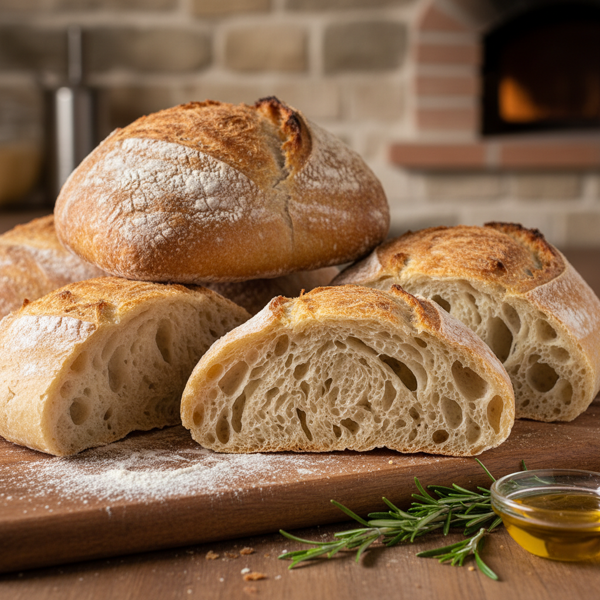
Homemade ciabatta bread embodies the essence of Italian baking, combining a crispy crust with a soft, airy interior. This recipe reflects the perfect balance of different flours, including durum and bolted flour, to create a rustic yet refined loaf. While it may seem like a lengthy process, the actual hands-on time is minimal, allowing you to enjoy the delightful aroma of freshly baked bread at your convenience. Whether served with a meal, used for sandwiches, or enjoyed on its own, this ciabatta bread is sure to impress. Feel free to experiment with flour variations to tailor the loaf to your preferences, making it a versatile staple in any kitchen.
N/A
Servings
N/A
Calories
6
Ingredients
Ingredients
Cold Water
1/2 liter (No preparation needed.)
Yeast
10 g (Active dry yeast or fresh yeast.)
Durum Flour
100 g (Use fine durum flour.)
Plain Flour (preferably Italian 'tipo 00')
300 g (Sift before use.)
Bolted Flour
50 g (No preparation needed.)
Salt
10 g (Fine sea salt is recommended.)
Instructions
1
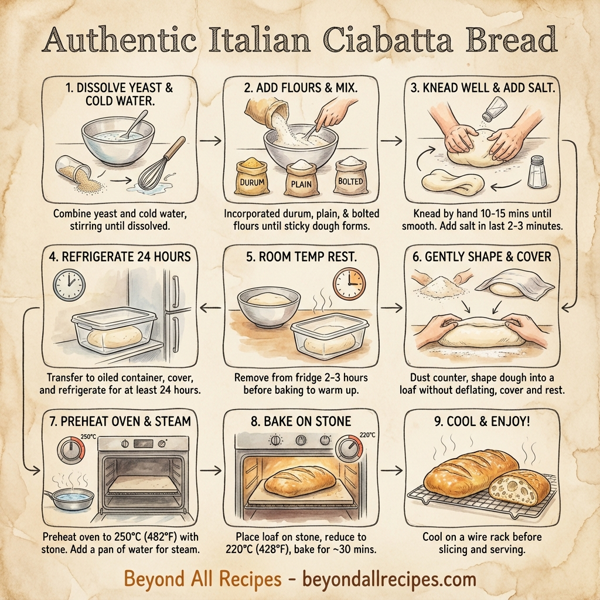
In a large mixing bowl, combine the yeast and cold water, stirring until the yeast is dissolved.
2
Gradually incorporate the durum flour, plain flour, and bolted flour until a sticky dough begins to form.
3
Knead the dough by hand for about 10 to 15 minutes, until it's smooth and elastic. In the last 2-3 minutes of kneading, add the salt and knead until fully incorporated.
4
Transfer the dough to a lightly oiled container, cover it, and refrigerate for at least 24 hours. This slow fermentation will enhance the flavor and texture.
5
When ready to bake, remove the dough from the fridge 2-3 hours beforehand, allowing it to come to room temperature without kneading or disturbing the air bubbles.
6
Dust your countertop with flour and gently shape the dough into a loaf, being careful not to deflate it. Cover it with a clean kitchen towel and let it rest.
7
Preheat your oven to 250°C (482°F) and place a baking stone inside if available. Just before baking, create steam by adding a small pan of water to the bottom of the oven.
8
Once the oven is hot, carefully place the loaf onto the stone and immediately reduce the temperature to 220°C (428°F). Bake for about 30 minutes, checking for a deep golden-brown color and a hollow sound when tapped on the bottom.
9
Remove from the oven and let cool on a wire rack before slicing and serving.
Nutrition Information
Frequently Asked Questions
Frequently Asked Questions
What is the characteristic texture of Authentic Italian Ciabatta Bread?
Authentic ciabatta bread features a crispy outer crust with a soft, airy interior characterized by large air bubbles.
What ingredients are required for this ciabatta recipe?
You will need 1/2 liter of cold water, 10g of yeast, 100g of durum flour, 300g of plain flour (preferably Italian 'tipo 00'), 50g of bolted flour, and 10g of salt.
Why is cold water used in the dough?
Cold water is used to control the temperature of the dough during the long, slow fermentation process.
What type of yeast is recommended?
You can use either active dry yeast or fresh yeast for this recipe.
Why does the recipe include durum flour?
Durum flour helps provide a rustic texture and traditional Italian flavor to the loaf.
What is Italian 'tipo 00' flour?
It is a finely ground Italian flour that is ideal for achieving the soft, refined crumb typical of authentic ciabatta.
Is there any special preparation for the plain flour?
Yes, the plain flour should be sifted before use to ensure a smooth dough.
What is bolted flour?
Bolted flour is a type of flour where some of the bran has been removed, providing a balance between whole grain and white flour.
How long should I knead the ciabatta dough?
Knead the dough for about 10 to 15 minutes by hand until it becomes smooth and elastic.
When should I add salt to the dough?
The salt should be added during the last 2-3 minutes of the kneading process.
How long does the fermentation process take?
The dough should be refrigerated for at least 24 hours to allow for slow fermentation.
What are the benefits of slow fermentation?
Slow fermentation enhances both the flavor and the texture of the bread, creating more complex aromas and better air bubbles.
How should the dough be handled after refrigeration?
Remove it from the fridge 2-3 hours before baking and let it come to room temperature without kneading or disturbing the internal air bubbles.
What is the secret to shaping ciabatta?
Gently shape the dough into a loaf on a floured surface, being very careful not to deflate the air bubbles that formed during fermentation.
What temperature should the oven be preheated to?
The oven should be preheated to 250°C (482°F).
Why is steam used during the baking process?
Steam helps the bread expand more easily and contributes to the formation of a thin, crispy crust.
How do I create steam in my home oven?
Place a small pan of water at the bottom of the oven just before you put the loaf inside.
At what temperature should the bread be baked?
After placing the loaf in the oven, reduce the temperature immediately to 220°C (428°F).
How long does the ciabatta take to bake?
The bread typically takes about 30 minutes to bake.
How do I know when the ciabatta is done?
The bread is done when it has a deep golden-brown color and produces a hollow sound when tapped on the bottom.
Should I use a baking stone?
Using a baking stone is recommended if available, as it helps provide consistent heat for a better crust.
How should the bread be cooled?
Let the bread cool completely on a wire rack before slicing to prevent the interior from becoming gummy.
Can I vary the flours in this recipe?
Yes, the recipe is versatile, and you can experiment with flour variations to suit your taste preferences.
Is this a high-effort recipe?
While the fermentation takes a long time, the actual hands-on time is minimal.
What type of salt is best for this recipe?
Fine sea salt is recommended for the best flavor integration.
What is the best way to serve ciabatta?
It can be served with a meal, used for sandwiches, or enjoyed on its own with olive oil.
Does this recipe produce a rustic loaf?
Yes, the combination of durum and bolted flours creates a rustic yet refined Italian loaf.
Why must the dough be covered while resting?
Covering the dough with a clean kitchen towel prevents the surface from drying out while it rests at room temperature.
Should I knead the dough again after it comes out of the fridge?
No, you should not knead or disturb the dough after refrigeration to preserve the air bubbles.
What is the importance of dusting the countertop with flour?
Ciabatta dough is quite sticky; flouring the surface prevents sticking and aids in the gentle shaping process.