Authentic Homemade Egg Pasta
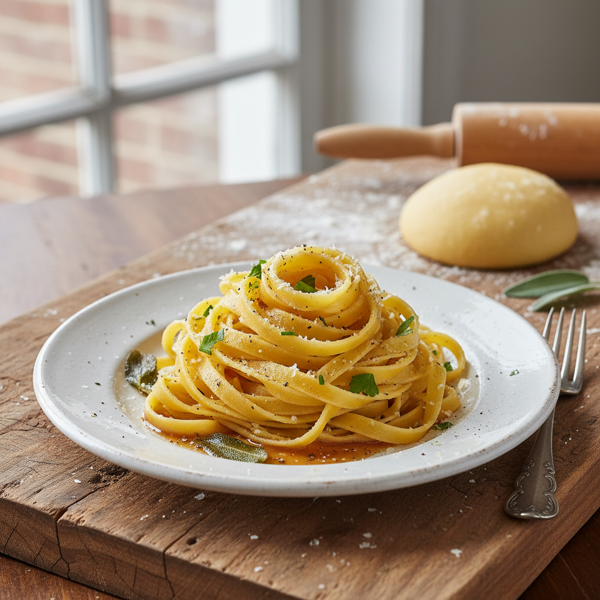
This Authentic Homemade Egg Pasta recipe, inspired by Mario Batali, guides you through the process of creating rich, fresh egg pasta right in your own kitchen. With just a few simple ingredients—unbleached all-purpose flour, extra-large eggs, and a dash of olive oil—you can produce pasta that boasts an artisan quality, perfect for a variety of dishes. This recipe is versatile and healthy, allowing for the incorporation of herbs and spices for extra flavor. Whether you choose to make fettuccine, spaghetti, or even ravioli, this homemade pasta promises a delightful experience that elevates any meal. Share this traditional recipe with family and friends and enjoy the satisfaction of making pasta from scratch.
N/A
Servings
300
Calories
4
Ingredients
Ingredients
Unbleached All-Purpose Flour
3.5 cups (Measuring)
Unbleached All-Purpose Flour
1/2 cup (For dusting)
Extra Large Eggs
4 (Beaten)
Olive Oil
1/2 teaspoon (Added to egg mixture)
Instructions
1
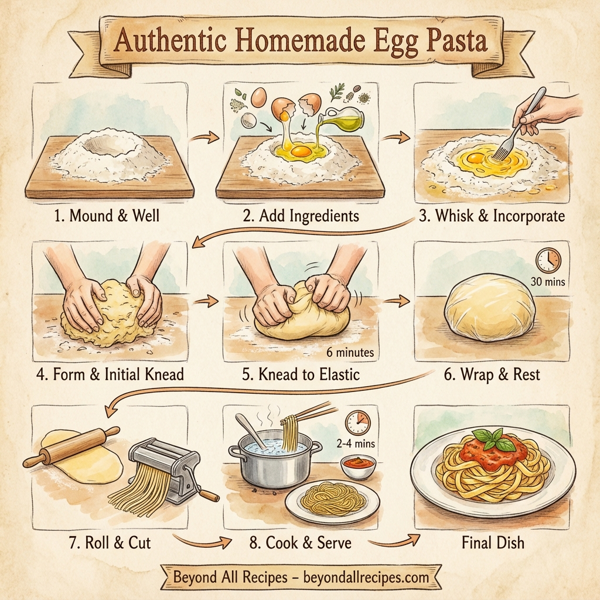
Start by placing 3.5 cups of unbleached all-purpose flour on a large wooden cutting board or clean countertop, forming a mound. Create a deep well in the center of the mound.
2
In the well, crack the eggs, add the olive oil, and any desired flavoring agents such as herbs or spices. Optional: consider adding a tablespoon of tomato paste for a unique taste.
3
Using a fork, gently whisk the eggs and oil together, gradually pulling in flour from the edges of the well. Be careful to maintain the well’s shape as you incorporate the flour.
4
Once about half of the flour is mixed in, the dough will start to come together. At this point, switch to using your hands. Knead the dough with your palms until fully combined.
5
Once the dough is cohesive, scrape your work surface clean and lightly dust it with flour. Knead the dough for about 6 minutes, dusting as necessary. You want the dough to be elastic and slightly sticky.
6
Wrap the kneaded dough in plastic wrap and let it rest for at least 30 minutes at room temperature. This resting time helps the gluten to relax, making the dough easier to roll out.
7
After resting, roll out the dough using a rolling pin or a pasta machine to your desired thickness. Cut into your preferred pasta shape: strands for spaghetti or fettuccine, or sheets for ravioli or lasagna.
8
To cook, bring a large pot of salted water to a boil. Fresh strand pasta usually takes only 2-4 minutes to cook, while filled pastas like ravioli may require more time. Serve with your favorite sauce or toppings, and enjoy!
Nutrition Information
2.5
Fat
60
Carbs
10
Protein
Frequently Asked Questions
Frequently Asked Questions
What is the main ingredient in this authentic homemade egg pasta?
The main ingredient is 3.5 cups of unbleached all-purpose flour.
How many eggs are required for this recipe?
The recipe calls for 4 extra-large eggs.
What type of flour is recommended?
Unbleached all-purpose flour is recommended for the best results.
How much olive oil should be added to the dough?
You should add 1/2 teaspoon of olive oil to the egg mixture.
How long do I need to knead the pasta dough?
The dough should be kneaded for about 6 minutes until it is elastic and slightly sticky.
Why does the dough need to rest before rolling?
Resting allows the gluten to relax, which makes the dough much easier to roll out.
How long should the pasta dough rest?
The dough should rest for at least 30 minutes at room temperature.
What is the cooking time for fresh strand pasta?
Fresh strand pasta like spaghetti or fettuccine usually takes only 2 to 4 minutes to cook in boiling salted water.
Can I use this recipe to make ravioli?
Yes, this versatile dough can be used for strands like spaghetti or sheets for ravioli and lasagna.
How many calories are in one serving of this pasta?
There are approximately 300 calories per serving.
Who is the inspiration behind this pasta recipe?
This recipe is inspired by the techniques of Mario Batali.
What size eggs should be used?
The recipe specifically requires extra-large eggs.
Can I add extra flavors to the dough?
Yes, you can incorporate herbs, spices, or even a tablespoon of tomato paste for a unique taste.
How much protein is in this homemade pasta?
Each serving contains 10 grams of protein.
What is the carbohydrate content per serving?
There are 60 grams of carbohydrates per serving.
How much fat is in this recipe?
The recipe contains 2.5 grams of fat per serving.
What should the texture of the dough be after kneading?
The dough should be elastic and slightly sticky to the touch.
How do I start mixing the flour and eggs?
Create a mound with the flour, make a deep well in the center, and crack the eggs into that well.
What tool should I use to initially mix the eggs and flour?
Use a fork to gently whisk the eggs and oil while gradually pulling in flour from the edges.
When should I switch from using a fork to my hands?
Switch to your hands once about half of the flour is mixed in and the dough begins to come together.
What kind of work surface is best for making pasta?
A large wooden cutting board or a very clean countertop is ideal.
How much extra flour should I have on hand for dusting?
It is recommended to have an additional 1/2 cup of flour ready for dusting the work surface.
Is this pasta recipe considered healthy?
Yes, the recipe is described as a healthy and artisan-quality alternative to store-bought pasta.
What types of pasta shapes can I make with this dough?
You can make fettuccine, spaghetti, ravioli, or lasagna sheets.
Do I need a pasta machine for this recipe?
You can use either a rolling pin or a pasta machine to roll the dough to your desired thickness.
Is there any salt added directly to the dough?
The provided ingredient list does not include salt in the dough, but the pasta is cooked in salted water.
What is the purpose of the 1/2 teaspoon of olive oil?
The olive oil is added to the egg mixture to enrich the dough and help with its texture.
Can I make this pasta ahead of time?
While best cooked fresh, the dough needs at least 30 minutes of rest and can be prepared shortly before rolling.
What is the first step of the instructions?
The first step is placing 3.5 cups of flour on a cutting board and forming a mound with a deep well.
How do I know when the pasta is finished cooking?
Fresh pasta cooks very quickly; strands are usually done in 2-4 minutes when they reach an al dente texture.