Authentic Greek Phyllo Pastry
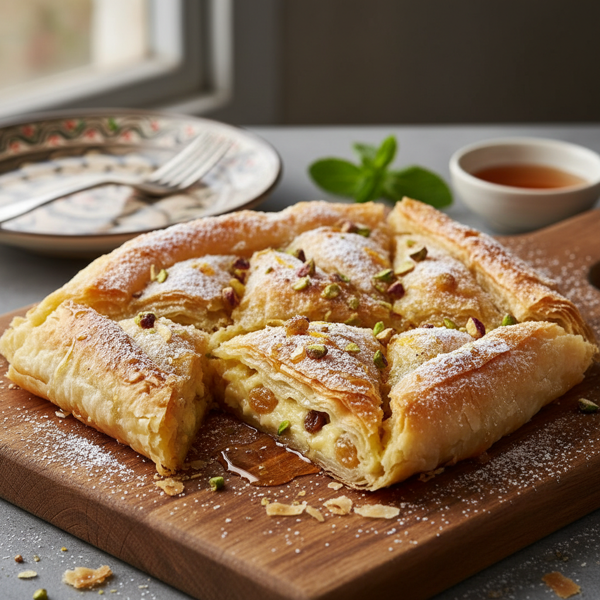
Discover the joy of making your own phyllo pastry, a fundamental component in numerous classic Greek dishes. When I lived in the enchanting land often referred to as the Holy Land, I learned that the older generations held a deep appreciation for homemade phyllo, believing its fresh flavor and texture far surpassed that of commercially made varieties. This recipe creates tender and flaky layers that can be used in a multitude of dishes, from sweet desserts like baklava to savory creations such as spinach pie. Although making phyllo from scratch may seem daunting, the end result is worth the effort, and you may find that once you try it, you'll never look back!
N/A
Servings
N/A
Calories
4
Ingredients
Ingredients
Flour
4 cups (Sifted)
Salt
1 teaspoon (Sifted with flour)
Tepid Water
1 1/3 cups (As is)
Olive Oil
1/4 cup (As is)
Instructions
1
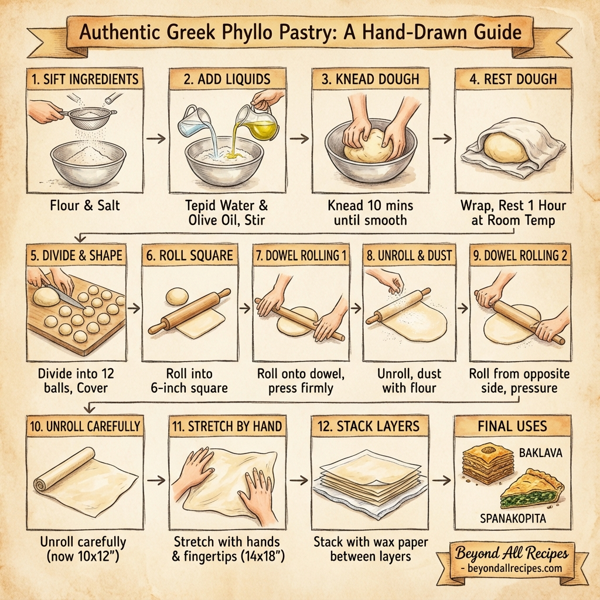
In a large mixing bowl, sift together the flour and salt.
2
Gradually add the tepid water and olive oil to the flour mixture, stirring until a soft dough forms.
3
Knead the dough in the bowl for about 10 minutes, until it becomes smooth and satiny. It may feel sticky at first, but keep kneading until the desired texture is achieved.
4
Once the dough is well-mixed and smooth, wrap it in plastic wrap and let it rest at room temperature for approximately one hour. If you're not using all the dough right away, wrap any unused portions in plastic wrap and refrigerate for up to a week; make sure to bring it to room temperature before using.
5
After the resting period, divide the dough into 12 equal pieces and shape each into a smooth ball.
6
Cover the dough balls with a cloth, leaving out the one you will be working with.
7
Flatten a ball of dough into a square, then roll it out on a lightly floured surface to form a 6-inch square.
8
Dust the rolled-out pastry with a little flour, then take your wooden dowel and roll the dough onto it, starting from one end. Press firmly as you roll, ensuring both hands support the dough evenly.
9
Unroll the pastry and dust the surface with more flour before rolling it up from the opposite side, applying pressure as you go.
10
Continue to unroll carefully, so as not to tear the pastry.
11
After this second rolling, your dough should measure approximately 10x12 inches.
12
Using the backs of your hands, gently stretch the dough, moving your hands to keep the stretching even and working your way to the edges. Use your fingertips to provide a final stretch to the edges for a more delicate finish.
13
Your final pastry should measure roughly 14x18 inches.
14
Transfer the phyllo to a clean cloth, cover it with wax paper, and fold the cloth over the top. This prevents the dough from drying out.
15
Repeat the rolling and stretching process with the remaining dough balls, layering them with a sheet of wax paper in between each layer.
16
It's important to use the phyllo soon after making, as it can spoil if left too long. For those seeking a very thin pastry, you can roll the layers even thinner by repeating the dowel rolling method as desired.
17
This phyllo can be used similarly to puff pastry when thicker or crafted into delicious Middle Eastern sweets when rolled thinly. In Greece, it's often used as a crust for savory pies like spanakopita (spinach pie).
Nutrition Information
Frequently Asked Questions
Frequently Asked Questions
What is the first step in making authentic Greek phyllo pastry?
The first step is to sift together the flour and salt in a large mixing bowl.
How much flour is required for this recipe?
You will need 4 cups of sifted flour.
What type of water should be used for the dough?
The recipe calls for 1 1/3 cups of tepid water.
How much olive oil is used in the dough?
The dough requires 1/4 cup of olive oil.
How long should I knead the phyllo dough?
Knead the dough in the bowl for about 10 minutes until it becomes smooth and satiny.
What should I do if the dough feels sticky while kneading?
It may feel sticky at first, but you should keep kneading until the desired smooth texture is achieved.
How long does the dough need to rest?
The dough should rest at room temperature for approximately one hour after being wrapped in plastic wrap.
Can the dough be refrigerated for later use?
Yes, unused portions can be wrapped in plastic and refrigerated for up to a week.
What must I do before using refrigerated dough?
Make sure to bring the refrigerated dough back to room temperature before using it.
Into how many pieces should the dough be divided?
After the resting period, divide the dough into 12 equal pieces.
How should I shape the divided dough pieces?
Shape each of the 12 pieces into a smooth ball.
How do I keep the dough balls from drying out while I work?
Cover the dough balls with a cloth, leaving out only the one you are currently working with.
What is the initial size to roll out each dough ball?
Flatten a ball of dough into a square and roll it out to form a 6-inch square.
What tool is recommended for rolling the dough?
A wooden dowel is used to roll the dough onto starting from one end.
How should I apply pressure when rolling with the dowel?
Press firmly as you roll, ensuring both hands support the dough evenly.
What are the dimensions of the dough after the second rolling?
After the second rolling, your dough should measure approximately 10x12 inches.
How do I stretch the dough properly?
Using the backs of your hands, gently stretch the dough, moving your hands to keep the stretching even.
How do I achieve a delicate finish on the edges of the pastry?
Use your fingertips to provide a final stretch to the edges for a more delicate finish.
What is the final size of a completed phyllo pastry sheet?
The final pastry should measure roughly 14x18 inches.
How should I store the finished phyllo sheets while working?
Transfer the phyllo to a clean cloth, cover it with wax paper, and fold the cloth over the top to prevent drying.
How should I layer multiple phyllo sheets?
Repeat the process and layer the sheets with a piece of wax paper in between each layer.
Can I make the phyllo even thinner?
Yes, for a very thin pastry, you can roll the layers even thinner by repeating the dowel rolling method as desired.
Is it important to use the phyllo quickly?
Yes, it is important to use the phyllo soon after making it as it can spoil if left too long.
What sweet dishes can be made with this pastry?
It can be used for sweet desserts like baklava and various Middle Eastern sweets.
What savory dishes use this phyllo?
It is often used for savory creations such as spinach pie (spanakopita) and other crusts.
Can this dough be used as a substitute for puff pastry?
When rolled thicker, this phyllo can be used similarly to puff pastry.
What are the main benefits of homemade phyllo?
Homemade phyllo offers a fresh flavor and tender, flaky texture that surpasses commercially made varieties.
Is the process of making phyllo difficult?
While it may seem daunting to make from scratch, the end result is worth the effort.
What is spanakopita?
Spanakopita is a traditional Greek savory spinach pie that uses phyllo as a crust.
How many ingredients are needed for the base dough?
There are 4 main ingredients: flour, salt, tepid water, and olive oil.