Authentic Gluten-Free Japanese Beef Curry Rice
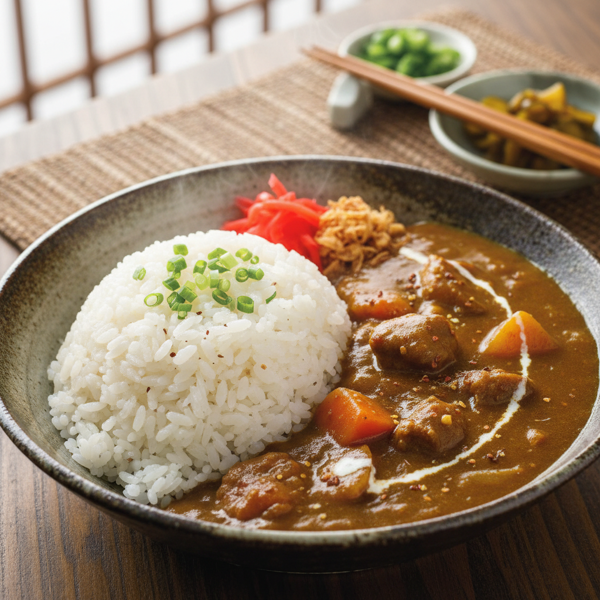
This homemade gluten-free Japanese Beef Curry Rice is a comforting and rich dish reminiscent of traditional Japanese home-cooking. It features succulent chunks of beef, hearty vegetables, and a savory curry sauce that offers an explosion of flavors without the gluten. With a silky and creamy curry roux made from a unique blend of spices such as rice flour, cumin, and aromatic curry powder, this dish is perfect for those who love Japanese cuisine and require a gluten-free option. Perfectly paired with fluffy short-grain rice, your family and friends will be impressed by this satisfying classic that's sure to become a favorite at your house.
10
Servings
N/A
Calories
19
Ingredients
Ingredients
butter
5 tablespoons
rice flour
6 tablespoons
curry powder
4 tablespoons
cumin powder
1 tablespoon
broth (chicken or beef)
8 ounces
heavy cream
5 tablespoons
ketchup
4 tablespoons
sugar
3 tablespoons
salt
to taste
pepper
to taste
olive oil
2 tablespoons
beef
2 lbs (cut into bite-sized cubes)
onion
1 (sliced)
garlic
1 tablespoon (minced)
ginger
1 tablespoon (minced)
russet potatoes
4 (cut into bite-sized cubes)
large carrots
4 (cut into bite-sized pieces)
water
4 cups
cooked short grain white rice
10 cups
Instructions
1
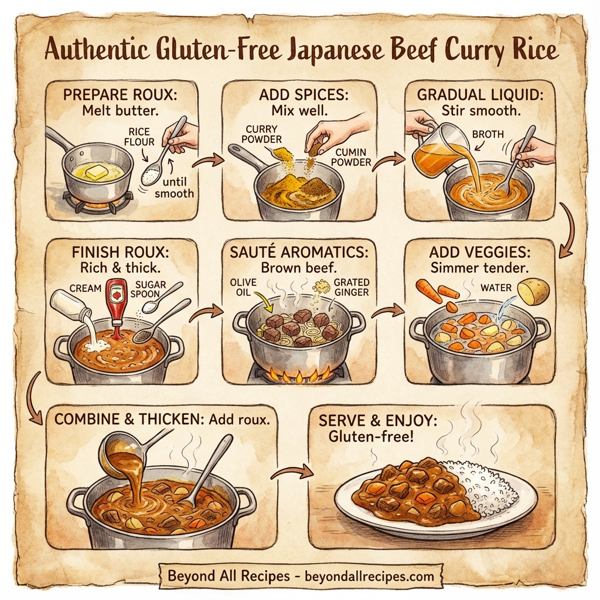
Begin by preparing the curry roux: In a saucepan, melt the butter over low heat. Add the rice flour and cook, constantly stirring for a few minutes until it forms a smooth paste.
2
Slowly add the curry powder and cumin powder. Mix well to incorporate the spices into the roux.
3
Gradually add the broth, stirring continuously to achieve a smooth consistency. Continue to cook over low heat.
4
Mix in the heavy cream, ketchup, and sugar. Season with salt and pepper to taste, cooking until the mixture thickens into a rich curry roux.
5
For the curry: Heat olive oil in a large pot over medium heat. Add the beef, onions, garlic, and ginger, sautéing until the onions are translucent and the beef is browned on all sides.
6
Add the potatoes and carrots to the pot and pour in the water. Bring to a simmer and cook until the potatoes are tender.
7
Once the vegetables are cooked, add the prepared Curry Roux to the pot and stir to combine. Adjust the thickness of the curry with additional water, if necessary, ensuring the sauce has a gravy-like consistency.
8
Serve the savory Japanese curry over hot cooked short-grain white rice. Enjoy your gluten-free culinary masterpiece!
Nutrition Information
Frequently Asked Questions
Frequently Asked Questions
What is Japanese Beef Curry Rice?
It is a rich, comforting dish featuring succulent beef and hearty vegetables in a savory curry sauce served over rice.
Is this recipe gluten-free?
Yes, this recipe is specifically designed to be gluten-free by using rice flour instead of wheat flour for the roux.
How many servings does this recipe yield?
This recipe is designed to serve 10 people.
What ingredients are used to thicken the curry?
The curry is thickened with a homemade roux made from butter and rice flour.
What spices are included in the curry roux?
The roux features a blend of curry powder and cumin powder for an aromatic flavor profile.
What type of beef should I use?
The recipe calls for 2 lbs of beef cut into bite-sized cubes.
What vegetables are included in this curry?
The dish includes russet potatoes, large carrots, onions, garlic, and ginger.
What kind of rice is recommended for serving?
It is best served over hot, fluffy short-grain white rice.
Can I use chicken broth instead of beef broth?
Yes, you can use either chicken or beef broth for the roux base.
Why is ketchup added to the recipe?
Ketchup adds a subtle sweetness and acidity that enhances the complex flavors of the Japanese curry sauce.
How do I prepare the curry roux?
Melt butter, stir in rice flour to form a paste, add spices, then gradually incorporate broth and cream.
What is the purpose of adding heavy cream?
Heavy cream is used to give the curry sauce a silky and creamy consistency.
Is sugar necessary in the sauce?
Sugar is used to balance the savory and spicy notes of the curry powder.
How do I brown the beef?
Sauté the beef in olive oil with onions, garlic, and ginger until the meat is browned on all sides.
How should the potatoes and carrots be cut?
They should be cut into bite-sized cubes or pieces to ensure even cooking.
When do I add the roux to the main pot?
The roux should be added after the vegetables have been simmered in water and are tender.
How can I adjust the thickness of the curry sauce?
You can adjust the consistency by adding more water if the sauce becomes too thick.
What type of oil is used for sautéing the beef?
The recipe specifies using 2 tablespoons of olive oil.
Is the garlic and ginger fresh?
The recipe calls for minced garlic and minced ginger for the best flavor.
Can I make this curry in advance?
Yes, Japanese curry is known for tasting even better the next day as the flavors meld together.
What gives the curry its 'authentic' flavor?
The combination of the homemade roux, aromatic spices, and traditional Japanese ingredients like ginger and short-grain rice.
How much water is needed for the main curry?
The recipe requires 4 cups of water to simmer the beef and vegetables.
What are the specific potato types mentioned?
The recipe specifically recommends using 4 russet potatoes.
How much rice do I need for 10 servings?
You will need approximately 10 cups of cooked short-grain white rice.
Is this a spicy dish?
The spice level depends on the curry powder used, but it is generally savory and mild to medium.
What category does this recipe fall into?
This recipe is categorized under Curries.
Is butter required for the roux?
Yes, 5 tablespoons of butter are used to create the base for the gluten-free roux.
What is the first step in the instructions?
The first step is preparing the curry roux by melting butter and adding rice flour.
Can I add more salt and pepper?
Yes, the recipe suggests seasoning with salt and pepper to taste.
Is this suitable for family meals?
Yes, it is described as a satisfying classic that is perfect for families and friends.