Authentic German Fastnachts
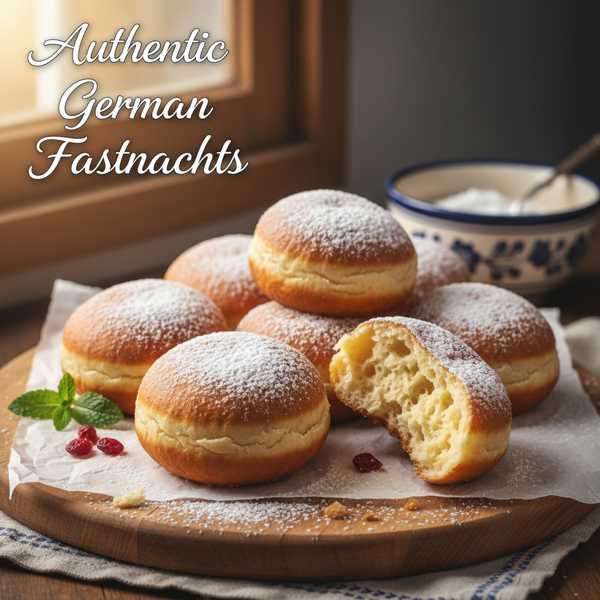
Experience the rich tradition of Fastnachts, a beloved German-style doughnut traditionally enjoyed on Shrove Tuesday, the day before Ash Wednesday. These delightful, light, and fluffy treats are made with a touch of nutmeg, rich milk, and butter, creating a heavenly flavor that is perfect for celebrating the pre-Lenten festivities. Coated in granulated sugar while still warm, these Fastnachts are an irresistible indulgence that will transport you to a German bakery, making them a must-have for your holiday table.
12
Servings
240
Calories
9
Ingredients
Ingredients
Dry Yeast
1 envelope (Dissolve in warm water)
Warm Water
1 cup (Used for dissolving yeast)
Eggs
3 (Beaten)
All-Purpose Flour
4 1/2 cups (Divided into two measures)
Butter
4 tablespoons (Melted)
Whole Milk
2 cups (Warm)
Nutmeg
1 pinch (Ground)
Granulated Sugar
1/2 cup (For dough and coating)
Granulated Sugar
1 tablespoon (Added to the dough)
Instructions
1
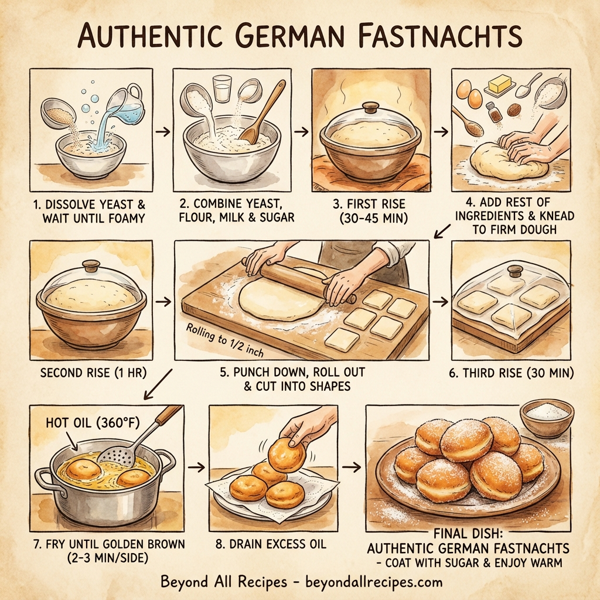
In a small bowl, dissolve the dry yeast in warm water and let it sit for about 5 minutes until foamy.
2
In a large mixing bowl, combine the dissolved yeast with 1/2 cup of flour. Stir until smooth.
3
Gradually add the warm milk and continue stirring.
4
Incorporate the first measure of granulated sugar and half of the flour. Mix well until all ingredients are combined.
5
Cover the bowl with a towel and allow the mixture to rise in a warm place for about 30 to 45 minutes, or until doubled in size.
6
Once risen, add the beaten eggs, melted butter, remaining sugar, nutmeg, and sufficient additional flour to form a firm dough.
7
Knead the dough lightly on a floured surface until smooth, then shape it into a ball and place it back in the bowl, covering it to rise again until doubled in bulk, about 1 hour.
8
After the second rise, punch down the dough and roll it out onto a floured surface to about 1/2 inch thickness.
9
Cut into squares or desired shapes and place them on a floured board.
10
Cover again and let rise for an additional 30 minutes.
11
While the doughnuts are rising, preheat the oil in a deep fryer or large pot to 360°F (182°C).
12
Carefully place the risen Fastnachts into the hot oil, frying a few at a time to avoid overcrowding, until they are light and golden brown on all sides, about 2 to 3 minutes per side.
13
Use a slotted spoon to transfer the fried doughnuts to a plate lined with paper towels to drain excess oil.
14
While still warm, roll the Fastnachts in granulated sugar to coat them evenly.
Nutrition Information
10g
Fat
33g
Carbs
4.5g
Protein
Frequently Asked Questions
Frequently Asked Questions
What are Authentic German Fastnachts?
Fastnachts are traditional German-style doughnuts that are light, fluffy, and typically flavored with nutmeg, served specifically for Shrove Tuesday.
When are Fastnachts traditionally served?
They are enjoyed on Shrove Tuesday, which is the day before Ash Wednesday, as part of pre-Lenten festivities.
How many rises does the Fastnacht dough require?
The dough requires three separate rising periods: a first rise of 30-45 minutes, a second rise of about 1 hour, and a final rise of 30 minutes after shaping.
What is the ideal oil temperature for frying Fastnachts?
The oil should be preheated to 360°F (182°C) for optimal frying.
How long should I fry each doughnut?
Each Fastnacht should be fried for about 2 to 3 minutes per side until light and golden brown.
What type of yeast is used in this recipe?
The recipe calls for one envelope of dry yeast.
How do I prepare the yeast for the dough?
Dissolve the dry yeast in one cup of warm water and let it sit for about 5 minutes until it becomes foamy.
How much flour is needed for Authentic German Fastnachts?
The recipe requires a total of 4 1/2 cups of all-purpose flour, added in stages.
What ingredients provide the rich flavor in the dough?
Rich milk, melted butter, and a pinch of ground nutmeg provide the signature flavor.
How many eggs are included in the recipe?
Three beaten eggs are incorporated into the dough after the first rise.
What is the recommended coating for Fastnachts?
They should be rolled in granulated sugar while they are still warm.
How thick should the dough be rolled before cutting?
The dough should be rolled out to a thickness of approximately 1/2 inch.
What shapes are traditional for Fastnachts?
They are commonly cut into squares, though other desired shapes can be used.
How many servings does this recipe yield?
This recipe makes 12 servings.
What is the calorie count for one Fastnacht?
Each serving contains approximately 240 calories.
How much fat is in one serving?
There are 10 grams of fat per serving.
What is the protein content per serving?
Each doughnut provides 4.5 grams of protein.
How many grams of carbohydrates are in a Fastnacht?
There are 33 grams of carbohydrates per serving.
Why should I avoid overcrowding the frying pot?
Frying only a few at a time prevents the oil temperature from dropping and ensures even cooking.
How should I drain the doughnuts after frying?
Use a slotted spoon to transfer them to a plate lined with paper towels to remove excess oil.
Can I use whole milk for this recipe?
Yes, the recipe specifically calls for 2 cups of warm whole milk.
Is the butter melted or softened for the dough?
The recipe requires 4 tablespoons of melted butter.
How long does the yeast take to foam?
It takes about 5 minutes in warm water to become foamy.
Is nutmeg a necessary ingredient?
While a pinch, ground nutmeg is traditional for achieving the authentic German flavor profile.
What should the dough consistency be like?
The dough should be firm enough to be kneaded and shaped after the remaining flour and eggs are added.
How do I know the first rise is complete?
The mixture should rise in a warm place until it has doubled in size, which takes 30 to 45 minutes.
What is the purpose of the second rise?
The second rise allows the shaped ball of dough to double in bulk, which takes about 1 hour and improves texture.
Do I need a deep fryer?
You can use either a deep fryer or a large pot to fry the doughnuts.
What is the category of this recipe?
This recipe is categorized under Breads.
Is granulated sugar used inside the dough?
Yes, 1/2 cup and an additional tablespoon of granulated sugar are used for both the dough and the final coating.